Identification and classification of urban commercial districts at block scale
Received date: 2014-12-20
Request revised date: 2015-03-11
Online published: 2015-07-12
Copyright
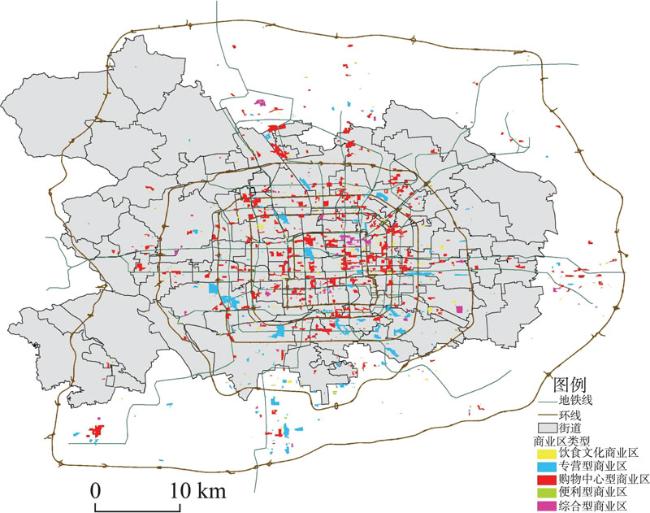
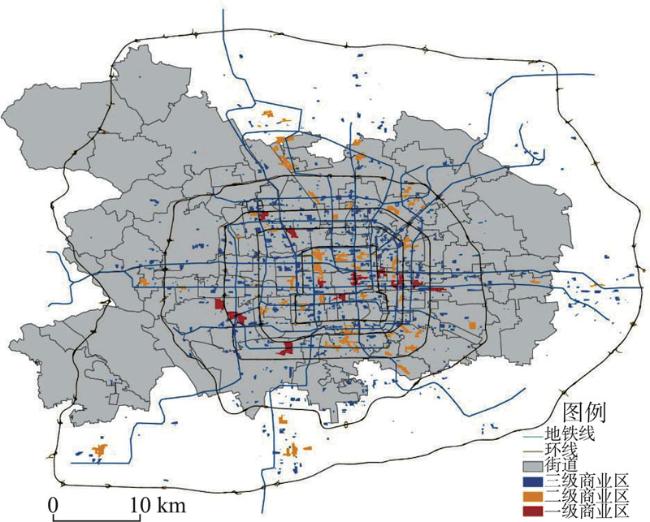
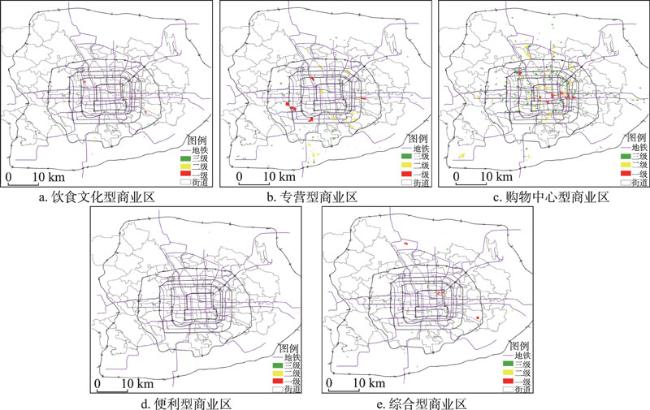
Commercial districts, which accommodate various commercial activities such as shopping, leisure, and business, are regarded as an important part of cities. However, as a result of increasingly mixed land use, it is difficult to visualize the spatial structure of urban commercial districts. This article presents a new method for identifying and classifying urban commercial districts with the POI (point of interest) and road network data and it enables the analysis of urban commercial structure at block scale. To do so, urban areas are divided into small blocks by roads and the amount of commercial activities in each block is aggregated with the mapped POI data. Then, a model is built to pick up the blocks dominated by commercial activities and those neighboring blocks are merged. A K-means clustering method is used to classify the urban commercial districts into the detailed function types such as cuisine culture streets, professional wholesale markets, large-scale shopping centers, convenience services, and common commercial centers functioning between large-scale shopping centers and convenience services. In the case of Beijing, a total of 1063 commercial districts with an average size of 0.065 km2 are identified and they are classified into five functional types and three levels. On this basis, the spatial pattern of commercial districts is explored. The result reveals that, high-level commercial districts well follow a center-oriented distribution while medium-level commercial districts a centrifugation trend along outwards trunk roads. It is also discovered that the spatial pattern of commercial districts differs by functional types. For instance, shopping centers are mainly distributed around the 2nd and 3rd ring roads, or outside the 5th Ring Road, but lower-level commercial services are much more dispersed in term of spatial distribution.
Key words: commercial district; space identification; classification; Beijing
WANG Fang , GAO Xiaolu , XU Zening . Identification and classification of urban commercial districts at block scale[J]. GEOGRAPHICAL RESEARCH, 2015 , 34(6) : 1125 -1134 . DOI: 10.11821/dlyj201506011
Tab. 1 The number and proportion of various commercial outlets in Beijing表1 北京市各类商业网点数量及比例 |
| 类型 | 数量 | 比例(%) | 类型 | 数量 | 比例(%) |
|---|---|---|---|---|---|
| 花鸟鱼虫市场 | 87 | 0.09 | 大型专营商场 | 13303 | 13.93 |
| 商业街 | 118 | 0.12 | 超市 | 3867 | 4.05 |
| 大型商场 | 1064 | 1.11 | 便利店 | 8116 | 8.50 |
| 综合市场 | 2846 | 2.98 | 各类专业店 | 28463 | 29.81 |
| 正餐厅 | 29103 | 30.49 | 休闲餐饮场所 | 2954 | 3.09 |
| 快餐厅 | 3621 | 3.79 | 饮食外卖店 | 1924 | 2.02 |
Tab. 2 The business area values of different commercial networks表2 商业网点营业面积选取值 |
| 行业 | 业态 | 经营类别 | 营业面积(m2) |
|---|---|---|---|
| 零售业 | 大型商场 | 购物中心、商业综合体 | 50000 |
| 商业街 | 步行街、特色商业街 | 30000 | |
| 大型专营商场 | 家居建材市场,家电电子商场 | 3000 | |
| 超市 | 家乐福、沃尔玛、卜蜂莲花等 | 3000 | |
| 综合市场 | 农副产品市场、小商品市场、旧货市场、果品市场、水产海鲜市场、蔬菜市场 | 2000 | |
| 花鸟鱼虫市场 | 宠物市场、花卉市场、花鸟鱼虫综合市场 | 1000 | |
| 各类专业店 | 化妆品店、体育用品店、文化用品店、服装鞋帽皮具店、各类专卖店、特殊买卖场所(典当行、拍卖行) | 300 | |
| 便利店 | 7-eleven、好邻居等 | 100 | |
| 餐饮业 | 正餐厅 | 各式中餐厅、外国餐厅 | 800 |
| 快餐厅 | 麦当劳、肯德基、吉野家、必胜客等 | 400 | |
| 休闲餐饮场所 | 咖啡厅、茶艺馆、冷饮店、酒吧、其他休闲餐饮场所 | 300 | |
| 饮食外卖店 | 甜品店、糕饼店、熟食店等 | 100 |
Tab. 3 The classification and functional characteristics of different commercial district types in Beijing表3 北京市商业区类型划分及功能特征 |
| 功能特征 | 主要商业网点 | 商业区数量 | 商业区平均面积(km2) | 等级 | |||
|---|---|---|---|---|---|---|---|
| 一级 | 二级 | 三级 | |||||
| 1.饮食文化型商业区 | 以饮食服务为主的商业功能 | 餐饮店 | 240 | 0.015 | 6(如魏公村附近) | 28(如三环新城食尚街) | 206(如旧鼓楼大街附近) |
| 2.专营型商业区 | 以某一类专营服务为主的商业功能 | 大型专营商场(家电电子商场、家居建材市场) | 264 | 0.068 | 6(如四惠建材城附近) | 19(如十里河建材市场附近) | 239(如东土城路附近) |
| 3.购物中心型商业区 | 以高档、综合性购物为主的商业功能 | 大型商场、购物中心、商业街等 | 350 | 0.121 | 8(如王府井、西单、朝外) | 39(如双安商场附近、北辰购物中心附近) | 303(如新奥购物中心附近、东方天作商城附近) |
| 4.便利型商业区 | 以基本生活服务为主的商业功能 | 超市、便利店、餐饮 | 120 | 0.011 | 3(如看丹路附近) | 24(如安翔里附近) | 93(如亚运村汇园附近) |
| 5.综合型商业区 | 职能最为综合,提供多种商业服务功能 | 各类专业店、各类综合市场、餐饮店、超市等 | 89 | 0.051 | 4(如回龙观批发市场附近) | 8(如安定门内大街附近服装购物) | 77(如五道口附近服装购物) |
| 6.全部商业区 | 1063 | 0.065 | 12 | 64 | 987 | ||
Fig. 1 The distribution of different types of commercial districts in Beijing图1 北京市商业区类型分布图 |
Fig. 2 The distribution of different levels of commercial districts in Beijing图2 北京市商业区等级分布图 |
Fig. 3 The spatial pattern of commercial districts in different function types图3 不同类型商业区空间分布 |
The authors have declared that no competing interests exist.
| [1] |
|
| [2] |
[
|
| [3] |
|
| [4] |
|
| [5] |
|
| [6] |
|
| [7] |
|
| [8] |
|
| [9] |
[
|
| [10] |
[
|
| [11] |
[
|
| [12] |
[
|
| [13] |
[
|
| [14] |
[
|
| [15] |
[
|
| [16] |
|
| [17] |
[
|
| [18] |
[
|
| [19] |
[
|
| [20] |
|
| [21] |
[
|
| [22] |
[
|
| [23] |
[
|
| [24] |
[
|
| [25] |
[
|
| [26] |
[
|
| [27] |
[
|
/
| 〈 |
|
〉 |