Spatial characteristics and causes of recreational space in the urban green belt of Beijing, China
Received date: 2015-01-08
Request revised date: 2015-05-21
Online published: 2015-08-20
Copyright
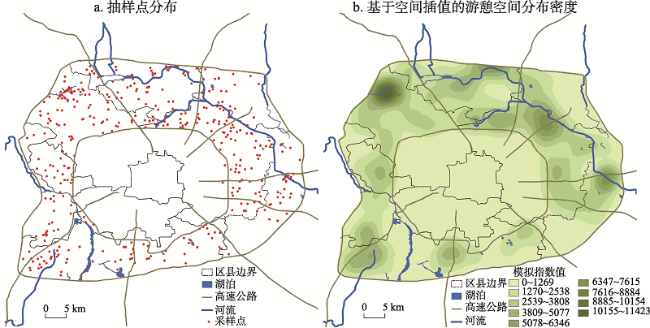
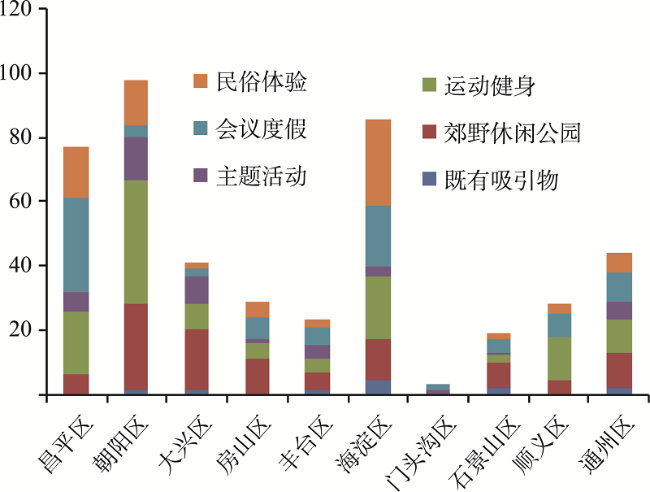
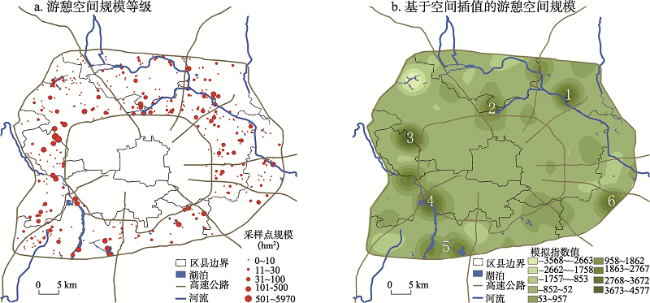
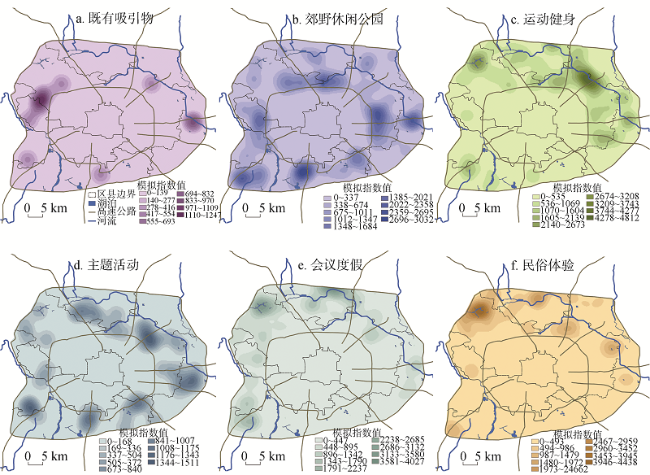
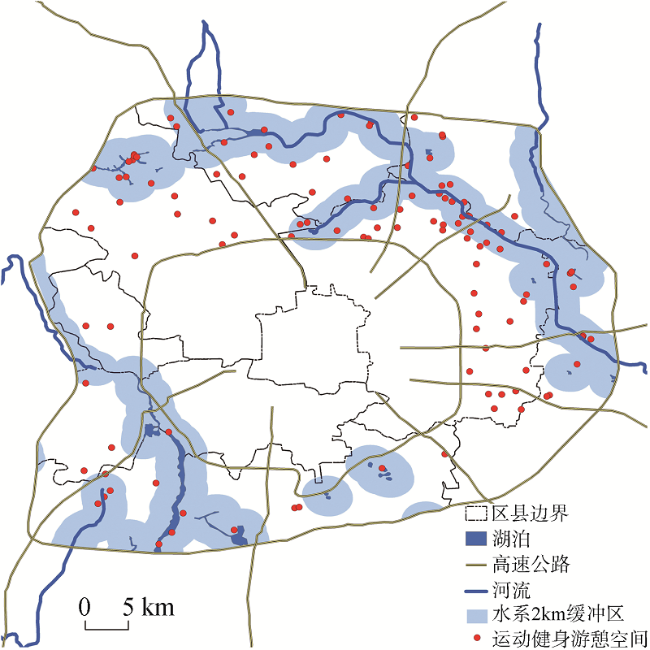
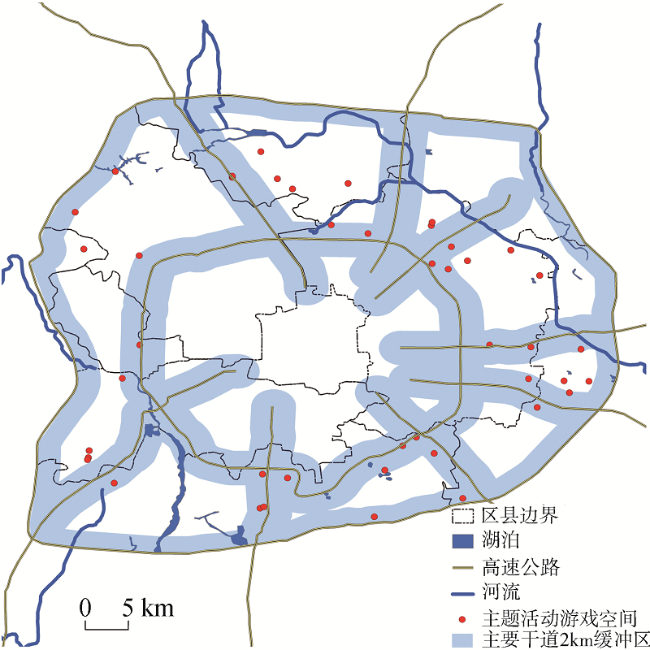
The urban green belt is critical to combat the urban sprawl and improve the ecological security pattern. The recreation development of the green belt can not only increase recreational space of a metropolis, but also enrich the utilities of greening. In this paper, we take 6 types of recreational spaces in the second greenbelt, Beijing, China as a case study. Based on the spatial analysis, such as kernel density estimation, we examine the overall spatial pattern, scale, capacity features of the greenbelt's recreational spaces in Beijing, as well as the spatial features and causes of various types of recreational spaces in the greenbelt. Several main conclusions can be drawn as follows: ① In respect of the overall spatial pattern, the greenbelt has presented a number of recreational assembling zones. The green belt's recreational space is characterized by "dense north, sparse south". There are a great number of recreational agglomerations in the north. On the contrary, the recreational space is sparse in the south. ② As far as the scale and capacity are concerned, the structure feature of the recreational space in the greenbelt is characterized by "large agglomeration, small scatter". There are 6 large scale recreational agglomerations with high density. ③ The causes for spatial characteristics of 6 types of recreational spaces have been identified: The cluster of resources and environment is the main reason for the attractions in the recreational spaces of greenbelts. Comparatively, suburban leisure parks are evenly distributed due to the related urban plans. The important river systems have formed an excellent landscape and an ecological buffer barrier for the sport recreational space, which shows a highly spatial correlation with the important river systems. The theme-park recreational spaces place emphasis on the visiting groups' cultivation, thus they are close to the trunk roads. The conference and resort spaces are highly connected to the distribution of the geothermal resources in Beijing. The folk-custom-experience recreational spaces are mostly distributed around the Shangzhuang Reservoir in Shangzhuang Town, Haidian District. On the one hand, the local governments encourage the recreational development; On the other hand, the good natural reservoir environment attracts a large number of local visitors, and has a high revisit ratio due to the public praise. Finally, in terms of the features and causes of the greenbelt recreational space in Beijing, we can see that there are rules to follow as to the suburban greenbelt recreational space of a metropolis. To provide a reference for the development and management of greenbelt recreation of China, the governments at all levels should pay close attention to the construction of greenbelt recreation system, the adjustment of the existing layout structure of greenbelt recreational spaces, as well as the further development of various recreational spaces.
Key words: recreational space; greenbelt; the spatial distribution; Beijing
LI Le , LIU Jiaming , SONG Tao , TAO Hui , ZHANG Xin . Spatial characteristics and causes of recreational space in the urban green belt of Beijing, China[J]. GEOGRAPHICAL RESEARCH, 2015 , 34(8) : 1507 -1521 . DOI: 10.11821/dlyj201508009
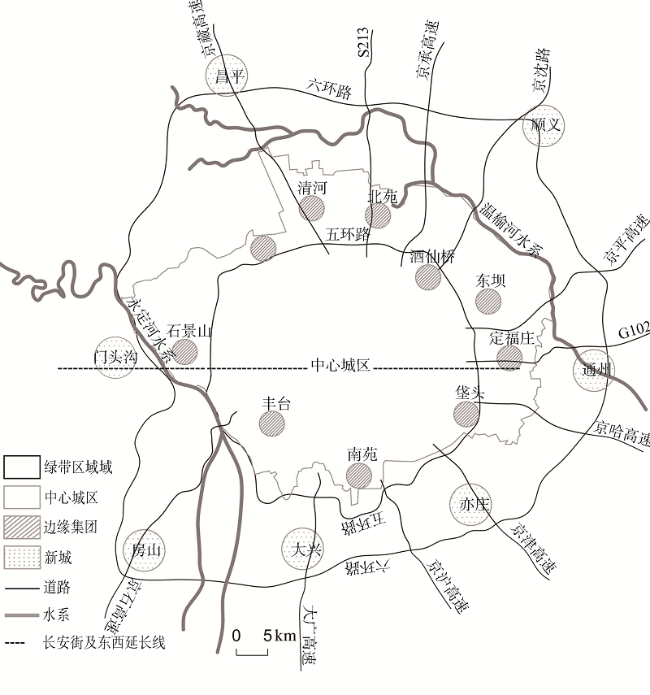
Fig. 1 Spatial structure of Beijing's second green belt图1 北京市第二道绿带空间结构示意图 |
Tab. 1 Sampling points of different recreational space表1 各类游憩空间采样类型及数量 |
| 游憩空间类型 | 子类型(采样点个数) | 总计 |
|---|---|---|
| 既有吸引物 | 自然风景区(6)、历史文化遗迹(5) | 11 |
| 郊野休闲公园 | 森林公园(8)、郊野公园(47)、城市公园(39)、休闲广场(11) | 105 |
| 运动健身 | 高尔夫球场(47)、滑雪场(3)、跑马场(15)、赛车场(2)、垂钓园(37)、素质拓展训练(7)、其他运动健身类型(11) | 122 |
| 主题活动 | 博物馆(14)、主题公园(8)、游乐场(13)、商业综合体(3)、影视基地(2)、艺术街区(4) | 44 |
| 会议度假 | 度假村(76)、会议中心(11)、会展中心(2) | 89 |
| 民俗体验 | 农家乐(40)、采摘园(15)、民俗村(1)、观光农业(21) | 77 |
Fig. 2 The distribution density ofrecreational space in the second urban green belt of Beijing图2 北京市第二道绿带游憩空间分布密度 |
Fig. 3 Spatial distribution of recreational space in Beijing图3 北京市第二道绿带游憩空间分布特征 |
Tab. 2 Statistics of recreational space scale表2 游憩空间规模特征统计表 |
| 类型 | 既有吸引物 | 郊野休闲公园 | 运动健身 | 主题活动 | 会议度假 | 民俗体验 |
|---|---|---|---|---|---|---|
| 样本数(个) | 11 | 105 | 122 | 46 | 78 | 89 |
| 平均面积(hm2) | 643.47 | 38.31 | 17.63 | 15.42 | 14.99 | 5.27 |
| 标准差 | 1772.25 | 84.40 | 36.51 | 39.73 | 33.34 | 10.32 |
| Zmin | -0.36 | -0.45 | -0.48 | -0.38 | -0.44 | -0.49 |
| Zmax | 3.01 | 8.31 | 5.73 | 6.33 | 5.60 | 7.16 |
Fig. 4 The distribution density of recreational space scale in the second urban green belt of Beijing图4 北京市第二道绿带游憩空间规模密度 |
Fig. 5 The distribution density of recreational space in various types in the second urban green belt of Beijing图5 北京市第二道绿带各类型游憩空间分布密度图 |
Tab. 3 Statistics of sport recreational space表3 运动健身游憩空间各子类型空间分析样本点统计 |
| 子类型(个数) | 缓冲区内采样点个数 | 百分比(%) |
|---|---|---|
| 高尔夫球场(47) | 27 | 57.44 |
| 滑雪场(3) | 0 | 0 |
| 跑马场(15) | 8 | 53.33 |
| 赛车场(2) | 2 | 100 |
| 垂钓园(37) | 22 | 59.46 |
| 素质拓展训练(7) | 3 | 42.86 |
| 其他运动健身(11) | 4 | 36.37 |
Fig. 6 Connection between sport recreational space and rivers图6 运动健身游憩空间分布与水系的关系 |
Fig. 7 Connection between theme activity recreational spaces and transport图7 主题活动游憩空间分布与交通线路的关系 |
Tab. 4 Statistics of theme activity recreational spaces表4 主题活动游憩空间各子类型空间分析样本点统计 |
| 子类型(个数) | 缓冲区内采样点个数 | 百分比(%) |
|---|---|---|
| 博物馆(14) 主题公园(8) 游乐场(13) 商业综合体(3) 影视基地(2) 艺术街区(4) | 12 6 8 2 1 3 | 85.71 75.00 61.54 66.67 50.00 75.00 |
The authors have declared that no competing interests exist.
| [1] |
[
|
| [2] |
|
| [3] |
|
| [4] |
|
| [5] |
|
| [6] |
|
| [7] |
|
| [8] |
|
| [9] |
|
| [10] |
[
|
| [11] |
[
|
| [12] |
[
|
| [13] |
[
|
| [14] |
[
|
| [15] |
[
|
| [16] |
[
|
| [17] |
[
|
| [18] |
[
|
| [19] |
[
|
| [20] |
[
|
| [21] |
[
|
| [22] |
[
|
| [23] |
[
|
| [24] |
[
|
| [25] |
[
|
| [26] |
[
|
| [27] |
[
|
| [28] |
[
|
| [29] |
[
|
| [30] |
[
|
| [31] |
[
|
| [32] |
[
|
| [33] |
[
|
| [34] |
[
|
| [35] |
|
| [36] |
|
| [37] |
[
|
/
| 〈 |
|
〉 |