“De-territorialization”and “re-territorialization”in the process of urbanization: A case study of Jiangkou Village, Guangzhou
Received date: 2018-09-03
Request revised date: 2019-06-12
Online published: 2019-09-11
Copyright
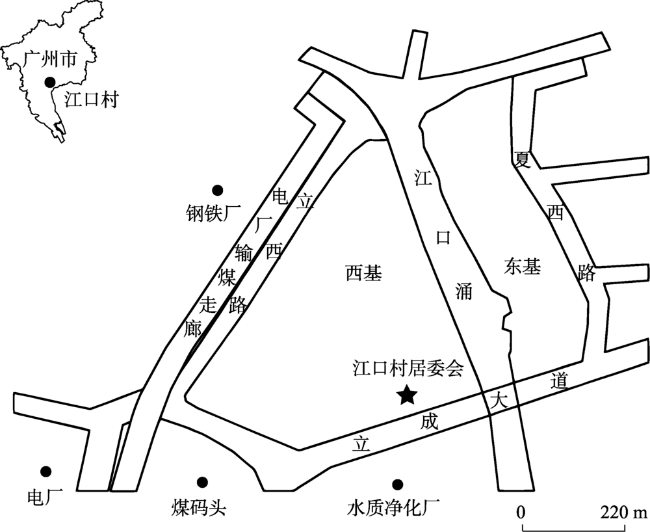
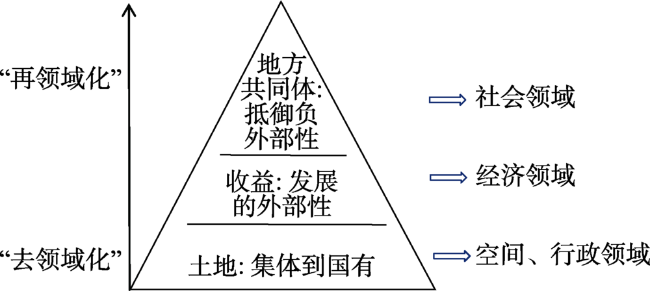
Territorialization is a key theoretical concept in political geography. In this paper, the authors adopt the perspective of territorialization and re(de)-territorialization to analyze the urbanization in China. In the process of urbanization, the limitation on urban development is resolved by the territorial expansion, in which the city expropriates more land for development and the ‘non-urban’ area is absorbed into ‘urban’ area. The actors in different scales, including the local government and central government, adopt different strategies of re-territorialization and de-territorialization. Based on the diachronic analysis of a case of an urbanizing village in Guangzhou, the paper summarizes three levels of territorialization of urbanization in China: First, the territorialization of urbanization is on space level. The land is the basic element in urbanizing process. The urban state and the peasants held the same recognition on land ownership that the land belongs to the state. The state and the city, based on the land rules and the needs of urban development, transfer the rural land to urban area. In this process, the rural area is absorbed into urban area, and the urban and rural space is re-adjusted. In the meantime, the administrative institution is transferred from rural system to urban system, from village to community. The second level is on the territorialization and de-territorialization of the space for interests. With their own strategies, multiple actors - local government, companies, village committee and villagers - enter the space for interests, negotiating and bargaining for their respective benefits. Different actors adopt different discourses in order to acquire more benefits. The urban state expropriates the rural land in order to develop economy. From the viewpoint of peasants and the collective, they benefited from the land expropriation, but lost the stable benefits of land in the end. As the economy develops, the peasants hope to obtain sustainable benefit. The third level is about place identity, where the competing strategies of re-territorialization lead to the generation and transition of place identity. The urban sprawl brings changes to the villages as well as the villagers. The communities finally get into the bottom layer of the urban administrative structure. The inconformity in these three levels causes discrepancies in governance at various times and further leads to the dilemma of governance. From the the perspective of territorialization, the paper discusses how the political scale is emerging from and reflected by the process of urbanization. After a review of the transitions of the boundaries between ‘urban’ and ‘rural’ areas in different periods, the complicated process of self-adjustment of the village, and the governance dilemma in the integration of ‘urban’ and ‘rural’ areas, the paper gives some advice.
HUANG Xiaoxing , MA Ling . “De-territorialization”and “re-territorialization”in the process of urbanization: A case study of Jiangkou Village, Guangzhou[J]. GEOGRAPHICAL RESEARCH, 2019 , 38(9) : 2148 -2161 . DOI: 10.11821/dlyj020180924
| [1] |
陆大道 . 地理学关于城镇化领域的研究内容框架. 地理科学, 2013,33(8):897-901.
[
|
| [2] |
陈明星 . 城市化领域的研究进展和科学问题. 地理研究, 2015,34(4):614-630.
[
|
| [3] |
|
| [4] |
顾朝林, 于涛方, 李王鸣 , 等. 中国城市化格局、过程与机理. 北京: 科学出版社, 2008.
[
|
| [5] |
刘玉 . 中国城市化发展的若干区域特性与矛盾差异. 城市规划学刊, 2007, ( 2):15-19.
[
|
| [6] |
陈明星, 陆大道, 查良松 . 中国城市化与经济发展水平关系的国际比较. 地理研究, 2009,28(2):464-474.
[
|
| [7] |
蔺雪芹, 王岱, 任旺兵 , 等. 中国城镇化对经济发展的作用机制. 地理研究, 2013,32(4):691-700.
[
|
| [8] |
|
| [9] |
|
| [10] |
张雷 . 中国城市化进程的资源环境基础. 北京: 科学出版社, 2009.
[
|
| [11] |
黄金川, 方创琳 . 城市化与生态环境交互耦合机制与规律性分析. 地理研究, 2003,22(2):211-220.
[
|
| [12] |
刘玉, 冯健, 孙楠 . 快速城市化背景下城乡结合部发展特征与机制: 以北京海淀区为例. 地理研究, 2009,28(2):499-512.
[
|
| [13] |
贺艳华, 周国华, 唐承丽 , 等. 城市群地区城乡一体化空间组织理论初探. 地理研究, 2017,36(2):241-252.
[
|
| [14] |
于伟, 吕晓, 宋金平 . 山东省城镇化包容性发展的时空格局. 地理研究, 2018,37(2):319-332.
[
|
| [15] |
方创琳 . 中国城市群研究取得的重要进展与未来发展方向. 地理学报, 2014,69(8):1130-1144.
[
|
| [16] |
顾朝林 . 城市群研究进展与展望. 地理研究, 2011,30(5):771-784.
[
|
| [17] |
张京祥, 范朝礼 . 试论行政区划调整与推进城市化. 城市规划汇刊, 2002, ( 5):25-28.
[
|
| [18] |
陶然, 徐志刚 . 城市化, 农地制度与迁移人口社会保障. 经济研究, 2005, ( 12):45-56.
[
|
| [19] |
陈金永, 蔡昉 . 中国户籍制度改革和城乡人口迁移. 中国劳动经济学, 2004, ( 1):117-118.
[
|
| [20] |
周一星 . 中国城镇的概念和城镇人口的统计口径. 人口与经济, 1989, ( 1):9-13.
[
|
| [21] |
刘云刚, 仵明霞 . 领域化视角下的珠三角乡村城市化再思考: 以广州市旧水坑村为例. 地理科学, 2016,36(12):1834-1842.
[
|
| [22] |
刘云刚, 叶清露 . 中国城市基层地域的领域化与领域政治: 基于东莞东泰社区的案例研究. 地理学报. 2015,70(2):283-296.
[ Territorialization and territorial politics in the urban grassroots of China: A case study of the Dongtai community in Dongguan city. Acta Geographica Sinica, 2015,70(2):283-296.]
|
| [23] |
|
| [24] |
|
| [25] |
娜仁, 刘洪 . 我的地盘我做主: 组织内领地行为与人际冲突的关系研究. 商业经济与管理, 2014, ( 12):23-31.
[
|
| [26] |
|
| [27] |
刘军, 袁艺玮, 陈星汶 . 组织内的领地牲: 概念缘起、研究现状与未来展望. 人力资源管理评论, 2016, ( 1):48-59.
[
|
| [28] |
|
| [29] |
|
| [30] |
|
| [31] |
|
| [32] |
|
| [33] |
|
| [34] |
|
| [35] |
|
| [36] |
|
| [37] |
苏贾 . 后现代地理学: 重申批判社会理论中的空间. 王文斌, 译. 北京: 商务印书馆, 2004.
[
|
| [38] |
吉登斯 , 社会的构成. 李康, 李猛译. 北京: 三联书店, 1998.
[
|
| [39] |
[
|
| [40] |
|
| [41] |
龙花楼 . 论土地整治与乡村空间重构. 地理学报, 2013,68(8):1019-1028.
[
|
| [42] |
|
| [43] |
|
| [44] |
|
| [45] |
|
| [46] |
[
|
| [47] |
刘云刚, 叶清露, 许晓霞 . 空间 , 权力与领域: 领域的政治地理研究综述与展望. 人文地理, 2015,30(3):1-6.
[
|
| [48] |
|
| [49] |
龙花楼, 屠爽爽 . 论乡村重构. 地理学报, 2017,72(4):563-576.
[
|
| [50] |
|
| [51] |
|
| [52] |
|
| [53] |
龙花楼, 张英男, 屠爽爽 . 论土地整治与乡村振兴. 地理学报, 2018,73(10):1837-1849.
[
|
| [54] |
顾朝林, 李阿琳 . 从解决“三农问题”入手推进城乡发展一体化. 经济地理, 2013,33(1):138-148.
[
|
| [55] |
[
|
| [56] |
罗彦, 周春山 . 中国城乡边缘区研究的回顾和展望. 城市发展研究, 2005,12(1):25-30.
[
|
| [57] |
仝德, 冯长春, 邓金杰 . 城中村空间形态的演化特征及原因: 以深圳特区为例. 地理研究, 2011,30(3):437-446.
[
|
| [58] |
李志刚, 刘晔 . 中国城市“新移民”社会网络与空间分异. 地理学报, 2011,66(6):785-795.
[
|
| [59] |
|
| [60] |
何艳冰, 黄晓军, 杨新军 . 快速城市化背景下城市边缘区失地农民适应性研究: 以西安市为例. 地理研究. 2017,36(2):226-240.
[
|
/
| 〈 |
|
〉 |