The spatial-temporal difference of peasants' livelihood response and enlightenments to rural revitalization strategy
Received date: 2018-12-04
Request revised date: 2019-02-20
Online published: 2019-12-02
Copyright
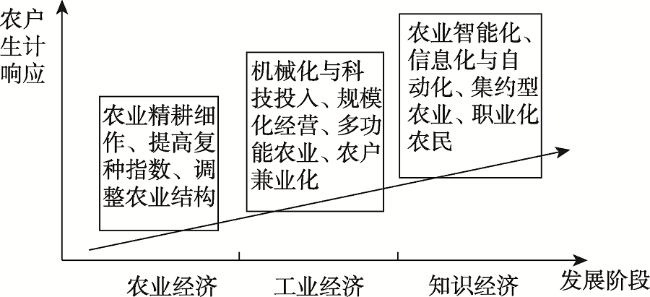
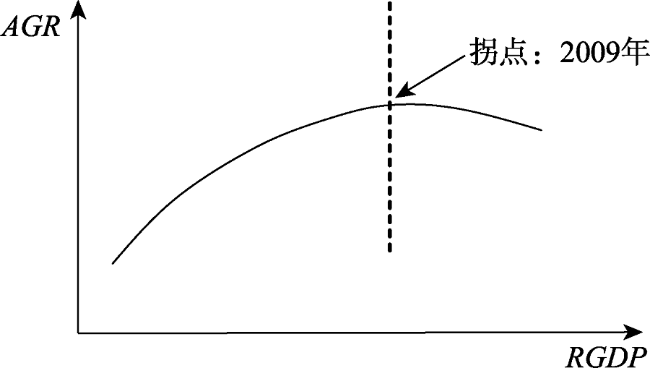
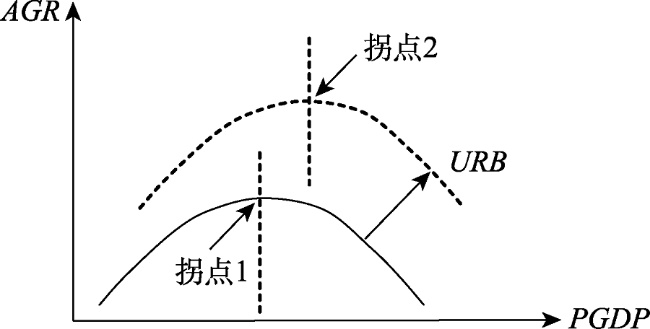
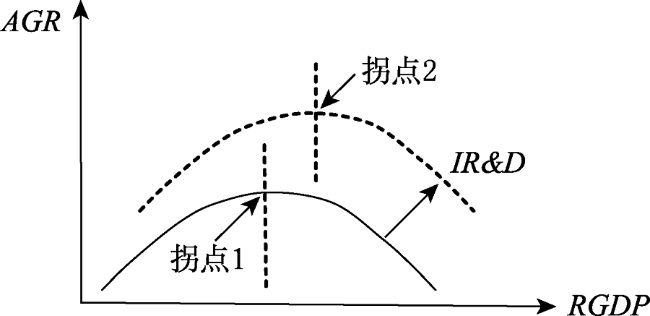
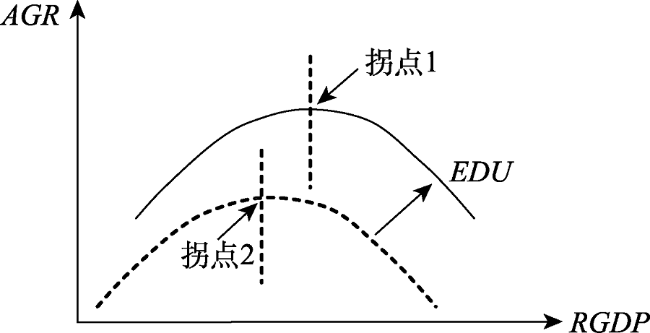
As human society evolves from agrarian economy to industrial dominated urban economy and further to the knowledge economy, peasants' livelihood has shifted from mainly undertaking agriculture to more diversified employments and income sources. However, peasants' income growth depends on their capability in getting adapted to the human society evolutions. Peasants' income growth is the key index to reflect peasants' livelihood adaptability and self-development capability. The paper investigates the coupled relationship between peasants' income growth and provincial economic development of China in the period 1995-2015. The panel data is used in the research. The results show that there is clear spatial-temporal differences of peasants' livelihood response to the economic development. The year 2009 is the turning point at which the growth rate of rural per capita net income in China starts to decrease. The turning point of rural per capita net income in central and western China appears in 2005 while eastern China finds the rural per capita net income decrease in 2012. This indicates that difficulties in peasants' income growth have already appeared in China and the situation in central and western China emerged earlier than that in eastern China. This also implies that peasants' capability fails to adapt to the changing external circumstances as China's reform and opening-up goes deep, which provides both opportunities and challenges to peasants' livelihood. In this process, the study shows that both urbanization development and scientific input contribute to peasants' income growth while the peasants' low educational level has restricted peasants' livelihood and their capability in obtaining steady income. In 2017, China announced its rural revitalization strategy which aims to promote rural development in a comprehensive way. To achieve prosperous livelihood for the peasants is the core aspect of the strategy. In the aim of realizing China's rural revitalization strategy, it is necessary to help peasants to achieve steady income growth in the long run. Thus, the paper suggests to promote ruralization and rural transformation which create a platform for peasants to generate steady income. Also it is important to improve peasants' educational level so as to enhance their resilient capability against external changes and improve their livelihood.
LI Yuheng , SONG Chuanyao , YAN Jiayu , LIU Yansui . The spatial-temporal difference of peasants' livelihood response and enlightenments to rural revitalization strategy[J]. GEOGRAPHICAL RESEARCH, 2019 , 38(11) : 2595 -2605 . DOI: 10.11821/dlyj020181314
表1 全样本回归分析结果Tab. 1 Results of full sample regression analysis |
| 因变量 | AGR全样本回归 | |||
|---|---|---|---|---|
| 模型1 | 模型2 | 模型3 | 模型4 | |
| RGDP | 4.350e-04*** (0.551e-04) | 2.700e-04*** (1.960e-04) | 6.770e-04*** (0.590e-04) | 7.260e-04*** (0.560e-04) |
| RGDP2 | -65.900e-08*** (11.800e-08) | -49.900e-08*** (25.500e-08) | -113.000e-08*** (16.300e-08) | -108.000e-08*** (12.000e-08) |
| URB | 0.093* (0.067) | |||
| URB×RGDP | 0.470e-04*** (3.280e-04) | |||
| IR&D | 0.670 (0.830) | |||
| IR&D×RGDP | 12.000 e-04***(23.000 e-04) | |||
| EDU | 0.107* (0.087) | |||
| EDU×RGDP | -1.500e-04*** (3.000e-04) | |||
| 常量 | 0.042 | 0.012 | 0.006 | 0.008 |
| 观测样本量 | 630 | 630 | 630 | 630 |
| R2 | 0.630 | 0.378 | 0.500 | 0.390 |
注:***、*分别表示显著性水平为1%、10%。 |
| [1] |
刘彦随 . 中国新时代城乡融合与乡村振兴. 地理学报, 2018,73(4):637-650.
[
|
| [2] |
|
| [3] |
|
| [4] |
|
| [5] |
李玉恒, 阎佳玉, 武文豪 , 等. 世界乡村转型历程与可持续发展展望. 地理科学进展, 2018,37(5):627-635.
[
|
| [6] |
尹成杰 . 农民持续增收动力: 内部动力与外部动力相结合. 中国农村经济, 2006, ( 1):4-10.
[
|
| [7] |
|
| [8] |
柯炳生 . 关于我国农民收入问题的若干思考. 农业经济问题, 2005, ( 1):25-30.
[
|
| [9] |
李小云, 董强, 饶小龙 , 等. 农户脆弱性分析方法及其本土化应用. 中国农村经济, 2007, ( 4):32-39.
[
|
| [10] |
杨伦, 刘某承, 闵庆文 , 等. 农户生计策略转型及对环境的影响研究综述. 生态学报, 2019,39(21):1-11.
[
|
| [11] |
|
| [12] |
|
| [13] |
|
| [14] |
|
| [15] |
李斌, 李小云, 左停 . 农村发展中的生计途径研究与实践. 农业技术经济, 2004, ( 4):10-16.
[
|
| [16] |
|
| [17] |
|
| [18] |
黄宗智 . 华北的小农经济与社会变迁. 北京: 中华书局, 2000.
[
|
| [19] |
李小建, 乔家君 . 欠发达地区农户的兼业演变及农户经济发展研究: 基于河南省1000农户的调查分析. 中州学刊, 2003, ( 5):58-61.
[
|
| [20] |
|
| [21] |
刘英杰, 刘家益, 李丹 . 中国农民收入增长的政策效应与发展走向分析. 农业经济与管理, 2012, ( 4):50-58.
[
|
| [22] |
|
| [23] |
|
| [24] |
|
| [25] |
|
| [26] |
|
| [27] |
周一星, 田帅 . 以“五普”数据为基础对中国分省城市化水平数据修补. 统计研究, 2006,23(1):62-65.
[
|
| [28] |
国家发展和改革委员会价格司. 全国农产品成本收益资料汇编. 北京: 中国统计出版社, 2010: 3-5.
[ Department of Price of National Development and Reform Commission. National Agricultural Product Cost-benefit Data Compilation. Beijing: China Statistics Press, 2010: 3-5]
|
| [29] |
李玉恒, 阎佳玉, 刘彦随 . 基于乡村弹性的乡村振兴理论认知与路径研究. 地理学报, 2019,74(10):2001-2010.
[
|
/
| 〈 |
|
〉 |