The key element characteristics of the optimized development and its function upgrade in the Guangdong-Hong Kong-Macao Greater Bay Area
Received date: 2020-05-08
Request revised date: 2020-09-09
Online published: 2020-11-20
Copyright
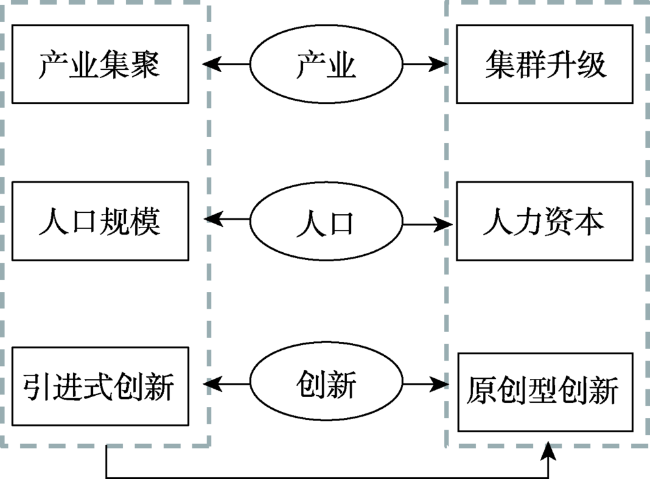
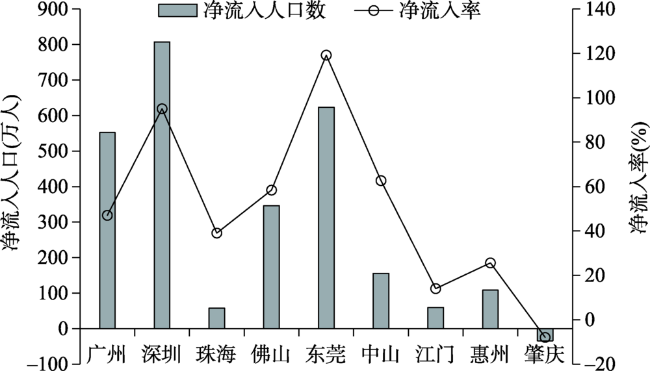
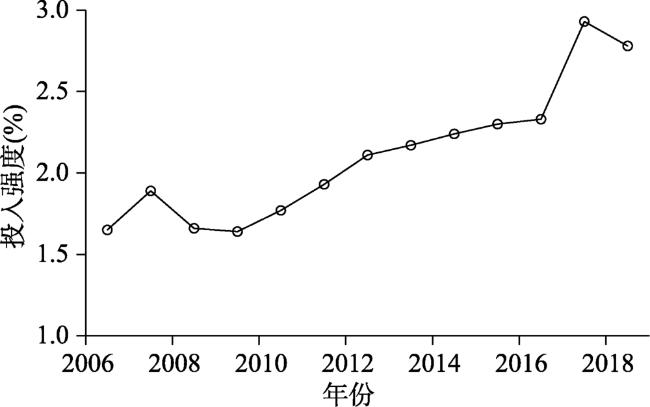
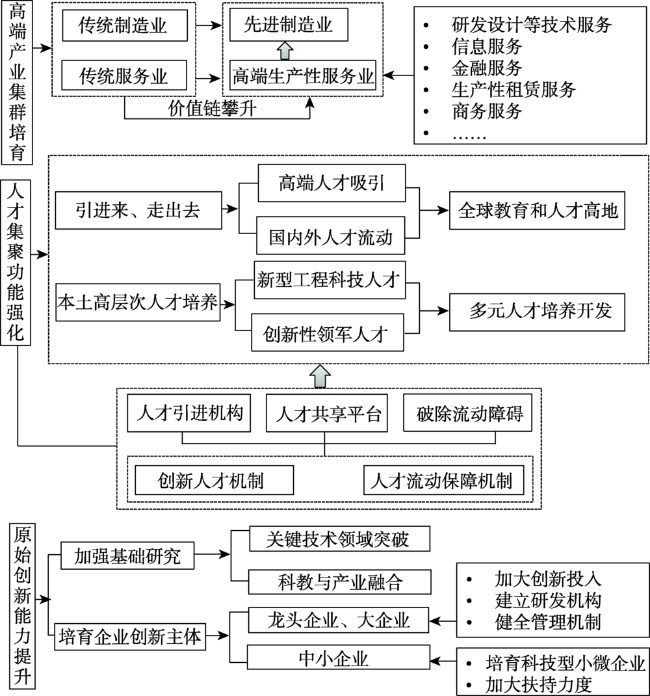
The development of urban agglomerations are generally accompanied by the optimization and upgrading of industrial structure, population transfer and quality improvement, and the improvement and deepening of innovation capabilities. The Guangdong-Hong Kong-Macao Greater Bay Area has attracted worldwide attention as the new engine of China's economy and an important growth pole that promotes global economic development. Based on the three key elements of industry, population, and innovation, this paper takes the Greater Bay Area as the research area, relying on the theory of the function upgrade of the key elements of urban agglomeration development, selects representative index of the level of industrial clusters, population mobility, and technological innovation support, uses quantitative measurement, statistical description, and qualitative analysis methods to analyze the current functional status and existing problems of key elements in the study area. At the industrial level, the service-oriented economy has a characteristic of agglomeration, but the degree of advanced industrial clusters is not enough. The Guangdong-Hong Kong-Macao Greater Bay Area has not yet formed a number of high-end industrial clusters with distinctive regional characteristics and outstanding international competitiveness, including high-end producer services, high-tech manufacturing, and strategic emerging industries. At the demographic level, the Greater Bay Area has strong attractiveness, but the degree of talent concentration, high-end and internationalization is low and far below international standards. At the innovation level, the Greater Bay Area has a certain foundation and vitality for science and technology innovation, but the original innovation capabilities are insufficient. Especially, the relative lack of cutting-edge talents is also a constraint to the original highland creation in this region. In response to the existing problems, we propose a path to upgrade the functions of key elements such as the cultivation of high-end manufacturing and producer services, the enhancement of talent gathering functions, the improvement of talent flow guarantee mechanism, and the enhancement of original innovation capabilities. The suggestions in the paper should promote the further optimized development of the Greater Bay Area and provide certain decision-making reference for enhancing the influence and competitiveness of the bay areas in global economy.
KANG Lei , LIU Yi . The key element characteristics of the optimized development and its function upgrade in the Guangdong-Hong Kong-Macao Greater Bay Area[J]. GEOGRAPHICAL RESEARCH, 2020 , 39(9) : 2015 -2028 . DOI: 10.11821/dlyj020200392
表1 2017年粤港澳大湾区各城市主要产业的区位熵Tab. 1 Location entropy of major industries in each city of the Guangdong-Hong Kong-Macao Greater Bay Area in 2017 |
| 地区 | 工业 | 批发和 零售业 | 交通运输、仓储 和邮政业 | 住宿和 餐饮业 | 金融业 | 房地产业 | 信息传输、软件和 信息技术服务业 |
|---|---|---|---|---|---|---|---|
| 广州 | 0.857 | 1.121 | 1.515 | 0.908 | 0.849 | 0.768 | 1.089 |
| 深圳 | 1.312 | 0.804 | 0.678 | 0.790 | 1.214 | 0.759 | 1.648 |
| 珠海 | 1.430 | 0.735 | 0.446 | 0.953 | 0.680 | 0.665 | 0.926 |
| 佛山 | 1.879 | 0.521 | 0.928 | 0.359 | 0.405 | 0.804 | 0.702 |
| 东莞 | 1.589 | 0.874 | 0.752 | 0.839 | 0.563 | 0.787 | 0.916 |
| 中山 | 1.623 | 0.746 | 0.503 | 0.510 | 0.538 | 0.693 | 0.887 |
| 江门 | 1.573 | 0.567 | 0.804 | 0.638 | 0.471 | 0.549 | 0.781 |
| 惠州 | 1.673 | 0.785 | 0.487 | 1.088 | 0.462 | 0.757 | 0.766 |
| 肇庆 | 1.131 | 0.745 | 0.999 | 1.283 | 0.331 | 0.547 | 0.855 |
| 香港 | 0.084 | 1.578 | 1.254 | 1.430 | 1.696 | 1.828 | 0.686 |
| 澳门 | 0.045 | 0.430 | 0.578 | 2.717 | 0.607 | 0.953 | 0.000 |
| 粤港澳 | 0.888 | 1.407 | 1.033 | 1.260 | 1.367 | 1.716 | 1.507 |
表2 2018年珠三角各市制造业细分行业产值占GDP比重统计Tab. 2 The proportion of the manufacturing sector’s output in GDP in the cities of the Pearl River Delta in 2018 (%) |
| 行业 | 广州 | 深圳 | 珠海 | 佛山 | 惠州 | 东莞 | 中山 | 江门 | 肇庆 |
|---|---|---|---|---|---|---|---|---|---|
| 烟酒食品加工业 | 2.17 | 0.62 | 1.05 | 1.92 | 0.57 | 1.34 | 1.07 | 5.21 | 1.28 |
| 纺织皮革制鞋业 | 0.68 | 0.58 | 0.60 | 3.46 | 1.23 | 3.40 | 2.29 | 2.61 | 1.55 |
| 造纸印刷文娱制造业 | 0.49 | 0.99 | 0.73 | 1.95 | 0.85 | 4.75 | 1.99 | 3.12 | 1.58 |
| 石化塑胶制造业 | 2.76 | 1.39 | 4.19 | 4.39 | 12.64 | 3.88 | 3.32 | 4.24 | 2.64 |
| 矿物及金属冶炼制造业 | 0.80 | 1.20 | 2.37 | 9.85 | 2.25 | 4.31 | 2.91 | 6.13 | 10.38 |
| 通用设备制造业 | 1.28 | 0.79 | 2.39 | 2.81 | 0.51 | 1.54 | 2.04 | 1.01 | 0.67 |
| 专用设备制造业 | 0.32 | 1.63 | 1.07 | 1.98 | 0.22 | 1.71 | 0.68 | 0.45 | 0.61 |
| 汽车制造业 | 5.23 | 0.65 | 0.97 | 2.18 | 1.25 | 0.88 | 1.14 | 1.42 | 1.25 |
| 电器机械和器材制造业 | 0.76 | 2.19 | 7.24 | 10.51 | 3.05 | 3.85 | 5.55 | 3.85 | 0.71 |
| 计算机、通信和其他电子设备制造业 | 1.62 | 23.06 | 6.99 | 1.81 | 15.57 | 16.6 | 4.42 | 2.64 | 1.81 |
注:数据来源于《广东统计年鉴2019》,辅以2018年市级国民经济和社会发展统计公报等资料补充。 |
真诚感谢各位匿名评审专家针对本文题目拟定、要素功能特征分析部分的研究思路、结论梳理提升以及论文撰写规范等方面给予的详实而富有建设性的修改意见,使本文获益匪浅。
| [1] |
郭荣朝, 宋双华, 苗长虹. 城市群结构优化与功能升级: 以中原城市群为例. 地理科学, 2011, 31(3): 322-328.
[
|
| [2] |
陆大道. 中国区域发展的新因素与新格局. 地理研究, 2003, 22(3): 261-271.
[
|
| [3] |
王吉霞. 产业结构优化升级与经济发展阶段的关系分析. 经济纵横, 2009, (11): 71-73.
[
|
| [4] |
刘伟, 李绍荣. 产业结构与经济增长. 中国工业经济, 2002, (5): 14-21.
[
|
| [5] |
杨小玲, 范小燕. 人口对区域发展的作用. 科技创新导报, 2011, (35): 236.
[
|
| [6] |
王桂新. 中国人口迁移与区域经济发展关系之分析. 人口研究, 1996, (6): 9-16.
[
|
| [7] |
蔡昉. 中国经济增长如何转向全要素生产率驱动型. 中国社会科学, 2013, (1): 57-72, 207.
[
|
| [8] |
林先扬. 粤港澳大湾区城市群经济整合研究. 广州: 广东人民出版社, 2017.
[
|
| [9] |
张震. 粤港澳大湾区产业结构变迁对经济协调发展的影响. 科技进步与对策, 2019, 36(7): 48-55.
[
|
| [10] |
王方方, 杨焕焕. 粤港澳大湾区城市群空间经济网络结构及其影响因素研究: 基于网络分析法. 华南师范大学学报(社会科学版), 2018, (4): 110-120+191.
[
|
| [11] |
徐维军, 张晓晴, 张卫国. 政策视角下粤港澳大湾区城市群产业结构问题研究. 城市观察, 2020, (2): 7-19.
[
|
| [12] |
覃成林, 潘丹丹. 粤港澳大湾区产业结构升级及经济绩效分析. 经济与管理评论, 2020, 36(1): 137-147.
[
|
| [13] |
杨东亮, 李朋骜. 人口集聚对粤港澳大湾区劳动生产率的影响研究. 吉林大学社会科学学报, 2020, 60(2): 85-97+221.
[
|
| [14] |
吴志才, 张凌媛, 黄诗卉. 粤港澳大湾区旅游经济联系的空间结构及协同合作模式. 地理研究, 2020, 39(6): 1370-1385.
[
|
| [15] |
范剑勇. 产业集聚与地区间劳动生产率差异. 经济研究, 2006, (11): 72-81.
[
|
| [16] |
尹继佐. 世界城市与创新城市. 上海: 上海社会科学院出版社, 2003: 28-29.
[
|
| [17] |
金煜, 陈钊, 陆铭. 中国的地区工业集聚: 经济地理、新经济地理与经济政策. 经济研究, 2006, (4), 79-89.
[
|
| [18] |
程杰. 城市的活力之源: 流动人口对城市经济发展的系统性影响. 城市与环境研究, 2018, (4): 54-69.
[
|
| [19] |
|
| [20] |
|
| [21] |
杨宇, 戚伟, 马丽, 等; “十四五”期间建设世界级城市群的人口功能优化布局. 中国科学院院刊, 2020, 35(7): 835-843.
[
|
| [22] |
王进富, 黄鹏飞. 共同演化视角下创新驱动发展协同动力与路径选择. 改革与战略, 2015, 31(4): 70-73.
[
|
| [23] |
任保平, 郭晗. 经济发展方式转变的创新驱动机制. 学术研究, 2013, (2): 69-76.
[
|
| [24] |
张霄宇, 柴慧敏. 国内外创新驱动发展战略理论研究综述. 中共郑州市委党校学报, 2018, (3): 40-45.
[
|
| [25] |
|
| [26] |
唐承丽, 吴艳, 周国华. 城市群、产业集群与开发区互动发展研究: 以长株潭城市群为例. 地理研究, 2018, 37(2): 292-306.
[
|
| [27] |
贺灿飞, 潘峰华. 产业地理集中、产业集聚与产业集群测量与辨识. 地理科学进展, 2007, 26(2): 1-13.
[
|
| [28] |
刘盛和, 邓羽, 胡章. 中国流动人口地域类型的划分方法及空间分布特征. 地理学报, 2010, 65(1): 1187-1197.
[
|
| [29] |
卢方元, 刘龙飞. 中部六省R&D经费投入与结构分析. 地域研究与开发, 2011, 30(5): 26-29.
[
|
| [30] |
辜胜阻, 曹冬梅, 杨嵋. 构建粤港澳大湾区创新生态系统的战略思考. 中国软科学, 2018, (4): 1-9.
[
|
| [31] |
林先扬. 粤港澳大湾区科技创新发展特征、瓶颈与策略探讨. 岭南学刊, 2018, (4): 27-32.
[
|
| [32] |
伍凤兰, 陶一桃, 申勇. 湾区经济演进的动力机制研究: 国际案例与启示. 科技进步与对策, 2015, 32(23): 37-41.
[
|
| [33] |
赵晓斌, 强卫, 黄伟豪, 等. 粤港澳大湾区发展的理论框架与发展战略探究. 地理科学进展, 2018, 37(12): 1597-1608.
[
|
| [34] |
刘胜. 以高端生产性服务业推动粤港澳大湾区制造业高质量发展. 广东经济, 2019, (8): 12-15.
[
|
| [35] |
陈雪玉. 粤港澳大湾区人才体制机制创新研究. 探求, 2019, (6): 37-43.
[
|
| [36] |
余碧仪, 黄何, 王静雯. 国际三大湾区科技人才发展经验对粤港澳大湾区的启示. 科技创新发展战略研究, 2019, 3(3): 45-50.
[
|
| [37] |
王玥. 人口集聚对产业结构升级的影响及机制研究. 合肥: 安徽大学博士学位论文, 2018.
[
|
| [38] |
孙晓芳, 韩佳宾. 太原都市圈人口与产业空间集聚演化与匹配性研究. 山西高等学校社会科学学报, 2020, 32(5): 7-15.
[
|
| [39] |
张其仔, 许明. 中国参与全球价值链与创新链、产业链的协同升级. 改革, 2020, (6): 58-70.
[
|
| [40] |
周春山, 王宇渠, 徐期莹, 等. 珠三角城镇化新进程. 地理研究, 2019, 38(1): 45-63.
[
|
| [41] |
赵建军, 胡春立. 让科技创新与人才驱动同频共振. 科技日报, 2019-04-01(4).
[
|
/
| 〈 |
|
〉 |