The deconstruction of the evolution of Chinese and Western marine geopolitical thoughts: Based on the analysis framework of human-ocean relation
Received date: 2020-01-20
Accepted date: 2020-07-16
Online published: 2021-04-10
Copyright
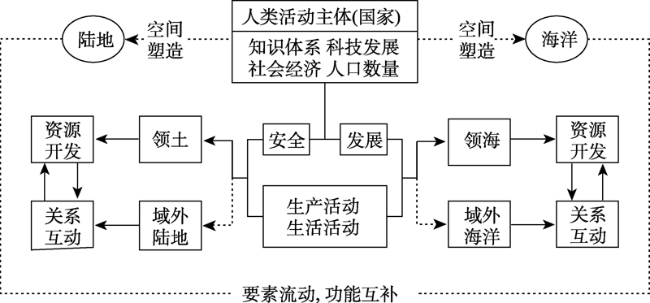
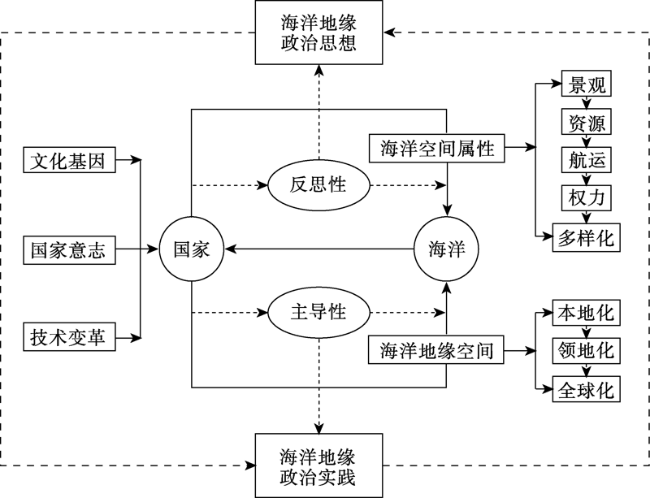
Marine geopolitics focuses mainly on the relationships between the politics and marine geographical environment and are committed to shaping political and economic pattern of the world theoretically and practically. Starting with the interplay of human and ocean, this paper constructs an analytical framework for marine geopolitical thoughts evolution, discusses the elements of human-ocean relation and state-ocean interaction mechanism, and sorts out the evolution path, content composition and stage features of the marine geopolitical thoughts of China and the West. Human-ocean relation, the interplay between human activities and ocean, is composed of the main body of human activities, land and ocean. The state is one of the most important social-spatial organizational units for studying human-ocean relation, and it is also one of the main research objects in the marine geopolitics. National will and demand, national cultural genes, and technological change are the main factors for the state and the ocean relations. As human-ocean relation progresses, some stage features appear in both China and the Western countries, such as “from land to sea, using marine resources to support land”, “expanding from land to sea, and opening up sea routes”, “checking and balancing the land with the sea, the conflict between the sea and the land”, and “coordinating the land and the sea”. From the perspective of the evolution of the relation between the state and the ocean, Chinese and Western marine geopolitical thoughts have both commonalities and significant differences. On the one hand, with the similar trends developing and many thoughts in common, they have all specifically evolved against the historical background. On the other hand, some major differences in philosophical basis, thinking concepts, and cognitive horizons exist between Western countries and China’s marine geopolitical thoughts from different periods of time. “Realism” and “peace-cooperativism”, “conflict expansion” and “negative conservatism”, “global vision” and “Huaxia Center” formed a striking contrast in the evolution of Chinese and Western marine geopolitical thoughts. In the future, China should better understand the interrelationships between critical inheritance and transformation, gather together marine geopolitical thoughts under the background of marine shared community for mankind, and enrich Chinese marine geopolitical theoretical system.
PENG Fei , FU Ningning , HAN Zenglin , LIU Tianbao , YANG Xin . The deconstruction of the evolution of Chinese and Western marine geopolitical thoughts: Based on the analysis framework of human-ocean relation[J]. GEOGRAPHICAL RESEARCH, 2021 , 40(2) : 556 -570 . DOI: 10.11821/dlyj020200051
真诚感谢匿名评审专家在论文评审中所付出的时间和精力,评审专家对“国家”等关键概念、海洋地缘政治思想阶段划分等提出的修改意见,使本文获益匪浅。
| [1] |
陆大道, 杜德斌. 关于加强地缘政治地缘经济研究的思考. 地理学报, 2013,68(6):723-727.
[
|
| [2] |
韩增林, 彭飞, 张耀光, 等. 海洋地缘政治研究进展与中国海洋地缘环境研究探索. 地理科学, 2015,35(2):129-136.
[
|
| [3] |
林肯·佩恩. 海洋与文明. 陈建军, 罗燚英 译. 天津: 天津人民出版社, 2017: 185-1367.
[
|
| [4] |
张耀光. 中国海洋政治地理学: 海洋地缘政治与海疆地理格局的时空演变. 北京: 科学出版社, 2004: 1-174.
[
|
| [5] |
张耀光. 中国的海疆与我国海洋地缘政治战略. 人文地理, 1996, (2):47-50.
[
|
| [6] |
刘笑阳. 海洋强国战略研究: 理论探索、历史逻辑和中国路径. 北京: 中央党校博士学位论文, 2016: 80-148.
[
|
| [7] |
胡志丁, 骆华松, 葛岳静, 等. 经典地缘政治理论研究视角及其对发展中国新地缘政治理论的启示. 热带地理, 2014,34(2):184-190.
[
|
| [8] |
杜德斌, 马亚华. “一带一路”: 中华民族复兴的地缘大战略. 地理研究, 2015,34(6):1005-1014.
[
|
| [9] |
宋涛, 陆大道, 梁宜. 大国崛起的地缘政治战略演化: 以美国为例. 地理研究, 2017,36(2):215-225.
[
|
| [10] |
彭飞, 富宁宁, 张琦琦, 等. 海洋地缘环境系统构建及其脆弱性解析. 世界地理研究, 2019,28(2):133-140.
[
|
| [11] |
陆大道. 当代中国的全球观念与全球战略. 地理科学, 2016,36(4):483-490.
[
|
| [12] |
曹文振. 全球化时代的中美海洋地缘政治与战略. 太平洋学报, 2010,18(12):45-51.
[
|
| [13] |
郑永年. 中国的海洋地缘政治与陆地地缘政治. 外交评论, 2014,31(1):1-11.
[
|
| [14] |
宋长青, 葛岳静, 刘云刚, 等. 从地缘关系视角解析“一带一路”的行动路径. 地理研究, 2018,37(1):3-19.
[
|
| [15] |
吴传钧. 论地理学的研究核心: 人地关系地域系统. 经济地理, 1991,11(3):1-6.
[
|
| [16] |
张耀光. 从人地关系地域系统到人海关系地域系统: 吴传均院士对中国海洋地理学的贡献. 地理科学, 2008,28(1):6-9.
[
|
| [17] |
韩增林, 刘桂春. 人海关系地域系统探讨. 地理科学, 2007,27(6):761-767.
[
|
| [18] |
王礼茂, 牟初夫, 陆大道. 地缘政治演变驱动力变化与地缘政治学研究新趋势. 地理研究, 2016,35(1):3-13.
[
|
| [19] |
强世功. 陆地与海洋: “空间革命”与世界历史的“麦金德时代”. 开放时代, 2018, (6):103-126.
[
|
| [20] |
陆俊元. 论地缘政治中的技术因素. 国际关系学院学报, 2005, (6):9-14.
[
|
| [21] |
胡浩, 葛岳静, 胡志丁. 南海问题的大周边地缘环境. 世界地理研究, 2012,21(3):36-44.
[
|
| [22] |
刘天宝, 韩增林, 彭飞. 人海关系地域系统的构成及其研究重点探讨. 地理科学, 2017,37(10):1527-1534.
[
|
| [23] |
徐象平. 人地观的演变与地理学思想的发展. 西北大学学报: 自然科学版, 2005, (1):122-124.
[
|
| [24] |
刘桂春. 人海关系与人海关系地域系统理论研究. 大连: 辽宁师范大学博士学位论文, 2007: 37-52.
[
|
| [25] |
刘天宝, 杨芳芳, 韩增林, 等. 人海关系地域系统视角下海洋本体的解构与研究重点. 地理科学, 2019,39(8):1321-1329.
[
|
| [26] |
黑格尔. 法哲学原理. 张企泰, 范扬 译. 北京: 商务印书馆, 1997: 257-360.
[
|
| [27] |
安东尼奥·葛兰西. 葛兰西文选. 李鹏程 译. 北京: 人民出版社, 2008: 1-403.
[
|
| [28] |
唐士其. 西方政治思想史. 北京: 北京大学出版社, 2002: 40-414.
[
|
| [29] |
|
| [30] |
科林·弗林特, 皮特·泰勒. 政治地理学. 刘云刚译. 北京: 商务印书馆, 2016: 138-185.
[
|
| [31] |
秦奇, 成升魁, 李飞, 等. 1992年以来国内外地缘政治比较研究: 基于地理学视角的分析. 地理科学进展, 2017,36(12):1475-1488.
[
|
| [32] |
赵宗金. 海洋文化与海洋意识的关系研究. 中国海洋大学学报: 社会科学版, 2013, (5):13-17.
[
|
| [33] |
赵传海. 论文化基因及其社会功能. 河南社会科学, 2008, (2):50-52.
[
|
| [34] |
刘从德. 地缘政治学导论. 北京: 中国人民大学出版社, 2010: 1-256.
[
|
| [35] |
亚里士多德. 政治学. 吴寿彭译. 北京: 商务印书馆, 1965: 2-479.
[
|
| [36] |
希罗多德. 历史. 王以铸译. 北京: 商务印书馆, 2009: 405-797.
[
|
| [37] |
修昔底德. 伯罗奔尼撒战争史. 谢德风 译. 北京: 商务印书馆, 2009: 2-721.
[
|
| [38] |
徐松岩, 赵青青. 伪色诺芬《雅典政制》史料价值初探. 史学史研究, 2015, (2):63-67.
[
|
| [39] |
斯塔夫里阿诺斯. 全球通史: 从史前史到21世纪. 董书慧, 王昶, 徐正源 译. 北京: 北京大学出版社, 2005: 405-632.
[
|
| [40] |
刘中民. 世界海洋政治与中国海洋发展战略. 北京: 时事出版社, 2009: 158-175.
[
|
| [41] |
胡果·格劳秀斯. 海洋自由论. 宇川, 汤茜茜 译. 上海, 三联书店出版社, 2005: 1-225.
[
|
| [42] |
侯璐璐, 刘云刚. 政治地理学中生存空间概念的演变. 地理科学进展, 2019,38(5):637-647.
[
|
| [43] |
伊曼纽尔·莫里斯·沃勒斯坦. 沃勒斯坦精粹. 黄光耀, 洪霞 译. 南京: 南京大学出版社, 2003: 93-252.
[
|
| [44] |
哈尔福德·麦金德. 历史的地理枢纽. 林尔蔚, 陈江 译. 北京: 商务印书馆, 陈江译., 2011: 49-71.
[
|
| [45] |
阿尔弗雷德·塞耶·马汉. 海权论. 一兵 译. 北京: 同心出版社, 2012: 1-256.
[
|
| [46] |
尼古拉斯·斯皮克曼. 和平地理学.愈海杰译. 上海: 上海人民出版社, 2016: 1-151.
[
|
| [47] |
杰弗里·帕克. 二十世纪的西方地理政治思想. 李亦鸣, 徐小杰, 张荣忠 译. 北京: 解放军出版社, 1992: 1-207.
[
|
| [48] |
索尔·伯纳德·科恩. 地缘政治学: 国际关系的地理学. 严春松 译. 上海: 上海社会科学院出版社, 2014: 1-66.
[
|
| [49] |
刘中民. 中国国际问题研究视域中的国际海洋政治研究述评. 太平洋学报, 2009, (6):78-89.
[
|
| [50] |
罗伯特·基欧汉, 约瑟夫·奈. 权力与相互依赖.门洪华译. 北京: 北京大学出版社, 2012: 65-174.
[
|
| [51] |
|
| [52] |
|
| [53] |
安宁, 钱俊希, 陈晓亮, 等. 国际上的政治地理学研究进展与启示: 对《Political Geography》杂志2005—2015年载文的分析. 地理学报, 2016,71(2):217-235.
[
|
| [54] |
刘云刚, 王丰龙. 中国古代政治地理思想探究. 地理科学进展, 2017,36(12):1450-1462.
[
|
| [55] |
杨国桢. 中国海洋文明专题研究. 北京: 人民出版社, 2016: 1-2950.
[
|
| [56] |
王子今. 论秦始皇南海置郡. 陕西师范大学学报: 哲学社会科学版, 2017,46(1):34-40.
[
|
| [57] |
川胜太平. 文明的海洋史观. 刘军译. 上海: 上海文艺出版社, 2014: 1-114.
[
|
| [58] |
余潇枫, 章雅荻 . 和合主义: 国际关系理论的中国范式. 世界经济与政治, 2019, (7):49-76.
[
|
| [59] |
郑士波. 郑成功海权思想及实践研究. 北京: 中国艺术研究院硕士学位论文, 2015: 21-59.
[
|
| [60] |
周益锋. 晚清海防思想研究. 西安: 西北大学博士学位论文, 2004: 49-121.
[
|
| [61] |
时平. 孙中山海权思想研究. 海洋开发与管理, 1998, (1):76-79.
[
|
| [62] |
韩增林, 张耀光, 栾维新, 等. 海洋经济地理学研究进展与展望. 地理学报, 2004,59(s1):183-190.
[
|
| [63] |
曲金良. 环中国海文化共同体重建大战略: “21世纪海上丝绸之路”的文化精义. 人民论坛·学术前沿, 2014, (24):54-65.
[
|
| [64] |
杨宇, 王礼茂, 江东, 等. 美国对伊朗石油禁运与全球能源安全. 地理研究, 2018,37(10):1879-1898.
[
|
/
| 〈 |
|
〉 |