Socio-spatial effects of urban shantytown renovation in Nanjing
Received date: 2020-03-23
Accepted date: 2020-06-22
Online published: 2021-06-10
Copyright
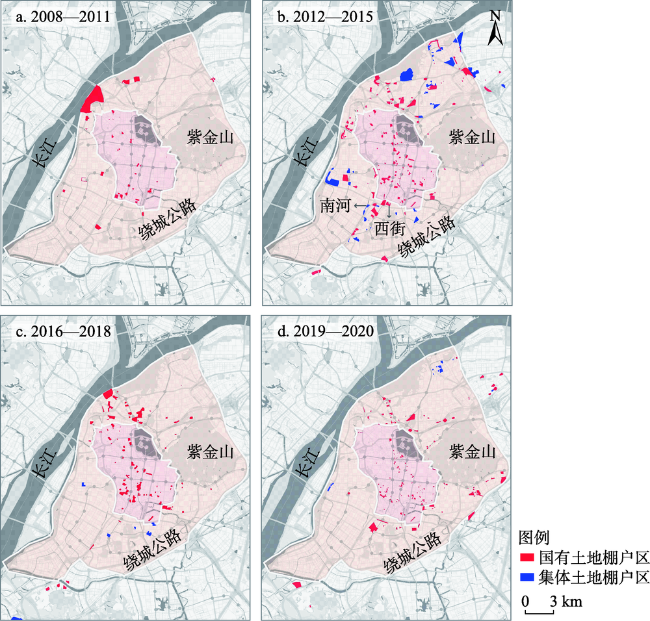
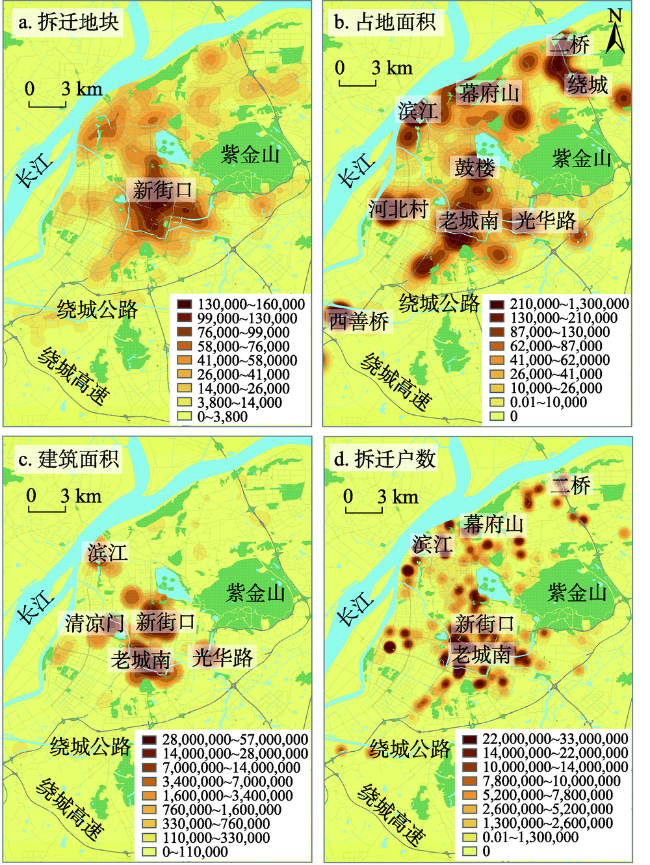
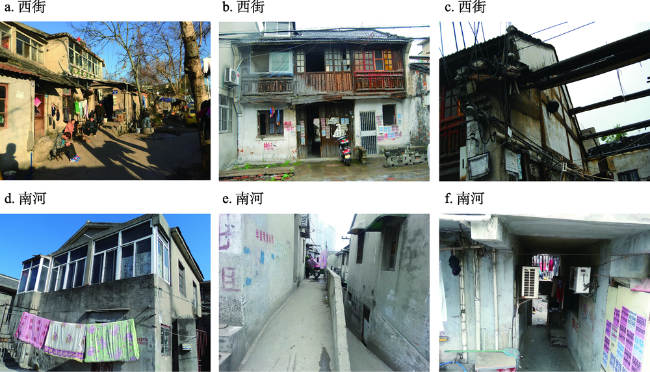
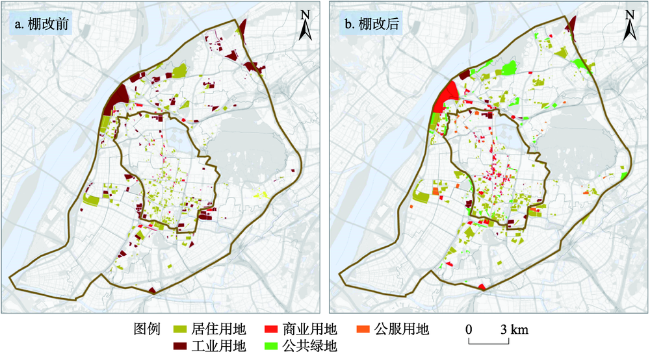
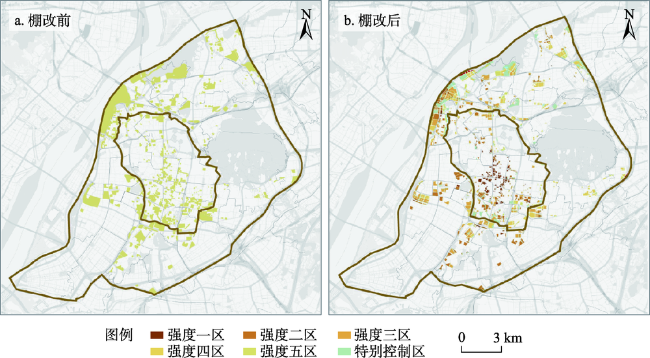
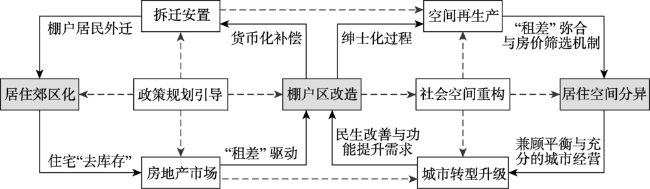
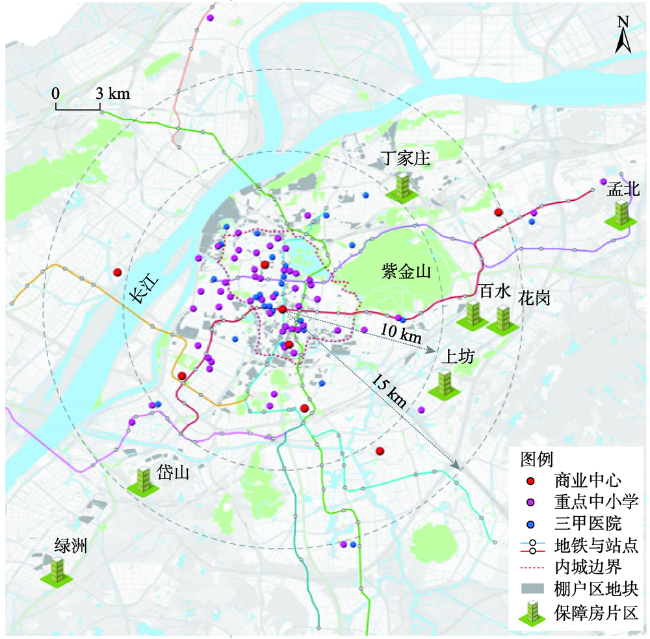
Shantytown, as a type of urban living space with a history of centuries, is a negative space where the function is gradually declining and most of residents are in poverty. It is the collective embodiment of the imbalanced and insufficient development of urban social space. Therefore, it restricts the high-quality and sustainable development of urban society and economy. The shantytown renovation is a livelihood project and development project aiming to improve the living conditions of the low-income groups having difficulties in housing, and to arouse the motive force and vitality of urban development. It is also a space redevelopment process which is intended to pursue the balanced and sufficient development of urban social space, and it deeply affects the living of shantytown residents and the reconstruction of urban social space. With Nanjing as an example, based on the spatial analysis of 434 land plots of shantytown renovation from 2008 to 2020, in combination with the typical cases of Xijie and Nanhe as well as the questionnaire data of demolition and resettlement residents, and based on the overall grasping of the temporal and spatial characteristics of shantytown renovation in Nanjing, this paper mainly discusses the driving mechanism and social space reconstruction effect of shantytown renovation. The shantytown renovation plays a positive role in improving residents' housing conditions, sufficiently excavating the potential land values, and improving the quality of urban functions, etc. However, the reconstruction of spatial gentrification in shantytowns and the centralized resettlement of the poverty-stricken groups on urban fringes have led to the imbalanced development of new urban space and the insufficient social security for the demolition and resettlement groups. Finally, aiming at the social space problems which will possibly be brought about by the agglomeration of poor groups in suburbs, this paper proposes suggestions on the policy formulation and planning adjustment for shantytown renovation, so as to realize the sufficient win-win results of many stakeholders in shantytown renovation, and promote more balanced development of urban social space.
SONG Weixuan , YUAN Yaqi , GU Yue , XU Di , LIU Chunhui , WANG Yi . Socio-spatial effects of urban shantytown renovation in Nanjing[J]. GEOGRAPHICAL RESEARCH, 2021 , 40(4) : 1008 -1024 . DOI: 10.11821/dlyj020200243
表1 南京主城区2008—2020年分阶段棚户区改造规模Tab. 1 Scale of phased shantytown renovation in Nanjing main city from 2008 to 2020 |
| 阶段划分 | 地块数量(个) | 拆迁户数(户) | 占地面积(万m2) | 建筑面积(万m2) | |
|---|---|---|---|---|---|
| 住宅 | 非住宅 | ||||
| 2008—2011年 | 47 | 17600 | 475.72 | 374.98 | 1.14 |
| 2012—2015年 | 111 | 31052 | 678.19 | 368.80 | 288.12 |
| 2016—2018年 | 130 | 20390 | 358.37 | 177.33 | 61.04 |
| 2019—2020年 | 146 | 23640 | 366.87 | 194.67 | 26.74 |
| 合计 | 434 | 92682 | 1879.15 | 1115.78 | 377.04 |
注:根据南京市住房保障和房产局提供数据整理。 |
表2 西街、南河片区棚改前后土地开发强度和性质变化Tab. 2 Land use function and intensity before and after shantytown renovation of Xijie and Nanhe districts in Nanjing |
| 案例片区 | 建筑面积(m2) | 限高(m) | 容积率 | 用地性质 | |
|---|---|---|---|---|---|
| 西街 | 改造前 | 44.04 | 7 | 0.93 | 居住 |
| 改造后 | 49.88 | 7 | 1.05 | 居住、商办、商住、文娱、绿地 | |
| 南河 | 改造前 | 15.48 | 12 | 0.86 | 居住、工业 |
| 改造后 | 44.51 | 100 | 3.00 | 居住、商办、商住、绿地 | |
注:根据南京市住房保障和房产局、南京市规划与自然资源局提供数据整理。 |
表3 2020年“江南六区”棚改地块上新建住宅与各区所有住宅的平均售租价格比较Tab. 3 Comparison of the average selling and rent price of the new-build houses after the shantytown renovation and all the houses in each district in 2020 |
| 行政区 | 棚改地块上新建住宅 | 行政区内所有住宅 | |||
|---|---|---|---|---|---|
| 平均售价(元/m2) | 平均租金(元/m2/月) | 平均售价(元/m2) | 平均租金(元/m2/月) | ||
| 鼓楼区 | 47298 | 57.7 | 45990 | 49.6 | |
| 玄武区 | 49731 | 60.1 | 39298 | 45.9 | |
| 秦淮区 | 46613 | 57.1 | 36858 | 46.9 | |
| 建邺区 | 51778 | 56.9 | 43910 | 47.0 | |
| 栖霞区 | 33553 | 43.5 | 29763 | 38.3 | |
| 雨花台区 | 38049 | 52.5 | 28073 | 41.0 | |
| 江南六区 | 45711 | 55.3 | 39435 | 45.7 | |
数据来源:中国房价行情平台(www.creprice.cn)。 |
表4 2009—2019年南京“江南六区”住宅小区平均房价分异指数变化Tab. 4 Theil indexes of average housing selling price of Nanjing main city from 2009 to 2019 |
| 年份 | 2009 | 2010 | 2011 | 2012 | 2013 | 2014 | 2015 | 2016 | 2017 | 2018 | 2019 | |
|---|---|---|---|---|---|---|---|---|---|---|---|---|
| Theil指数 | 0.013 | 0.014 | 0.013 | 0.013 | 0.014 | 0.013 | 0.014 | 0.017 | 0.015 | 0.016 | 0.017 | |
| 贡献率(%) | 区间 | 18.15 | 16.30 | 16.36 | 16.90 | 19.73 | 18.43 | 18.20 | 15.61 | 12.89 | 11.33 | 11.41 |
| 区内 | 81.85 | 83.70 | 83.64 | 83.10 | 80.27 | 81.57 | 81.80 | 84.39 | 87.11 | 88.67 | 88.59 | |
数据来源:中国房价行情平台(www.creprice.cn)。 |
表5 西街、南河片区拆迁安置居民棚改前后住宅面积比较Tab. 5 Residential area before and after shantytown renovation of Xijie and Nanhe districts |
| 案例片区 | 自有住房比例(%) | 平均套型面积(m2) | 人均住房面积(m2) | 各类住宅套型面积家庭占比(%) | ||||
|---|---|---|---|---|---|---|---|---|
| < 50 m2 | 50~65 m2 | 65~75 m2 | > 75 m2 | |||||
| 西街 | 改造前 | 31.2 | 14.5 | 7.6 | 61.6% | 32.8% | 5.2% | 0.4% |
| 改造后 | 100.0 | 51.1 | 26.9 | 38.8% | 32.8% | 26.2% | 2.2% | |
| 南河 | 改造前 | 67.1 | 127.0 | 43.5 | 18.8% | 19.2% | 23.3% | 38.7% |
| 改造后 | 100.0 | 132.9 | 73.8 | 5.8% | 40.0% | 13.8% | 40.4% | |
数据来源:根据南京市住房保障和房产局提供数据整理。 |
表6 南京“七大保障房片区”与城市中心距离与规模Tab. 6 Distance from urban center and scale of the Nanjing seven affordable housing areas |
| 保障房片区 | 距离城市中心(km) | 占地面积(万m2) | 建筑面积(万m2) | 住宅面积(m2) | 住房规模(万套) | 始建年份 |
|---|---|---|---|---|---|---|
| 上坊 | 11 | 125 | 200 | 140 | 1.4 | 2010 |
| 岱山 | 14 | 223 | 380 | 258 | 3.2 | 2010 |
| 花岗 | 13 | 135 | 211 | 135 | 1.6 | 2010 |
| 丁家庄 | 11 | 85 | 167 | 128 | 1.75 | 2010 |
| 孟北 | 21 | 127 | 228 | 127 | 1.7 | 2018 |
| 绿洲 | 22 | 101 | 248 | 150 | 2.0 | 2018 |
| 百水 | 12 | 65 | 120 | 66 | 0.9 | 2018 |
| 平均值 | 14.9 | 123 | 222 | 143 | 1.79 | - |
数据来源:根据南京市住房保障和房产局提供数据整理。 |
本文的写作得到评审专家的指导和帮助,特别是在棚户区改造社会空间效应方面的修改意见,使本文获益匪浅,谨致谢忱!
| [1] |
|
| [2] |
|
| [3] |
|
| [4] |
|
| [5] |
|
| [6] |
湛东升, 张文忠, 孟斌, 等. 北京城市居住和就业空间类型区分析. 地理科学, 2017,37(3):356-366.
[
|
| [7] |
冯健, 钟奕纯. 北京社会空间重构: 2000—2010. 地理学报, 2018,73(4):711-737.
[
|
| [8] |
廖邦固, 徐建刚, 梅安新. 1947—2007年上海中心城区居住空间分异变化: 基于居住用地类型视角. 地理研究, 2012,31(6):1089-1102.
[
|
| [9] |
李志刚, 吴缚龙, 肖扬. 基于全国第六次人口普查数据的广州新移民居住分异研究. 地理研究, 2014,33(11):2056-2068.
[
|
| [10] |
袁媛, 刘菁, 陈逸敏, 等. 基于遥感影像及在线房租数据的城市内部贫困空间测度研究: 以广州市内城核心区为例. 人文地理, 2018,33(3):60-67.
[
|
| [11] |
张瑜, 仝德,
[
|
| [12] |
|
| [13] |
|
| [14] |
徐旳, 张伟飞, 汪毅, 等. 南京城市户籍贫困人口的时空分异格局. 地理研究, 2019,38(12):2873-2888.
[
|
| [15] |
|
| [16] |
|
| [17] |
|
| [18] |
|
| [19] |
|
| [20] |
|
| [21] |
|
| [22] |
|
| [23] |
|
| [24] |
|
| [25] |
张京祥, 胡毅. 基于社会空间正义的转型期中国城市更新批判. 规划师, 2012,28(12):5-9.
[
|
| [26] |
陈浩, 张京祥, 林存松. 城市空间开发中的“反增长政治”研究: 基于南京“老城南事件”的实证. 城市规划, 2015,39(4):19-26.
[
|
| [27] |
苏海威, 胡章, 李荣. 拆除重建类城市更新的改造模式和困境对比. 规划师, 2018,34(6):123-128.
[
|
| [28] |
叶裕民. 特大城市包容性城中村改造理论架构与机制创新: 来自北京和广州的考察与思考. 城市规划, 2015,39(8):9-23.
[
|
| [29] |
林强. 城市更新的制度安排与政策反思: 以深圳为例. 城市规划, 2017,41(11):52-55.
[
|
| [30] |
张京祥, 李阿萌. 保障性住区建设的社会空间效应反思: 基于南京典型住区的实证研究. 国际城市规划, 2013,28(1):87-93.
[
|
| [31] |
郑文升, 丁四保, 王晓芳, 等. 中国东北地区资源型城市棚户区改造与反贫困研究. 地理科学, 2008,28(2):156-160.
[
|
| [32] |
周春山, 杨高. 中国农民工聚居区研究进展. 地理科学进展, 2016,35(5):569-579.
[
|
| [33] |
宋伟轩, 孙洁, 陈艳如, 等. 南京内城商业绅士化发育特征研究. 地理学报, 2020,75(2):426-442.
[
|
| [34] |
|
| [35] |
宋伟轩, 刘春卉, 汪毅, 等. 基于“租差”理论的城市居住空间中产阶层化研究: 以南京内城为例. 地理学报, 2017,72(12):2115-2130.
[
|
| [36] |
洪世键, 张衔春. 租差、绅士化与再开发: 资本与权利驱动下的城市空间再生产. 城市发展研究, 2016,23(3):101-110.
[
|
| [37] |
吴启焰, 陈辉, 贝琳达·吴, 等. 城市空间形态的最低成本-周期扩张规律: 以昆明为例 . 地理研究, 2012,31(3):484-494.
[
|
| [38] |
孙东琪, 张京祥, 陈浩, 等. 中国大城市拆迁安置居民补偿方式与受益率测度: 以南京为例. 地理科学, 2016,36(2):161-169.
[
|
| [39] |
宋伟轩, 陈培阳, 徐旳. 内城区户籍贫困空间剥夺式重构研究: 基于南京10843份拆迁安置数据. 地理研究, 2013,32(8):1467-1476.
[
|
| [40] |
|
| [41] |
|
| [42] |
|
/
| 〈 |
|
〉 |