The nostalgia and placed criticism in post-urban landscape: An image analysis on Pearl River Night Tour art exhibition
Received date: 2020-08-07
Accepted date: 2021-01-04
Online published: 2021-08-10
Copyright
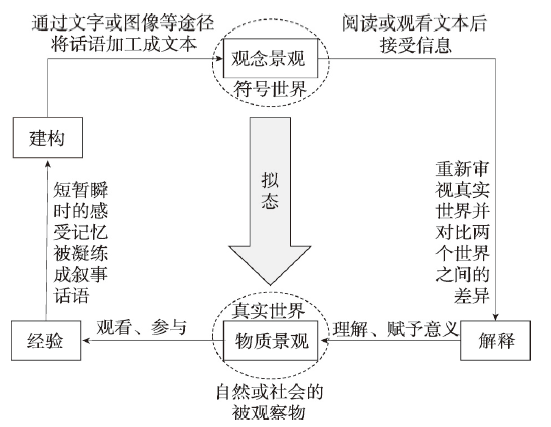
Landscape study is an important part of human geography and a key subject of geographic analysis. With the development of technology and social transformation, the types, forms and connotations of the landscape have become more and more diverse and complicated. Under the dominance of visual mechanism in post-modern society, people's impression of the city mostly comes from the city landscape. However, landscape studies in China were often confined to the material landscape, while ignoring the conceptual landscape. Through an image analysis on Pearl River Night Tour art exhibition in Guangzhou by adopting a German semiotician Uwe Flick's theory of mimesis, together with the analysis from exhibition audiences' (urban residents') interview, this article finds that nostalgia and placed criticism are two important themes among the exhibited art works and conceptual landscape. The study puts forward that landscape is a symbolic tool for studying the interaction between human beings and their environment; and the conceptual landscape is mimesis of material landscape which is based on the real world. The Pearl River Night Tour art exhibition used numerous symbols and conceptual landscape to present a unique place perception and memory of the people in the Pearl River Delta in post-urban era, and to show a critical thinking on the human-environment relationship between urban residents and the city under the context of rapidly changing society of this region. The study suggests that the use of image and narrative analysis of urban conceptual landscape is an effective method which deserves to draw more attention to landscape studies in cultural geography. It provides a deeper understanding of human-place interaction and the impact of urban development from urban residents' perspective.
Key words: conceptual landscape; theory of mimesis; nostalgia; placed criticism; Guangzhou
MA Ling , CHEN Haoran , ZHU Hong . The nostalgia and placed criticism in post-urban landscape: An image analysis on Pearl River Night Tour art exhibition[J]. GEOGRAPHICAL RESEARCH, 2021 , 40(6) : 1637 -1651 . DOI: 10.11821/dlyj020200758
表1 地理学中的符号性工具Tab. 1 Symbolic tools in geography |
| 符号性工具 | 对应议题 | 拟态内容 | 图像类型 |
|---|---|---|---|
| 地图 | 空间分析 | 空间距离 | 距离图像 |
| 景观 | 人地关系 | 地方感知 | 文化图像 |
表2 “特展:珠江夜游—后珠三角景观”部分展品简介及其观念景观Tab. 2 Some exhibits and their conceptual landscape in Night tour of the Pearl River |
| 作品 | 简介 |
|---|---|
 | 名称:- 内容:一系列的粤语熟语 符号:方言 作者:- 形式:现场的装潢设计 |
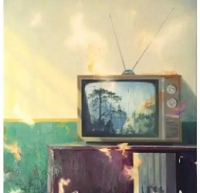 | 名称:凝固的时间 内容:在夕阳的映照下,一台老式电视机在播着黄山松的画面 符号:黄山松、老式电视机 作者:黄伟鸿 形式:布面油画 |
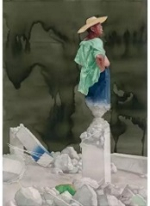 | 名称:XS29 内容:一个农民工叉腰站在废墟之上,眺望远方 符号:农民工、废墟 作者:刘声 形式:纸面水彩 |
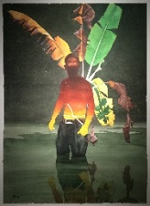 | 名称:XS26 内容:一个农民站在污水之中,身上长着几片芭蕉叶,但大部分都已枯萎 符号:农民、污水、芭蕉叶 作者:刘声 形式:纸面水彩 |
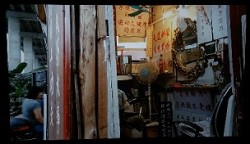 | 名称:艺术计划·夕阳为民理发点 内容:循环播放一段对店主梁伯的采访记录视频,展示该理发点的周边环境;现场还摆放着来自该理发点的部分器物 符号:城中村、窝棚 作者:喻旭东 形式:装置 |
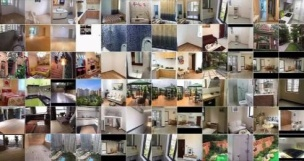 | 名称:为什么看房 内容:循环播放一段作者在不同地方看房的视频;现场还摆放着作者配合该视频而撰写的辅助性小册子 符号:出租房、青年 作者:秦晋 形式:装置 |
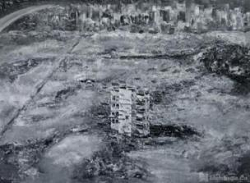 | 名称:当代景观之错误的覆加No.3 内容:废墟中仅剩下一栋摇摇欲坠的平房,就像是城市拆迁中的“钉子户”;色调为黑白 符号:钉子户 作者:莫希亮 形式:布面油画 |
图片来源:2019年3月作者拍摄于广东美术馆。 |
表3 物质景观与观念景观之对应理解Tab. 3 The understanding of material landscapes and conceptual landscapes |
| 景观类型 | 对应世界 | 主要呈现的内容 | 意义 |
|---|---|---|---|
| 物质景观 | 真实世界 | 城市化之后的自然或社会环境 | 反映人地关系的演变过程 |
| 观念景观 | 符号世界 | 方言、芭蕉叶、窝棚、出租屋等 社会文化符号及其相关作品 | 理解人地关系的互动机制 |
真诚感谢匿名评审专家在论文评审中所付出的时间和精力,评审专家对本文的内容分析以及结论梳理方面的修改意见,使本文获益匪浅。
| [1] |
|
| [2] |
|
| [3] |
李培林. 老工业基地的失业治理: 后工业化和市场化: 东北地区9家大型国有企业的调查. 社会学研究, 1998, (4): 1-12.
[
|
| [4] |
|
| [5] |
胡大平. 哲学与“空间转向”: 通往地方生产的知识. 哲学研究, 2018, (10): 24-34, 128.
[
|
| [6] |
高燕. 视觉隐喻与空间转向: 思想史视野中的当代视觉文化. 上海: 复旦大学出版社, 2009.
[
|
| [7] |
俞孔坚. 景观的含义. 时代建筑, 2002, (1): 14-17.
[
|
| [8] |
|
| [9] |
|
| [10] |
|
| [11] |
范建红, 张弢, 雷汝林. 国外景观地理学发展的回顾与展望. 世界地理研究, 2007, (1): 83-89.
[
|
| [12] |
|
| [13] |
毕雪婷, 韩锋. 文化景观价值的解读方式研究. 风景园林, 2017, (7): 100-107.
[Bi Xueting & Han Feng. Study on the ways to interpret the cultural landscape values. Landscape Architecture, 2017, (7): 100-107.] DOI: 10.14085/j.fjyl. 2017.07.0100.08.
|
| [14] |
|
| [15] |
|
| [16] |
陈惠龄. 乡土性·本土化·在地感: 台湾新乡土小说书写风貌. 台北: 万卷楼, 2010: 162.
[
|
| [17] |
蔡运龙,
[
|
| [18] |
唐晓峰, 周尚意, 李蕾蕾. “超级机制”与文化地理学研究. 地理研究, 2008, 27(2): 431-438.
[
|
| [19] |
|
| [20] |
|
| [21] |
李晓黎, 韩锋. 文化景观之理论与价值转向及其对中国的启示. 风景园林, 2015, (8): 44-49.
[
|
| [22] |
|
| [23] |
|
| [24] |
李蕾蕾. 当代西方“新文化地理学”知识谱系引论. 人文地理, 2005, (2): 77-83.
[
|
| [25] |
唐晓峰. 文化转向与地理学. 读书, 2005, (6): 72-79.
[
|
| [26] |
|
| [27] |
马凌. 城市舒适物视角下的城市发展: 一个新的研究范式和政策框架. 山东社会科学, 2015, (2): 13-20.
[
|
| [28] |
罗钢, 王中忱. 消费文化读本. 北京: 中国社会科学出版社, 2003: 181-182, 203-205.
[
|
| [29] |
|
| [30] |
|
| [31] |
|
| [32] |
周星. 生活革命、乡愁与中国民俗学. 民间文化论坛, 2017, (2): 42-61.
[
|
| [33] |
王新歌, 陈田, 林明水, 等. 国内外乡愁相关研究进展及启示. 人文地理, 2018, 33(5): 1-11.
[
|
| [34] |
张宝秀, 张勃, 孟斌. 北京学研究: 2015. 北京: 中国社会科学出版社, 2016.
[
|
| [35] |
汪芳, 吕舟, 张兵, 等. 迁移中的记忆与乡愁: 城乡记忆的演变机制和空间逻辑. 地理研究, 2017, 36(1): 3-25.
[
|
| [36] |
成志芬, 周尚意, 张宝秀. “乡愁”研究的文化地理学视角. 北京联合大学学报: 人文社会科学版, 2015, 13(4): 64-70.
[
|
| [37] |
|
| [38] |
|
| [39] |
|
| [40] |
|
| [41] |
周尚意, 成志芬. 关于“乡愁”的空间道德和地方道德评价. 人文地理, 2015, 30(6): 1-6.
[
|
| [42] |
|
| [43] |
|
| [44] |
|
| [45] |
安德里亚·巴尔蒂尼. 论公共艺术的在地性. 文艺理论研究, 2016, 36(2): 78-83.
[
|
| [46] |
黄宙辉, 吴大海, 刘丹妮. 两广东本土艺术家展览在广东美术馆开展. 羊城派, 2019-03-24.
[
|
| [47] |
|
| [48] |
周尚意, 戴俊骋. 文化地理学概念、理论的逻辑关系之分析: 以“学科树”分析近年中国大陆文化地理学进展. 地理学报, 2014, 69(10): 1521-1532.
[
|
| [49] |
|
| [50] |
刘毅, 杨宇, 康蕾, 等. 新时代粤港澳大湾区人地关系的全球模式与区域响应. 地理研究, 2020, 39(9): 1949-1957.
[
|
| [51] |
童强. 社会转型与城市景观变迁. 学术研究, 2017, (10): 170-176.
[
|
| [52] |
童强. 现代城市景观批判. 文化研究, 2016, (2): 71-81.
[
|
| [53] |
|
| [54] |
李如铁, 朱竑, 唐蕾. 城乡迁移背景下“消极”地方感研究: 以广州市棠下村为例. 人文地理, 2017, 32(3): 27-35.
[
|
| [55] |
习近平: 以更大魄力在更高起点上推进改革开放. 人民日报, 2020-10-15.
[Xi Jinping: Promote reform and opening-up from a higher starting point with greater courage. The People's Daily, 2020-10-15.]
|
| [56] |
|
/
| 〈 |
|
〉 |