The decline and resilience of worker community under the influence of accidents: Based on filtering theory
Received date: 2021-01-01
Accepted date: 2021-05-06
Online published: 2022-04-10
Copyright
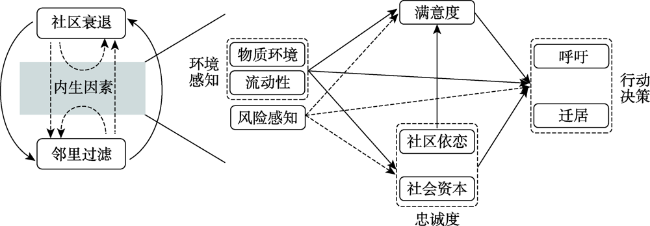
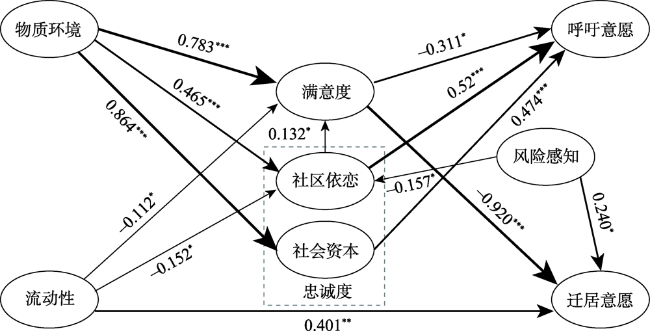
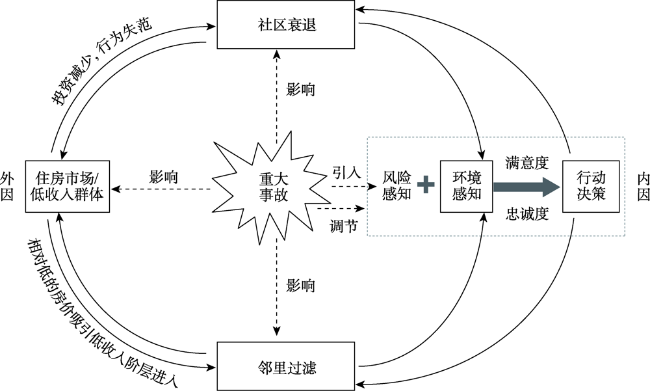
Worker communities, as the living area of the work unit (danwei), had been suffering the physical and societal decline since state-owned enterprise reform and industrial structure adjustment in China. The resident replacement that high income groups moved out while lower groups moved in had taken place, which was called filtering. Worker communities should enhance their resilience to struggle over shocks and avoid declining. The filtering theory of community decline indicated that decline and filtering positively strengthen each other, which led to a downward spiral. However, the theory only focused on the gradual decline of the community but ignored the influence of accidents. For worker community which was adjacent to chemical factory, the shocks included not only gradual events such as creaking infrastructure, but also emergencies such as industrial accidents. Given this, the study established a conceptual model of community decline, which integrated the influence of accidents into the filtering theory. Taking N community as a case, which had been disconnected from the unit and encountered several chemical explosion accidents, this paper applied questionnaire surveys, interviews, text analysis and structural equation model to discuss the interaction mechanism of decline and filtering. The results showed that the decline of the community was the result of a combination of factors within and outside the community: (1) For the internal mechanisms, decline and filtering were both the cause of environmental perception which includes the perception of physical environment and community mobility, and the result of action decision-making, including voice and exit. Positive environmental perception promoted satisfaction and loyalty, which in turn influenced action decisions. The stronger the risk perception, the lower the level of community attachment in loyalty, and the more the residents are likely to leave. Besides, rick experiences moderated the influence of risk perception on satisfaction and the influence of community attachment on satisfaction. (2) For the external mechanisms, decline and filtering were affected by low-income groups and the entire housing market, which were also influenced by the accident. Considering both gradual and sudden factors, this research established the filtering mechanism of community decline under the influence of accidents from a micro perspective of residents' decision making and it was a new exploration of community decline research. Finally, aiming at enhancing community resilience to resist multiple shocks, this study proposed suggestions for improving residents' community loyalty, and encouraging more community participation.
ZHANG Xinyi , ZHANG Min . The decline and resilience of worker community under the influence of accidents: Based on filtering theory[J]. GEOGRAPHICAL RESEARCH, 2022 , 41(2) : 546 -561 . DOI: 10.11821/dlyj020210002
表1 各变量测量指标和参考来源Tab. 1 Measurement and references of variables |
| 变量 | 观测指标 | 赋值方式 | 参考来源 | |
|---|---|---|---|---|
| 环境感知 | 物质环境 | 基本设施 | 很不满意=1;较不满意=2;一般=3;较为满意=4;很满意=5 | 林李月等[21];冯健等[28] 基于24项社区物质环境指标主成分分析 |
| 提升设施 | ||||
| 社区环境 | ||||
| 流动性 | 社区居民迁入迁出总体变化情况 | 稳定=1;较稳定=2;一般=3;变动较大=4;变动很大=5 | Li等[27];Taylor[34] | |
| 社区搬入居民数量a | 极少=1;较少=4;一般=3;较多=4,很多=5 | |||
| 社区搬出居民数量 | ||||
| 社区中经常交往的朋友搬出数量 | ||||
| 风险感知 | 严重性 | 对事故造成空气污染、水污染的担忧 | 不担心=1;不太担心=2;一般=3;较为担心=4;非常担心=5 | 侯光辉等[35];Slovic[38] |
| 对事故影响个人健康的担忧 | ||||
| 对事故造成住房贬值的担忧 | ||||
| 对事故影响社区声誉的担忧 | ||||
| 可能性 | 对再次发生事故的担忧 | 赋值方式同上 | ||
| 满意度 | 满意度 | 近五年来感知到社区的变化 | 优化明显=1;略微优化=2;无变化=3;略微恶化=4;恶化明显=5 | Dekker等[20] |
| 预期的社区变化 | ||||
| 对住房条件的满意度 | 很不满意=1;较不满意=2;一般=3;较为满意=4;很满意=5 | |||
| 对社区环境的满意度 | ||||
| 忠诚度 | 社区依恋 | 自然联系 | 完全不符合=1;较不符合=2;一般=3;较为符合=4;完全符合=5 | 侯光辉等[35];Raymond等[36] |
| 社会联系 | ||||
| 地方依赖 | ||||
| 地方认同 | ||||
| 社会资本 | 嵌入感 | 赋值方式同上 | Dekker等[20] | |
| 不信任感 | 完全符合=1;较为符合=2;一般=3;较不符合=4;完全不符合=5 | |||
| 行动决策 | 呼吁意愿 | 对居民破坏社区环境行为的干预 | 一定不干预=1;小概率干预=2;不确定=3;大概率干预=4;一定干预=5 | 虞佳丽[41]11-14 基于9项呼吁行动意愿的主成分分析 |
| 对社区外因素破坏社区环境行为的干预 | ||||
| 迁居意愿 | 您曾经是否考虑过搬迁 | 没想过=1;想过几次=2;一般=3;经常想=4;一直想=5 | 夏云岭[22]20 | |
| 您的预期搬迁行为 | 一定不搬=1;小概率搬迁=2;一般=3,大概率搬迁=4;一定搬迁=5 |
注:“社区搬入居民数量”后续因子载荷过低,删除。 |
表2 问卷样本的基本信息(N=228)Tab. 2 The profile of survey samples (N=228) |
| 属性 | 分类 | 比例(%) | 属性 | 分类 | 比例(%) |
|---|---|---|---|---|---|
| 性别 | 男性 | 56.6 | 家庭成员 | 独居 | 3.5 |
| 女性 | 43.4 | 夫妇 | 21.1 | ||
| 年龄 | 25岁以下 | 3.9 | 夫妇+小孩 | 49.1 | |
| 25~44岁 | 60.5 | 独居+小孩 | 11.8 | ||
| 45~59岁 | 33.8 | 其他 | 14.5 | ||
| 60岁以上 | 1.8 | 家庭人均月收入 | 1000元以下 | 1.3 | |
| 受教育水平 | 初中 | 16.7 | 1000~3000元 | 15.8 | |
| 高中 | 33.8 | 3000~5000元 | 34.2 | ||
| 大专 | 30.3 | 5000~8000元 | 26.8 | ||
| 本科 | 17.1 | 8000元以上 | 21.9 | ||
| 研究生及以上 | 2.2 | 您的家人在或曾在J化工厂工作 | 是 | 44.7 | |
| 居住年限 | 10年及以上 | 54.4 | 否 | 55.3 | |
| 5~10年 | 20.2 | 住房产权 | 自有 | 80.3 | |
| 2~5年 | 21.9 | 租赁 | 19.7 | ||
| 2年以内 | 3.5 | 住房类型 | 商品房 | 45.6 | |
| 是否工作 | 是 | 85.1 | 房改房 | 36.8 | |
| 否 | 14.9 | 福利房 | 14.0 | ||
| 您是否在或曾在J化工厂工作 | 是 | 32.5 | 其他 | 3.5 | |
| 否 | 67.5 |
表3 概念模型内在结构适配度结果Tab. 3 Goodness-of-fit index of concept model |
| 基本维度 | 平均提取方差AVE | 组合信度CR |
|---|---|---|
| 基本设施 | 0.576 | 0.942 |
| 提升设施 | 0.627 | 0.91 |
| 其他环境 | 0.506 | 0.857 |
| 流动性 | 0.525 | 0.765 |
| 满意度 | 0.555 | 0.83 |
| 社区依恋 | 0.517 | 0.864 |
| 嵌入感 | 0.779 | 0.913 |
| 不信任感 | 0.598 | 0.81 |
| 风险感知 | 0.715 | 0.925 |
| 呼吁意愿 | 0.682 | 0.95 |
| 迁居意愿 | 0.408 | 0.577 |
表4 概念模型的拟合程度Tab. 4 Fitting index of conceptual model |
| 拟合指标 | X2/df | RMSEA | GFI | NFI | IFI | TLI | CFI | AIC |
|---|---|---|---|---|---|---|---|---|
| 理想数值 | 1~3 | <0.05适配良好 | >0.9拟合良好,接近0.9可以接受 | 越小越好 | ||||
| 原模型 | 1.636 | 0.053 | 0.877 | 0.903 | 0.960 | 0.952 | 0.959 | 558.675 |
| 修正模型 (不含控制变量) | 1.157 | 0.026 | 0.916 | 0.938 | 0.991 | 0.989 | 0.991 | 413.636 |
| 修正模型 (含控制变量) | 1.205 | 0.030 | 0.902 | 0.923 | 0.986 | 0.983 | 0.986 | 488.915 |
表5 假设路径的标准化检验结果Tab. 5 Standardized test results of hypothesized path |
| 研究假设 | 路径关系 | 标准化系数 | 标准误差 | t值 | P | 假设检验结果 |
|---|---|---|---|---|---|---|
| H1a | 环境感知→满意度 | 0.783 | 0.100 | 7.383 | *** | 支持 |
| H1b | 环境感知→社区依恋 | 0.465 | 0.099 | 5.793 | *** | 支持 |
| H1c | 环境感知→社会资本 | 0.864 | 0.092 | 7.247 | *** | 支持 |
| H2a | 流动性→满意度 | -0.112 | 0.050 | -2.061 | 0.039 | 支持 |
| H2b | 流动性→社区依恋 | -0.152 | 0.085 | -2.187 | 0.029 | 支持 |
| H2c | 流动性→社会资本 | 0.037 | 0.069 | 0.407 | 0.684 | 不支持 |
| H2d | 流动性→迁居意愿 | 0.401 | 0.161 | 3.115 | 0.002 | 支持 |
| H3a | 满意度→呼吁意愿 | -0.311 | 0.251 | -1.979 | 0.048 | 支持 |
| H3b | 满意度→迁居意愿 | -0.92 | 0.351 | -3.526 | *** | 支持 |
| H4a | 社区依恋→呼吁意愿 | 0.52 | 0.115 | 5.518 | *** | 支持 |
| H4b | 社区依恋→迁居意愿 | 0.113 | 0.153 | 0.764 | 0.445 | 不支持 |
| H5a | 社会资本→呼吁意愿 | 0.474 | 0.280 | 3.302 | *** | 支持 |
| H5b | 社会资本→迁居意愿 | 0.341 | 0.347 | 1.621 | 0.105 | 不支持 |
| H6 | 社区依恋→满意度 | 0.132 | 0.051 | 1.979 | 0.048 | 支持 |
| H7a | 风险感知→满意度 | -0.044 | 0.028 | -0.849 | 0.396 | 不支持 |
| H7b | 风险感知→社区依恋 | -0.157 | 0.049 | -2.278 | 0.023 | 支持 |
| H7c | 风险感知→社会资本 | 0.047 | 0.043 | 0.482 | 0.630 | 不支持 |
| H7d | 风险感知→呼吁意愿 | 0.079 | 0.065 | 1.049 | 0.294 | 不支持 |
| H7e | 风险感知→迁居意愿 | 0.24 | 0.085 | 2.049 | 0.040 | 支持 |
注:***表示P<0.001。 |
表6 分组路路径系数和卡方差检验结果Tab. 6 Results of multi-groups path coefficients and Chi-square test |
| 研究 假设 | 结构路径 | 知悉 与否 | 结构路径 标准回归系数 | 模型卡方差检验 | CR | |||
|---|---|---|---|---|---|---|---|---|
| 从 | 到 | Δdf | ΔX² | P | ||||
| H1a | 环境感知 | 满意度 | 是 | 0.723*** | 1 | 0.021 | 0.885 | -1.504 |
| 否 | 1.134** | |||||||
| H1b | 环境感知 | 社区依恋 | 是 | 0.449*** | 1 | 0.396 | 0.529 | -0.385 |
| 否 | 0.611** | |||||||
| H1c | 环境感知 | 社会资本 | 是 | 0.848*** | 1 | 0.151 | 0.698 | -0.125 |
| 否 | 0.730** | |||||||
| H2a | 流动性 | 满意度 | 是 | -0.092* | 1 | 0.29 | 0.590 | 1.069 |
| 否 | -0.285 | |||||||
| H2b | 流动性 | 社区依恋 | 是 | -0.158** | 1 | 0.004 | 0.950 | 0.007 |
| 否 | -0.175 | |||||||
| H2c | 流动性 | 社会资本 | 是 | 0.047 | 1 | 1.663 | 0.197 | 0.606 |
| 否 | -0.273 | |||||||
| H2d | 流动性 | 迁居意愿 | 是 | 0.411** | 1 | 0.065 | 0.798 | 0.389 |
| 否 | 0.364 | |||||||
| H3a | 满意度 | 呼吁意愿 | 是 | -0.208 | 1 | 1.835 | 0.176 | 1.026 |
| 否 | -0.507 | |||||||
| H3b | 满意度 | 迁居意愿 | 是 | -0.862** | 1 | 1.815 | 0.178 | 0.850 |
| 否 | -0.828* | |||||||
| H4a | 社区依恋 | 呼吁意愿 | 是 | 0.547*** | 1 | 0.001 | 0.976 | 0.217 |
| 否 | 0.461** | |||||||
| H4b | 社区依恋 | 迁居意愿 | 是 | 0.235 | 1 | 1.182 | 0.277 | 1.344 |
| 否 | -0.116 | |||||||
| H5a | 社会资本 | 呼吁意愿 | 是 | 0.411** | 1 | 0.064 | 0.800 | -0.315 |
| 否 | 0.378 | |||||||
| H5b | 社会资本 | 迁居意愿 | 是 | 0.092 | 1 | 4.888 | 0.027 | -1.642 |
| 否 | 0.654** | |||||||
| H6 | 社区依恋 | 满意度 | 是 | 0.211** | 1 | 6.204 | 0.013 | 2.007 |
| 否 | -0.191 | |||||||
| H7a | 风险感知 | 满意度 | 是 | -0.097* | 1 | 5.081 | 0.024 | -1.972 |
| 否 | 0.343 | |||||||
| H7b | 风险感知 | 社区依恋 | 是 | -0.241*** | 1 | 3.044 | 0.081 | -1.657 |
| 否 | 0.220 | |||||||
| H7c | 风险感知 | 社会资本 | 是 | -0.034 | 1 | 3.323 | 0.068 | -1.418 |
| 否 | 0.576* | |||||||
| H7d | 风险感知 | 呼吁意愿 | 是 | 0.124 | 1 | 3.087 | 0.079 | 1.581 |
| 否 | -0.226 | |||||||
| H7e | 风险感知 | 迁居意愿 | 是 | 0.251* | 1 | 0.314 | 0.575 | 0.388 |
| 否 | 0.035 | |||||||
注:*表示P<0.1;**表示P<0.05;***表示P<0.001。 |
| [1] |
刘玉亭, 吴缚龙, 何深静, 等. 转型期城市低收入邻里的类型、特征和产生机制: 以南京市为例. 地理研究, 2006, (6):1073-1082.
[
|
| [2] |
塔娜, 柴彦威. 过滤视角下的中国城市单位社区变化研究. 人文地理, 2010, 25(5):6-10.
[
|
| [3] |
|
| [4] |
|
| [5] |
塔娜, 柴彦威, 刘志林. 过滤理论的起源、概念及研究进展. 人文地理, 2011, 26(1):10-14, 159.
[
|
| [6] |
|
| [7] |
|
| [8] |
|
| [9] |
田小芳. 社会资本对农村移民迁移意愿的影响研究. 大连: 大连理工大学硕士学位论文, 2014.
[
|
| [10] |
湛东升, 孟斌, 张文忠. 北京市居民居住满意度感知与行为意向研究. 地理研究, 2014, 33(2):336-348.
[
|
| [11] |
|
| [12] |
|
| [13] |
|
| [14] |
|
| [15] |
|
| [16] |
|
| [17] |
邵亦文, 徐江. 城市韧性:基于国际文献综述的概念解析. 国际城市规划, 2015, 30(2):48-54.
[
|
| [18] |
赵瑞东, 方创琳, 刘海猛. 城市韧性研究进展与展望. 地理科学进展, 2020, 39(10):1717-1731.
[
|
| [19] |
唐任伍, 郭文娟. 乡村振兴演进韧性及其内在治理逻辑. 改革, 2018, (8):64-72.
[
|
| [20] |
|
| [21] |
林李月, 朱宇, 许丽芳. 流动人口对流入地的环境感知及其对定居意愿的影响: 基于福州市的调查. 人文地理, 2016, 31(1):65-72.
[
|
| [22] |
夏云岭. 千岛湖旅游地居民迁居意愿的测度与驱动机制研究. 芜湖: 安徽师范大学硕士学位论文, 2017: 15.
[
|
| [23] |
|
| [24] |
|
| [25] |
|
| [26] |
|
| [27] |
|
| [28] |
冯健, 林文盛. 苏州老城区衰退邻里居住满意度及影响因素. 地理科学进展, 2017, 36(2):159-170.
[
|
| [29] |
|
| [30] |
|
| [31] |
|
| [32] |
陈虎, 梅青, 王颖超, 等. 历史街区旅游意象对环境责任行为的驱动性研究: 以满意度为中介变量. 中国人口·资源与环境, 2017, 27(12):106-116.
[
|
| [33] |
|
| [34] |
|
| [35] |
侯光辉, 陈通, 王颖, 等. 地方依恋、突发事件与风险的社会“变异”: 一个化工社区在“8·12”特大爆炸事故前后的变化. 公共管理学报, 2018, 15(2): 56- 68, 155-156.
[
|
| [36] |
|
| [37] |
|
| [38] |
| [39] |
|
| [40] |
|
| [41] |
虞佳丽. 环境知识与环境态度、环境行为的关系研究. 上海:华东理工大学硕士学位论文, 2013: 11-14.
[
|
| [42] |
吴明隆. 结构方程模型:Amos的操作与应用. 重庆: 重庆大学出版社, 2010.
[
|
| [43] |
|
| [44] |
吴艳, 温忠麟. 结构方程建模中的题目打包策略. 心理科学进展, 2011, 19(12):1859-1867.
[
|
| [45] |
彭正霞, 陆根书. 大学生创业意向的性别差异: 多群组结构方程模型分析. 高等工程教育研究, 2013, (5):57-65.
[
|
| [46] |
颜文涛, 卢江林. 乡村社区复兴的两种模式: 韧性视角下的启示与思考. 国际城市规划, 2017, 32(4):22-28.
[
|
/
| 〈 |
|
〉 |