Socio-spatial segregation of household registration based on a spatiotemporal index at the individual level: A case study of 10 towns in Shanghai suburbs
Received date: 2021-03-02
Accepted date: 2021-07-02
Online published: 2022-06-10
Copyright
Socio-spatial segregation is a critical issue of urban studies. With the increase of human mobility, the traditional measurements of residential segregation based on aggregated data show limitations. Few studies have explored the segregation in residents' daily activity space outside their living spaces, or the spatiotemporal patterns of segregation level in different periods of a day. Thus, it is necessary to study the individual-based socio-spatial segregation in various geographic and temporal contexts. Using data from a household travel survey in 10 typical towns of the suburbs of Shanghai in 2017, this study researched the spatiotemporal characteristics of household registration segregation in people's daily life based on a creative individual-based proximity index, which measures the proximity of various groups in different geographic contexts with various activity types and time periods. We divided a day into eight periods and used the i-STP index to measure the spatiotemporal pattern of segregation of four kinds of household registered residents. By dividing Shanghai into hexagonal grids with an actual area of 5 km 2, the average value of i-STP within each grid was calculated. Then Arcscene 10.2 was used to visualize the results. Results show that the average i-STP is higher in work activities during weekdays and is lower in recreation activities on weekends, indicating the distinctions of segregation levels in different activity contexts. Results also show that lower i-STP is detected during commuting time (6:00-9:00) and leisure time at night (18:00-21:00) on weekdays and the average i-STP reaches the minimum in the afternoon (15:00-18:00) on weekends. We also found that residents with different household registration types have different spatiotemporal segregation patterns and that the working place and activity place of residents in day time shows higher segregation level than the living place at night. The study provides a new measure of segregation from an individual-based and dynamic perspective, which can fill the gap in the existing research on segregation based on activity space. The results of the study indicate that attention should be paid to the segregation of different types of registered population in work and leisure activities in large cities of China to enhance the interaction between different groups.
Key words: activity space; household registration; social segregation; suburbs; Shanghai
SHEN Yue , LUO Xueyao . Socio-spatial segregation of household registration based on a spatiotemporal index at the individual level: A case study of 10 towns in Shanghai suburbs[J]. GEOGRAPHICAL RESEARCH, 2022 , 41(4) : 1152 -1169 . DOI: 10.11821/dlyj020210167
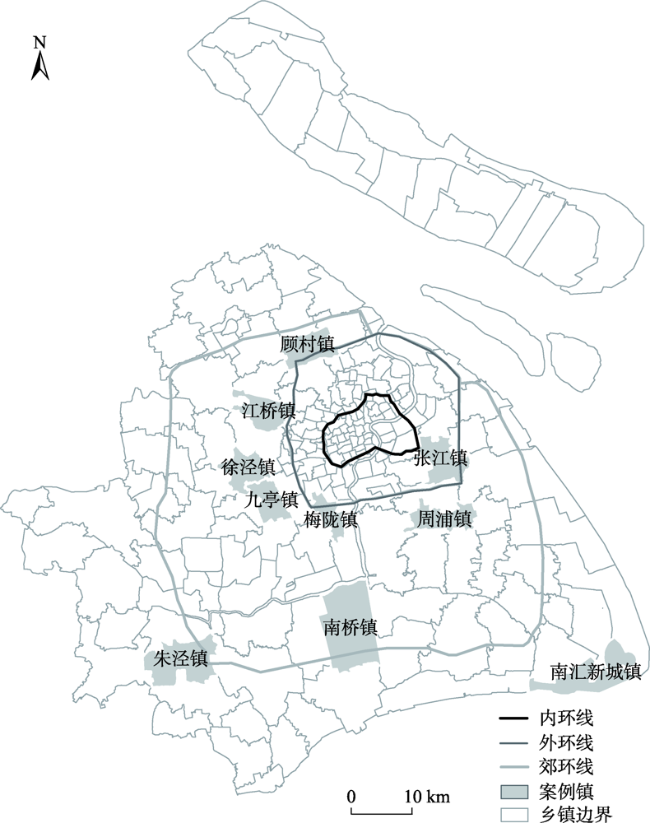
表1 案例镇基本特征统计Tab. 1 The statistics of sample towns |
| 案例镇 | 行政区 | 区位 | 户籍结构 | 性别结构 | 年龄结构 | 就业结构 | ||||||||
|---|---|---|---|---|---|---|---|---|---|---|---|---|---|---|
| 常住人口 (万人) | 户籍人口 比例(%) | 男性 (%) | 女性 (%) | 0~14 (%) | 15~64 (%) | 65 (%) | 二三产业从业 人口比例(%) | 本地企业就业 人口比例(%) | ||||||
| 朱泾镇 | 金山区 | 远郊 | 12.0 | 69.8 | 50.2 | 49.8 | 10.0 | 78.5 | 11.5 | 51.9 | 16.3 | |||
| 南汇新城镇 | 浦东新区 | 远郊 | 4.8 | 47.0 | 60.5 | 39.5 | 6.0 | 89.5 | 4.5 | 67.0 | 42.6 | |||
| 周浦镇 | 浦东新区 | 近郊 | 14.7 | 42.8 | 51.3 | 48.7 | 9.8 | 81.2 | 8.9 | 75.8 | 51.9 | |||
| 张江镇 | 浦东新区 | 近郊 | 16.5 | 32.5 | 53.4 | 46.6 | 9.8 | 84.1 | 6.1 | 69.5 | 2.3 | |||
| 南桥镇 | 奉贤区 | 远郊 | 36.1 | 31.5 | 51.0 | 49.0 | 12.6 | 81.4 | 6.0 | 35.6 | 34.8 | |||
| 顾村镇 | 宝山区 | 近郊 | 24.0 | 29.3 | 55.1 | 44.9 | 8.9 | 84.6 | 6.5 | 29.5 | 10.1 | |||
| 梅陇镇 | 闵行区 | 近郊 | 34.4 | 26.9 | 52.0 | 48.0 | 9.2 | 83.8 | 7.0 | 68.6 | 28.3 | |||
| 江桥镇 | 嘉定区 | 近郊 | 25.6 | 21.4 | 54.5 | 45.5 | 8.4 | 86.1 | 5.5 | 52.1 | 42.8 | |||
| 徐泾镇 | 青浦区 | 近郊 | 12.8 | 20.0 | 54.7 | 45.3 | 9.2 | 86.8 | 4.0 | 80.1 | 59.6 | |||
| 九亭镇 | 松江区 | 近郊 | 25.3 | 13.3 | 53.1 | 46.9 | 11.2 | 85.2 | 3.6 | 84.8 | 21.6 | |||
注:户籍、性别、年龄数据来源于2010年第六次全国人口普查;就业数据来源于《中国县域统计年鉴2018》。 |
表2 样本基本特征统计Tab. 2 Socio-economic characteristics of samples |
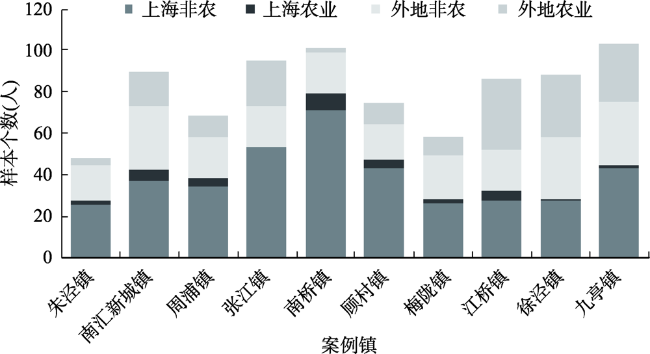
| 变量名称 | 类别 | 总样本构成 | 上海非农 样本构成 | 上海农业 样本构成 | 外地非农 样本构成 | 外地农业 样本构成 | 上海市总 体情况 | ||||||
|---|---|---|---|---|---|---|---|---|---|---|---|---|---|
| (人) | (%) | (%) | (%) | (%) | (%) | (%) | |||||||
| 性别 | 男 | 414.0 | 51.1 | 49.5 | 43.8 | 53.3 | 53.3 | 51.5 | |||||
| 女 | 396.0 | 48.9 | 50.5 | 56.3 | 46.7 | 46.7 | 48.5 | ||||||
| 教育程度 | 初中及以下 | 167.0 | 20.6 | 15.8 | 50.0 | 15.0 | 33.9 | 50.0 | |||||
| 高中 | 250.0 | 30.9 | 43.0 | 34.4 | 42.3 | 46.7 | 21.0 | ||||||
| 本科及以上 | 293.0 | 36.2 | 41.2 | 15.6 | 42.7 | 19.4 | 22.0 | ||||||
| 年龄 | 16~34 | 260.0 | 32.1 | 37.8 | 31.3 | 61.7 | 65.5 | 81.3 | |||||
| 35~49 | 433.0 | 53.5 | 40.7 | 40.6 | 31.3 | 29.1 | |||||||
| 50及以上 | 117.0 | 14.4 | 21.5 | 28.1 | 7.0 | 5.5 | |||||||
| 户籍 | 上海非农 | 386.0 | 47.7 | 100.0 | 0.0 | 0.0 | 0.0 | 59.8 | |||||
| 上海农业 | 32.0 | 4.0 | 0.0 | 100.0 | 0.0 | 0.0 | |||||||
| 外地非农 | 227.0 | 28.0 | 0.0 | 0.0 | 100.0 | 0.0 | 40.2 | ||||||
| 外地农业 | 165.0 | 20.4 | 0.0 | 0.0 | 0.0 | 100.0 | |||||||
| 婚姻状况 | 已婚 | 650.0 | 80.3 | 86.0 | 81.3 | 74.9 | 73.9 | ||||||
| 单身/离异/丧偶 | 160.0 | 19.8 | 14.0 | 18.8 | 25.1 | 26.1 | |||||||
| 出行能力 | 有驾照 | 444.0 | 54.8 | 57.3 | 46.9 | 63.9 | 38.2 | ||||||
| 无驾照 | 366.0 | 45.2 | 42.8 | 53.1 | 36.1 | 61.8 | |||||||
| 工作状态 | 全职就业 | 623.0 | 76.9 | 76.9 | 75.0 | 81.5 | 70.9 | ||||||
| 非全职就业 | 187.0 | 23.1 | 23.1 | 25.0 | 18.5 | 29.1 | |||||||
| 个人月收入 | 低收入(<2500元) | 78.0 | 9.6 | 9.6 | 31.3 | 5.3 | 11.5 | ||||||
| 中收入(2501~7500元) | 469.0 | 53.5 | 51.1 | 34.4 | 54.6 | 58.8 | |||||||
| 高收入(>7500元) | 299.0 | 36.9 | 38.3 | 34.4 | 40.1 | 29.7 | |||||||
注:上海市总体情况的性别、教育程度、年龄数据来源于2010年第六次全国人口普查,户籍常住人口比例和外来常住人口比例来源于上海市2017年国民经济和社会发展统计公报。 |
表3 不同k值中各户籍类型人群比例Tab. 3 The ratio of different types of household registered population of k values |
| 上海非农户籍人数/上海 常住人口总数(%) | 上海农业户籍人数/上海 常住人口总数(%) | 外地户籍人数/上海 常住人口总数(%) | |
|---|---|---|---|
| k=5 | 48.6 | 4.1 | 47.3 |
| k=10 | 48.8 | 4.1 | 46.7 |
| k=15 | 49.4 | 4.3 | 46.4 |
| k=25 | 49.8 | 4.4 | 45.7 |
| 2014年上海市 | 53.6 | 5.7 | 40.7 |
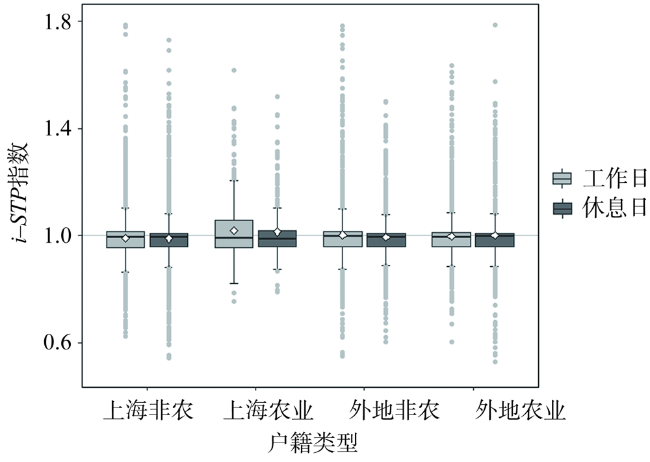
表4 户籍因素的多重比较结果Tab. 4 Pairwise comparisons between houlsehold registrations |
| 户籍类型差异 | 汇总平均值差异 | 工作日平均值差异 | 休息日平均值差异 |
|---|---|---|---|
| 上海非农-上海农业 | -0.0259*** | -0.0280*** | -0.0239*** |
| 上海非农-外地非农 | -0.0091*** | -0.0136*** | -0.0045 |
| 上海非农-外地农业 | -0.0112*** | -0.0112*** | -0.0112*** |
| 上海农业-外地非农 | 0.0168*** | 0.0143* | 0.0193*** |
| 上海农业-外地农业 | 0.0146*** | 0.0167** | 0.0126** |
| 外地非农-外地农业 | -0.0021 | 0.0024 | -0.0066** |
注:*、**、***分别代表P值<0.01、P值<0.05、P值<0.1。 |
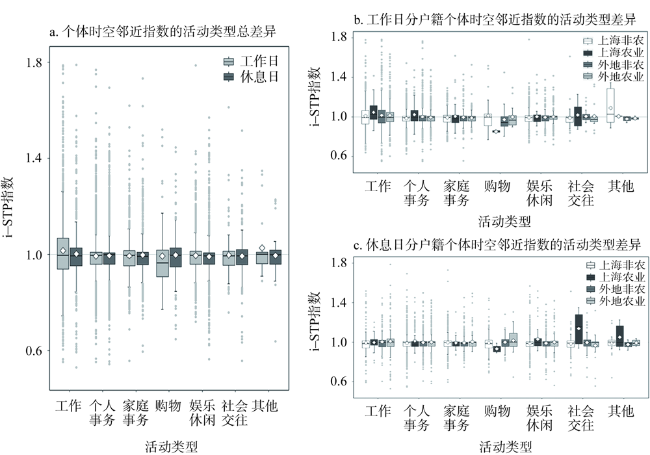
图4 个体时空邻近指数的活动类型差异Fig. 4 The variation of segregation level in different activity types |
表5 活动维度的分异格局多重比较Tab. 5 Pairwise comparisons between activity types |
| 各活动类型均值差异 | |||||||
|---|---|---|---|---|---|---|---|
| 工作 | 个人事务 | 家庭事务 | 购物 | 娱乐休闲 | 社会交往 | 其他 | |
| 工作日活动类型 | |||||||
| 工作 | - | 0.0281* | 0.0287* | 0.0288 | 0.0271* | 0.0244 | -0.004 |
| 个人事务 | -0.0281* | - | 0.0005 | 0.0006 | -0.001 | -0.0038 | -0.0321 |
| 家庭事务 | -0.0287* | -0.0005 | - | 0.0001 | -0.0015 | -0.0043 | -0.0326 |
| 购物 | -0.0288 | -0.0006 | -0.0001 | - | -0.0016 | -0.0044 | -0.0327 |
| 娱乐休闲 | -0.0271* | 0.001 | 0.0015 | 0.0016 | - | -0.0028 | -0.0311 |
| 社会交往 | -0.0244 | 0.0038 | 0.0043 | 0.0044 | 0.0028 | - | -0.0284 |
| 其他 | 0.004 | 0.0321 | 0.0326 | 0.0327 | 0.0311 | 0.0284 | - |
| 休息日活动类型 | |||||||
| 工作 | - | 0.0118* | 0.009 | 0.009 | 0.0143* | 0.0135 | -0.0026 |
| 个人事务 | -0.0118* | - | -0.0027 | -0.0028 | 0.0025 | 0.0018 | -0.0144 |
| 家庭事务 | -0.009 | 0.0027 | - | 0.0001 | 0.0053 | 0.0045 | -0.0116 |
| 购物 | - | 0.0028 | -0.0001 | - | 0.0053 | 0.0045 | -0.0116 |
| 娱乐休闲 | -0.0143* | -0.0025 | -0.0053 | -0.0053 | - | -0.0008 | -0.0169 |
| 社会交往 | -0.0135 | -0.0018 | -0.0045 | -0.0045 | 0.0008 | - | -0.0162 |
| 其他 | 0.0026 | 0.0144 | 0.0116 | 0.0116 | 0.0169 | 0.0162 | - |
注:*、**、***分别代表P值<0.01、P值<0.05、P值<0.1。 |
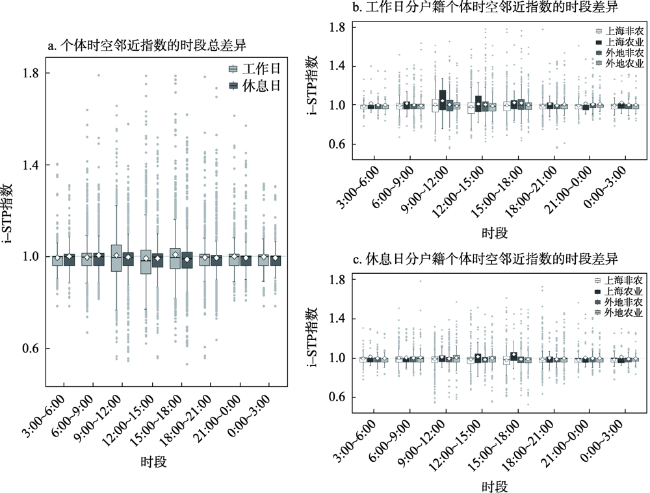
图5 个体时空邻近指数的时段差异Fig. 5 The variation of segregation level in different time periods |
表6 时间维度的分异格局多重比较Tab. 6 Pairwise comparisons between time periods |
| 各时段均值差异 | ||||||||
|---|---|---|---|---|---|---|---|---|
| 3:00~6:00 (t1) | 6:00~9:00 (t2) | 9:00~12:00 (t3) | 12:00~15:00 (t4) | 15:00~18:00 (t5) | 18:00~21:00 (t6) | 21:00~0:00 (t7) | 0:00~3:00 (t8) | |
| 工作日时段 | ||||||||
| 3:00~6:00 (t1) | - | -0.0019 | -0.0118 | -0.0057 | -0.014* | -0.0012 | -0.0066 | -0.0036 |
| 6:00~9:00 (t2) | 0.0019 | - | -0.0099 | -0.0038 | -0.012* | 0.0006 | -0.0047 | -0.0017 |
| 9:00~12:00 (t3) | 0.0118 | 0.0099 | - | 0.0061 | 0.0021 | 0.0105 | 0.0052 | 0.0082 |
| 12:00~15:00 (t4) | 0.0057 | 0.0038 | -0.0061 | - | -0.0082 | 0.0044 | -0.0008 | 0.002 |
| 15:00~18:00 (t5) | 0.014* | 0.012* | -0.0021 | 0.0082 | - | 0.0127* | 0.0073 | 0.0103 |
| 18:00~21:00 (t6) | 0.0012 | -0.0006 | -0.0105 | -0.0044 | -0.0127* | - | -0.0053 | -0.0023 |
| 21:00~0:00 (t7) | 0.0066 | 0.0047 | -0.0052 | 0.0008 | -0.0073 | 0.0053 | - | 0.0029 |
| 0:00~3:00 (t8) | 0.0036 | 0.0017 | -0.0082 | -0.002 | -0.0103 | 0.0023 | -0.0029 | - |
| 休息日时段 | ||||||||
| 3:00~6:00 (t1) | - | -0.0061 | 0.0024 | 0.0077 | 0.0122* | 0.0069 | 0.007 | 0.0071 |
| 6:00~9:00 (t2) | 0.0061 | - | 0.0085 | 0.0138* | 0.0183* | 0.0131* | 0.0132* | 0.0133* |
| 9:00~12:00 (t3) | -0.0024 | -0.0085 | - | 0.0053 | 0.0097 | 0.0045 | 0.0046 | 0.0047 |
| 12:00~15:00 (t4) | -0.0077 | -0.0138* | -0.0053 | - | 0.0044 | -0.0007 | -0.0006 | -0.0005 |
| 15:00~18:00 (t5) | -0.0122* | -0.0183* | -0.0097 | -0.0044 | - | -0.0052 | -0.0051 | -0.0051 |
| 18:00~21:00 (t6) | -0.0069 | -0.0131* | -0.0045 | 0.0007 | 0.0052 | - | 0.0001 | 0.0001 |
| 21:00~0:00 (t7) | -0.007 | -0.0132* | -0.0046 | 0.0006 | 0.0051 | -0.0001 | - | 0.0001 |
| 0:00~3:00 (t8) | -0.0071 | -0.0133* | -0.0047 | 0.0005 | 0.0051 | -0.0001 | -0.0001 | - |
注:*、**、***分别代表P值<0.01、P值<0.05、P值<0.1。 |
真诚感谢匿名评审专家在论文评审中所付出的时间和精力,评审专家对本文研究思路、结果分析、结论梳理方面的修改意见,使本文获益匪浅。
| [1] |
李志刚, 吴缚龙. 转型期上海社会空间分异研究. 地理学报, 2006,61(2):199-211.
[
|
| [2] |
冯健, 周一星. 转型期北京社会空间分异重构. 地理学报, 2008,63(8):829-844.
[
|
| [3] |
|
| [4] |
|
| [5] |
|
| [6] |
王春兰, 杨上广, 何骏, 等. 上海城市社会空间演化研究: 基于户籍与职业双维度. 地理研究, 2018,37(11):2236-2248.
[
|
| [7] |
何深静, 刘玉亭, 吴缚龙, 等. 中国大城市低收入邻里及其居民的贫困集聚度和贫困决定因素. 地理学报, 2010,65(12):1464-1475.
[
|
| [8] |
周春山, 童新梅, 王珏晗, 等. 2000—2010年广州市人口老龄化空间分异及形成机制. 地理研究, 2018,37(1):103-118.
[
|
| [9] |
|
| [10] |
|
| [11] |
|
| [12] |
|
| [13] |
柴彦威, 沈洁. 基于居民移动: 活动行为的城市空间研究. 人文地理, 2006,21(5):108-112.
[
|
| [14] |
甄峰, 魏宗财, 杨山, 等. 信息技术对城市居民出行特征的影响: 以南京为例. 地理研究, 2009,28(5):1307-1317.
[
|
| [15] |
|
| [16] |
安东尼·吉登斯. 社会的构成: 结构化理论纲要. 李康, 李猛译. 北京: 中国人民大学出版社, 2012: 109-110.
[
|
| [17] |
|
| [18] |
申悦, 柴彦威. 基于日常活动空间的社会空间分异研究进展. 地理科学进展, 2018,37(6):853-862.
[
|
| [19] |
|
| [20] |
|
| [21] |
|
| [22] |
|
| [23] |
塔娜, 柴彦威, 关美宝. 北京郊区居民日常生活方式的行为测度与空间-行为互动. 地理学报, 2015,70(8):1271-1280.
[
|
| [24] |
|
| [25] |
|
| [26] |
|
| [27] |
|
| [28] |
塔娜, 申悦. 基于共享度的上海郊区社区居民活动空间隔离及其影响因素. 地理学报, 2020,75(4):849-859.
[
|
| [29] |
|
| [30] |
|
| [31] |
|
| [32] |
|
| [33] |
|
| [34] |
邹一南. 农民工市民化困境与新一轮户籍制度改革反思. 江淮论坛, 2020, (4):54-61.
[
|
| [35] |
樊明, 王权堂, 张晶, 等. 户籍制度改革的经济学分析及路径探索. 中国劳动关系学院学报, 2021,35(2):27-37.
[
|
| [36] |
陆益龙. 户口还起作用吗: 户籍制度与社会分层和流动. 中国社会科学, 2008, (1): 149-162, 207-208.
[
|
| [37] |
李伟. 农民工城市融入问题研究综述. 经济研究参考, 2014, (30):38-49.
[
|
| [38] |
刘玉照, 乌尼日其其格, 陈伟. 社会转型与上海市居民的职业技能养成: 以上海都市社区调查(SUNS)为例. 工会理论研究(上海工会管理职业学院学报), 2020, (4):28-40.
[
|
| [39] |
张瑜, 仝德,
[
|
| [40] |
孙珊, 龚岳, 李贵才. 中国超大城市流动人口居住分异特征及影响因素研究. 城市发展研究, 2020,27(6):88-97.
[
|
| [41] |
刘爽, 王震, 陈晨. 上海市外来人口空间集聚的特征及其影响因素初探. 上海城市管理, 2020,29(5):24-35.
[
|
| [42] |
上海市统计局. 上海统计年鉴 . 北京: 中国统计出版社, 2020.
[Shanghai Bureau of Statistics. Shanghai Statistical Yearbook. Beijing: China Statistics Press, 2020.]
|
| [43] |
干迪, 王德, 朱玮. 上海市近郊大型社区居民的通勤特征: 以宝山区顾村为例. 地理研究, 2015,34(8):1481-1491.
[
|
| [44] |
孙铁山, 刘霄泉. 中国超大城市常住外来和常住户籍人口居住-就业的空间错位: 基于北京、上海和广州的实证. 人口与经济, 2016, (5):23-34.
[
|
| [45] |
崔光灿. 外来人口居住空间结构与产业结构的互动: 以上海市为例. 城市问题, 2014, (11):33-38.
[
|
| [46] |
傅行行, 申悦. 面向社区生活圈构建的郊区居民社区依赖性研究: 以上海市为例. 地理科学进展, 2019,38(6):818-828.
[
|
| [47] |
|
| [48] |
|
| [49] |
申悦, 柴彦威, 郭文伯. 北京郊区居民一周时空间行为的日间差异. 地理研究, 2013,32(4):701-710.
[
|
| [50] |
钟炜菁, 王德. 基于居民行为周期特征的城市空间研究. 地理科学进展, 2018,37(8):1106-1118.
[
|
| [51] |
叶锦涛, 王建平. 特大城市老年人家庭结构、老龄化程度与养老需求研究: 以上海市为例. 老龄科学研究, 2020,8(7):41-56.
[
|
/
| 〈 |
|
〉 |