Motility and viscosity: Spatial practices of road travel on Sichuan-Tibet Highway
Received date: 2022-11-07
Accepted date: 2023-02-24
Online published: 2023-08-08
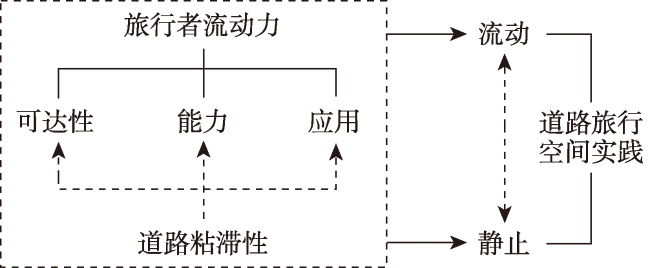
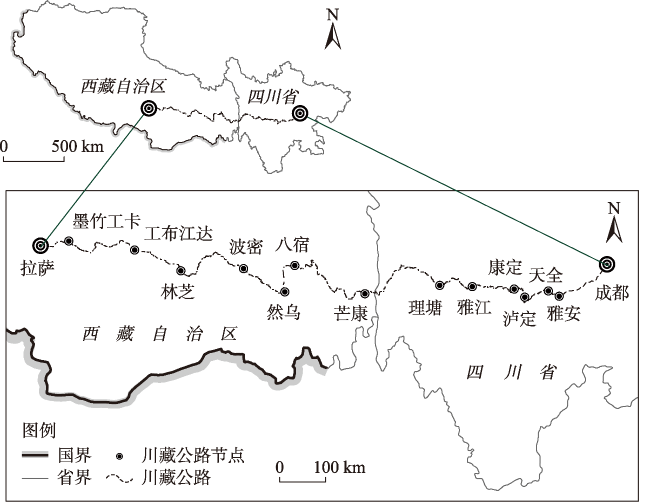
Road travel, represented by Sichuan-Tibet Highway trip, has become a popular non-institutionalized and post-modern travel method. Road travel is very different from the general mass tourism because of its long-term and large-scale mobility practice, which poses a challenge to the traditional tourism research that focuses more on tourism destination. Taking Sichuan-Tibet Highway as a case, this study adopted the method of mobile ethnography and integrated the framework of “motility-viscosity” based on the perspective of mobility theory to explore the spatial practices and formation mechanism of road travel on the Sichuan-Tibet Highway. The study found that, on the one hand, the mobility practices of Sichuan-Tibet Highway road travel are the result of travelers' coordination of the key elements of their motility, including “access”, “competence” and “appropriation”. In this process, the Sichuan-Tibet Highway not only assumes the function of a channel, but also influences the mobility practices and experience of travelers by multiple materialities. Road travel mobilities are comprehensive skill practices involving multiple mobility technologies such as automobiles, bicycles and so on, which not only enable the traveler's body to move through space, but also shape the rhythm of movement and the way how specific places and landscapes are perceived and experienced. In addition, for long-term travel in large-scale spaces, travelers' planning and mobility willingness are crucial to determine whether the travel can be completed. On the other hand, the mooring practices are mainly affected by the “obstacle viscosity”, “landscape viscosity” and “relationship viscosity” of the road, and present a variety of forms and practical significance. This expands our understanding of the moorings during travel. Moorings are not necessarily negative. The alternating cycle of “mobility, mooring and re-mobility” constitutes the common structure of road travel pattern, but it also shows complexity and variability. The interaction between a traveler's mobility dynamics and road viscosity provides an explanation for the occurrence mechanism of the traveler's spatial practices-road viscosity respectively acts on different and key factors of motility, thus shaping the diverse purposes and representation of mobility/mooring practices and their mutual transformation. This study innovatively integrated the analysis framework of “motility-viscosity”, expanding the concept connotation of “viscosity” and trying to build the interactive relationship between the two, which is a breakthrough attempt comparing to the use of a single concept in analyzing mobility practice in the past. The study revealed the interactive relationship between road space and travelers and its significance to the tourism mobility practices. It reflected on the understanding of travel channels and journey in tourism research from a dynamic perspective.
Key words: road travel; mobility practices; motility; viscosity; Sichuan-Tibet Highway
WANG Xueji , YUE Dingyi , SUN Jiuxia . Motility and viscosity: Spatial practices of road travel on Sichuan-Tibet Highway[J]. GEOGRAPHICAL RESEARCH, 2023 , 42(8) : 2211 -2224 . DOI: 10.11821/dlyj020221299
表1 被访者信息Tab. 1 Demographic characteristics of interviewees |
| 编号 | 年龄 | 性别 | 旅行方式 | 行程/ 田野点 | 编号 | 年龄 | 性别 | 旅行方式 | 行程/田野点 |
|---|---|---|---|---|---|---|---|---|---|
| ZC | 27 | 男 | 摩托车旅行 | 成都-理塘 | XE | 28 | 男 | 摩托车旅行 | 理塘 |
| XJ | 25 | 男 | 摩托车旅行 | 雅安-理塘 | YJ | 26 | 男 | 自行车旅行 | 拉萨 |
| JL | 22 | 男 | 摩托车旅行 | 理塘-鲁朗 | HQ | 26 | 男 | 自行车旅行 | 拉萨 |
| JE | 20 | 女 | 徒搭旅行 | 鲁朗-拉萨 | HD | 18 | 男 | 自行车旅行 | 拉萨 |
| CE | 22 | 男 | 徒搭旅行 | 鲁朗-拉萨 | WX | 26 | 女 | 自行车旅行 | 拉萨 |
| JW | 25 | 男 | 自行车旅行 | 成都 | GB | 30 | 女 | 摩托车旅行 | 拉萨 |
| AJ | 24 | 男 | 自行车旅行 | 成都 | YX | 26 | 男 | 徒步旅行 | 拉萨 |
| MM | 28 | 女 | 徒搭旅行 | 成都 | YF | 27 | 女 | 徒步旅行 | 拉萨 |
| LX | 22 | 男 | 自行车旅行 | 理塘 | LL | 23 | 男 | 徒步旅行 | 拉萨 |
| DC | 23 | 男 | 自行车旅行 | 理塘 | YY | 37 | 女 | 徒搭旅行 | 拉萨 |
| JK | 28 | 男 | 徒搭旅行 | 理塘 | CK | 24 | 男 | 自驾旅行 | 拉萨 |
| ZF | 23 | 女 | 徒搭旅行 | 理塘 | YQ | 22 | 女 | 自驾旅行 | 拉萨 |
| FG | 30 | 男 | 自驾旅行 | 理塘 |
真诚感谢匿名评审专家在论文评审中所付出的时间和精力,专家对本文优化文献综述的内容与结构、深化理论分析的修改意见使本文获益匪浅。
| [1] |
王学基, 孙九霞, 黄秀波. 中介、身体与情感:川藏公路旅行者的流动性体验. 地理科学, 2019, 39(11): 1780-1786.
[
|
| [2] |
|
| [3] |
解佳, 孙九霞, 王学基. 道路旅行中的背包客涂鸦: 空间实践与新部落的形成. 地理研究, 2020, 39(7): 1640-1653.
[
|
| [4] |
王学基, 解佳, 孙九霞. 在路上: 道路旅行者的流动实践及其意义解读. 旅游科学, 2019, 33(5): 1-13.
[
|
| [5] |
张朝枝, 张鑫. 流动性的旅游体验模型建构: 基于骑行入藏者的研究. 地理研究, 2017, 36(12): 2332-2342.
[
|
| [6] |
|
| [7] |
|
| [8] |
|
| [9] |
|
| [10] |
|
| [11] |
| [12] |
|
| [13] |
|
| [14] |
|
| [15] |
|
| [16] |
保继刚. 论旅游地理学的研究核心. 人文地理, 1992, (2): 11-18.
[
|
| [17] |
|
| [18] |
|
| [19] |
|
| [20] |
蔡晓梅, 卜美玲, 李军. 以流动看世界: 基于彼得·阿迪《流动性》的研究述评. 热带地理, 2020, 40(3): 455-465.
[
|
| [21] |
熊伟, 黄媚娇, 蔡晓梅, 等. 新流动范式下非流动性的研究进展与展望. 地理研究, 2022, 41(3): 748-763.
[
|
| [22] |
|
| [23] |
|
| [24] |
|
| [25] |
|
| [26] |
|
| [27] |
吴寅姗, 陈家熙, 钱俊希. 流动性视角下的入藏火车旅行研究: 体验、实践、意义. 旅游学刊, 2017, 32(12): 17-27.
[
|
| [28] |
朱璇, 解佳, 江泓源. 移动性抑或流动性? 翻译、沿革和解析. 旅游学刊, 2017, 32(10): 104-114.
[
|
| [29] |
|
| [30] |
|
| [31] |
|
| [32] |
|
| [33] |
|
| [34] |
|
| [35] |
|
| [36] |
|
| [37] |
|
| [38] |
|
| [39] |
|
| [40] |
|
| [41] |
|
| [42] |
|
| [43] |
|
| [44] |
|
| [45] |
|
| [46] |
石飞, 刘峰贵, 李春花, 等. 川藏公路沿线旅游安全风险分析. 地域研究与开发, 2014, 33(4): 115-120.
[
|
| [47] |
单之蔷. 从大上海到珠穆朗玛:中国人的景观大道: 318国道. 中国国家地理, 2006, 7(10): 60-135.
[
|
| [48] |
王学基. 道路旅行中的主客互动与人地关系生产. 北方民族大学学报: 哲学社会科学版, 2019, 31(6): 71-76.
[
|
| [49] |
|
| [50] |
|
| [51] |
解佳, 孙九霞. 旅游流动中停泊的意义: 移动性视角下的青年旅舍研究. 旅游科学, 2019, 33(4): 32-46.
[
|
| [52] |
|
| [53] |
孙九霞, 周尚意, 王宁, 等. 跨学科聚焦的新领域: 流动的时间、空间与社会. 地理研究, 2016, 35(10): 5-22.
[
|
/
| 〈 |
|
〉 |