An analysis of the cultural representation, spatial distribution, and influencing factors of village names in Li language on Hainan Island
Received date: 2024-05-09
Accepted date: 2024-08-20
Online published: 2025-03-04
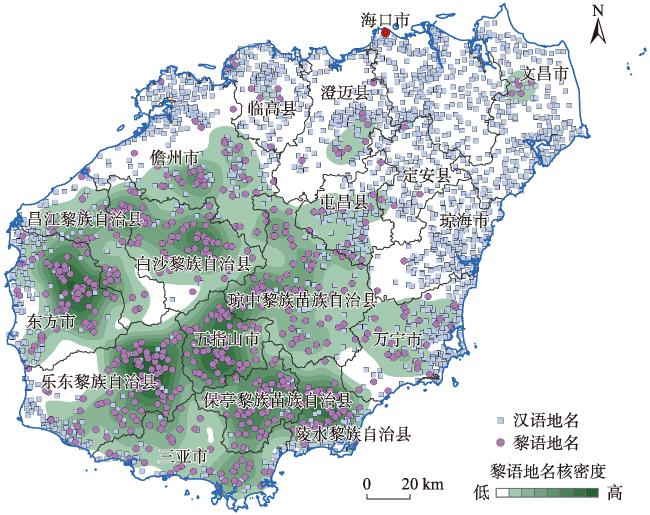
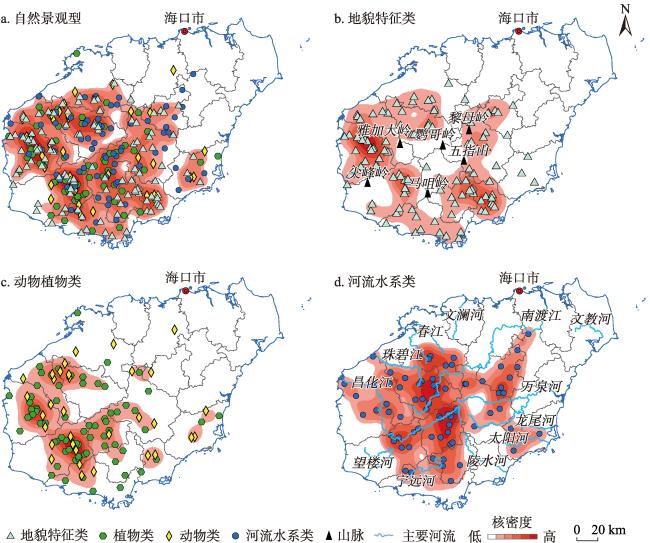
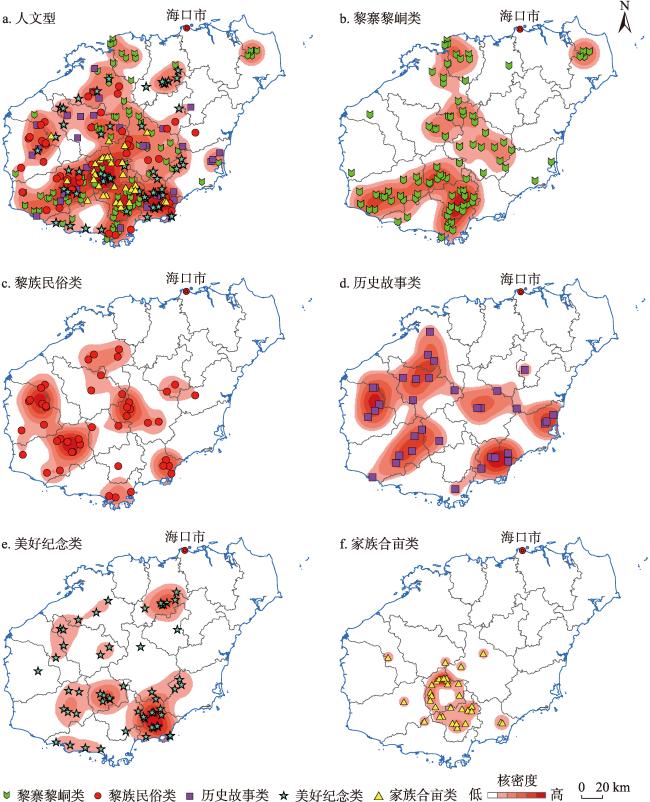
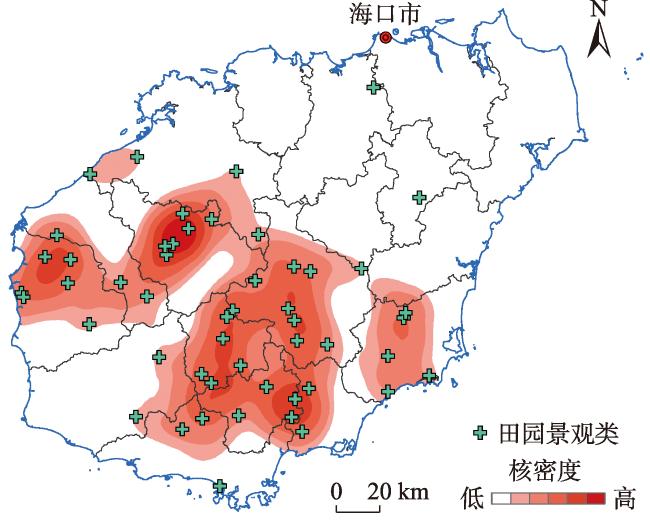
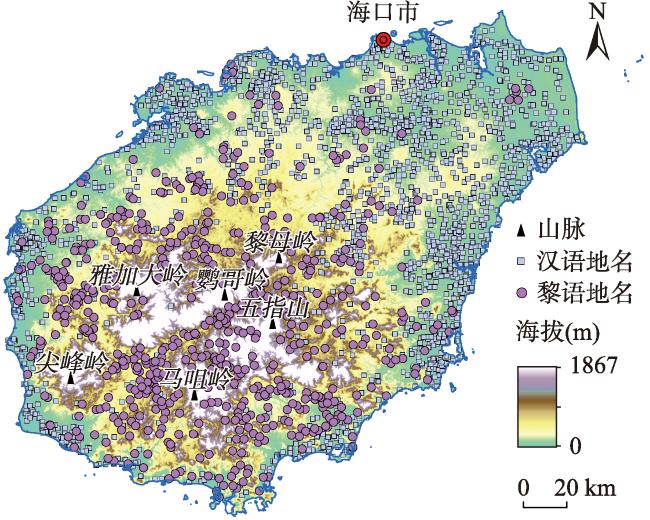
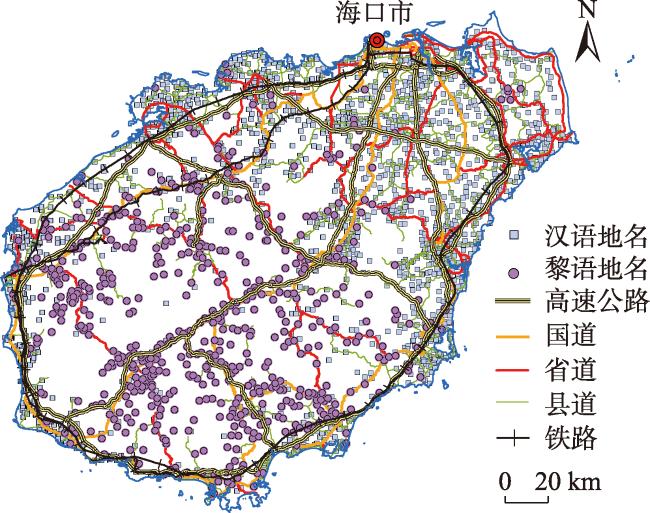
Hainan Island's village names in Li language serve as important carriers of the Li ethnic history and culture, representing precious intangible cultural heritages. From the perspective of cultural heritage, this article employs GIS spatial analysis and binomial logistic regression methods to explore the cultural representation, spatial distribution, and influencing factors of Hainan Island's village names in Li language. The findings showed that: (1) Hainan Island's village names in Li language reflects not only the characteristics of the natural landscape but also the cultural traits of the Li ethnic group. Natural landscape names are named after mountains, water, animals and plants, etc., which directly record and represent the living environment and natural ecological culture of Li people. Cultural place names are named after ancient Li-Dong, memorial stories, families, folk skills, etc., exhibiting the multi-characteristic culture of Li ethnic group, such as Li-Dong culture, folk culture, He-Mu culture and so on. Compound place names, exemplified by pastoral landscape designations, embody the harmonious coexistence of natural and human elements. (2) The spatial distribution of place names of Hainan Island is unbalanced, characterized by "Han in the coastal plain, while Li in the inland mountains". The spatial pattern of Li place names is closely related to the physio-geographical environment and the distribution of Li people's humanistic activities. (3) The formation of the spatial pattern of village names in Li language on Hainan Island is jointly affected by various factors: historical and political factors are dominant in forming the distribution of village names in Li language. Natural environmental factors play a foundational role in the distribution pattern of village names in Li language, while transportation accessibility acts as the dynamic factors that affect the distribution of the place names. By exploring and interpreting the excellent culture of village names in Li language, and clarifying its spatial pattern and influencing factors, it is helpful to carry forward the protection, promotion, and sustainable development of the cultural heritage of place names in Li language.
ZHANG Zhihong , ZHANG Zhengsheng , ZHANG Nianjie , DUAN Yinping , YE Yuhang . An analysis of the cultural representation, spatial distribution, and influencing factors of village names in Li language on Hainan Island[J]. GEOGRAPHICAL RESEARCH, 2025 , 44(3) : 809 -824 . DOI: 10.11821/dlyj020240418
表1 海南岛黎语村落地名字(词)汉语意分类Tab. 1 Chinese semantic classification of village names (words) in Li language on Hainan Island |
| 主类 | 亚类 | 黎语村落地名主要用字、词(汉语意思) | 例子 | 数量 (个) | 亚类 占比(%) |
|---|---|---|---|---|---|
| 自然 景观型 | 地貌特征 | 俄、峨、邱(山岭),空、昂、道(山林),陀(山岗),查(山沟),串(坑穴),朗(平坦低洼),炳、龙(宽阔),炮(沙子),定、丁(红黄色土壤),抄、朝(下方) | 俄查、峨沟、什邱、空联、昂外、道隆、陀骂、抱串、大朗、金炳、方龙、大炮、保定、抄抗、朝根 | 114 | 18.87 |
| 河流水系 | 南(水,河流),牙(两条河流交叉处),沟(河溪),南训(泉水喷出),浓塞(红水) | 南定、冲南、南圣、牙合、陀牙、番沟、可沟、南训 | 76 | 12.58 | |
| 动物植物 | 赛、寨(荔枝),密(波罗蜜),运(木瓜),孟(芒果),好(木棉),妹、眉(青梅),孔车(榕树),志针(鸡尖),什奋(乌墨),力秀(花梨),界、介(四脚蛇),飞(鸟),巴(狗),梅、美(狗熊),派(马),黄加(黄猄) | 番赛、抄寨、龙密、什运、赤好、乐妹、土眉、什介、抱界、飞巴、保梅、南美、三派、黄加 | 106 | 17.55 | |
| 自然景观型地名小计 | 296 | 49.01 | |||
| 文化型 | 黎寨黎峒 | 抱、报、保、番、方、芬(村,村寨),弓(古黎峒政区,沿用古黎峒名) | 抱班、报什、保突、番曼、方龙、芬坡、三弓、加钗 | 90 | 14.90 |
| 家族合亩 | 母、毛、茂(氏族,宗族称谓),尼下、抱由(同一祖先,同一族姓人居住) | 母感弓、加茂、毛定、毛枝抱安、尼下、抱由 | 33 | 5.46 | |
| 黎族民俗 | 罗(铜锣,图腾),佳(坛罐),帮辩(煮山麻织布制衣),报英(一种染料),礼乐(天黑之后才下葬的习俗) | 罗任、罗反、江边、佳头、加艾、牙排、毛道、老长 | 45 | 7.45 | |
| 历史故事 | 排慎(公母石头传说),本号(边屯历史) | 排慎、本号、汉小、亚欠、打金、月大 | 34 | 5.63 | |
| 美好纪念 | 水满(古老,至高无上),群英(黎族群众出英雄),畅好(山好水好人好) | 水满、群英、畅好、亚上、黎安、福安 | 55 | 9.11 | |
| 文化型地名小计 | 257 | 42.55 | |||
| 复合型 | 田园景观 | 什、扎、打、大、三、那、祖(农田,水田) | 什龙、扎南、打炳、大本、三雅、那会、祖空 | 51 | 8.44 |
| 总计 | 604 | 100 | |||
表2 Logistic逐步回归分析结果Tab. 2 Logistic stepwise regression analysis results |
| 变量 | 回归系数B | 标准差 | 瓦尔德 | 自由度 | 显著性p值 | Exp(B) |
|---|---|---|---|---|---|---|
| 距主要历史治所 | 0.004 | 0.002 | 4.268 | 1 | 0.039 | 1.004 |
| 距火车站 | -0.026 | 0.007 | 14.381 | 1 | 0.000 | 0.974 |
| 距水系 | -0.030 | 0.008 | 13.238 | 1 | 0.000 | 0.970 |
| 距主要道路 | 0.084 | 0.038 | 4.792 | 1 | 0.029 | 1.088 |
| 距海岸线 | 0.021 | 0.007 | 8.772 | 1 | 0.003 | 1.021 |
| 坡度 | 0.050 | 0.019 | 6.869 | 1 | 0.009 | 1.051 |
| 高程 | 0.015 | 0.001 | 127.428 | 1 | 0.000 | 1.015 |
| 土地利用类型 | 0.455 | 0.122 | 13.915 | 1 | 0.000 | 1.576 |
| 常量 | -2.990 | 0.224 | 178.271 | 1 | 0.000 | 0.050 |
注:样本数n=2534;变量NDVI、坡向未参与逐步回归运算。 |
真诚感谢匿名评审专家在论文评审中所付出的时间和精力,评审专家对本文文献综述、理论视角、数据整理、结果分析等方面提出了宝贵的修改意见,使本文获益匪浅。
| [1] |
褚亚平, 尹钧科, 孙冬虎. 地名学基础教程. 北京: 中国地图出版社, 1994: 5-36.
[
|
| [2] |
陈晨, 修春亮, 陈伟, 等. 基于GIS的北京地名文化景观空间分布特征及其成因. 地理科学, 2014, 34(4): 420-429.
[
|
| [3] |
王彬, 司徒尚纪. 基于GIS的广东地名景观分析. 地理研究, 2007, 26(2): 238-248.
[
|
| [4] |
|
| [5] |
马仁锋, 陈佳锐. 长三角地区地名通名文化景观空间格局及影响因素. 地理研究, 2022, 41(3): 764-776.
[
|
| [6] |
|
| [7] |
孙百生, 葛伟, 杨依天, 等. 基于定量计算的承德地貌与乡村聚落地名相关分析. 干旱区资源与环境, 2017, 31(11): 69-74.
[
|
| [8] |
|
| [9] |
|
| [10] |
|
| [11] |
|
| [12] |
|
| [13] |
曾早早, 方修琦, 叶瑜. 基于聚落地名记录的过去300年吉林省土地开垦过程. 地理学报, 2011, 66(7): 985-993.
[
|
| [14] |
|
| [15] |
李建华, 米文宝, 冯翠月, 等. 基于GIS的宁夏中卫县地名文化景观分析. 人文地理, 2011, 26(1): 100-104.
[
|
| [16] |
朱海天. 南沙群岛地名分析. 地理研究, 2018, 37(11): 2344-2354.
[
|
| [17] |
赵静, 张争胜, 陈冠琦, 等. 文化生态学视角下的南海诸岛地名文化. 热带地理, 2016, 36(6): 1045-1056.
[
|
| [18] |
王法辉, 王冠雄, 李小娟. 广西壮语地名分布与演化的GIS分析. 地理研究, 2013, 32(3): 487-496.
[
|
| [19] |
|
| [20] |
李巍, 杨斌. 藏族村落地名的空间格局、生成机制与保护策略: 以甘南藏族自治州夏河县为例. 地理研究, 2019, 38(4): 784-793.
[
|
| [21] |
朱竑, 周军, 王彬. 城市演进视角下的地名文化景观: 以广州市荔湾区为例. 地理研究, 2009, 28(3): 829-837.
[
|
| [22] |
张生瑞, 王英杰, 张桐艳, 等. 基于跨省界自然地理实体地名空间格局的行政管理优化. 地理学报, 2019, 74(4): 797-813.
[
|
| [23] |
赵思文, 胡希军, 金晓玲, 等. 古航道视角下聚落地名文化景观时空特征及影响因素: 以湖南沅水流域为例. 地理研究, 2024, 43(1): 214-235.
[
|
| [24] |
夏志, 金石柱, 刘云刚. 中朝边境地名空间分布及区域特征分析: 以延边、咸镜北道地名为例. 世界地理研究, 2023, 32(4): 50-62.
[
|
| [25] |
覃凤余, 林亦. 壮语地名的语言与文化. 南宁: 广西人民出版社, 2007: 1-6.
[
|
| [26] |
刘剑三. 地名: 海南民族活动史的“化石”. 海南师院学报, 1992, (1): 102-107.
[
|
| [27] |
刘剑三. 海南地名及其变迁研究. 海口: 海南出版社, 2008: 100-106.
[
|
| [28] |
文珍. 三亚黎语地名的文化解析. 琼州学院学报, 2015, 22(3): 27-34+78.
[
|
| [29] |
王学萍. 中国黎族. 北京: 民族出版社, 2004.
[
|
| [30] |
王秀伟, 李晓军. 中国乡村旅游重点村的空间特征与影响因素. 地理学报, 2022, 77(4): 900-917.
[
|
| [31] |
高文静, 肖大威, 卓晓岚. 云南少数民族特色村寨的分布特征及影响因素. 经济地理, 2022, 42(9): 228-238.
[
|
| [32] |
|
| [33] |
海南省地方志办公室编. 海南省志民族志. 海口: 南海出版公司, 2006: 22-25.
[Edited by Hainan Provincial Local Chronicles Office. Ethnography of Hainan Province. Haikou: Nanhai Publishing Company, 2006: 22-25.]
|
| [34] |
阎根齐. 昌江黎族自治县史. 北京: 社会科学文献出版社, 2016: 13-23.
[
|
/
| 〈 |
|
〉 |