Spatio-temporal characteristics and influencing factors of China's digital consumption
Received date: 2024-06-28
Accepted date: 2024-12-12
Online published: 2025-04-16
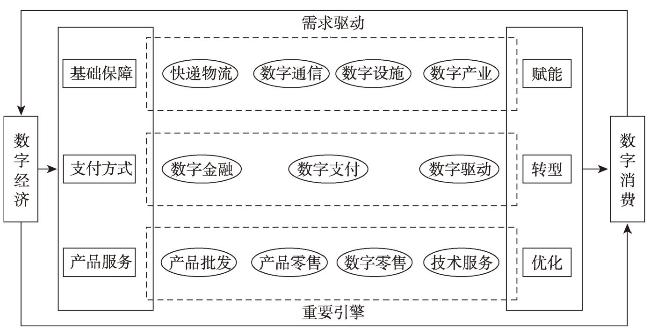
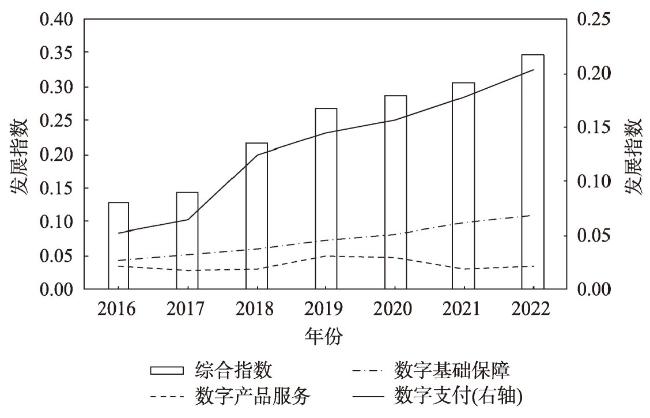
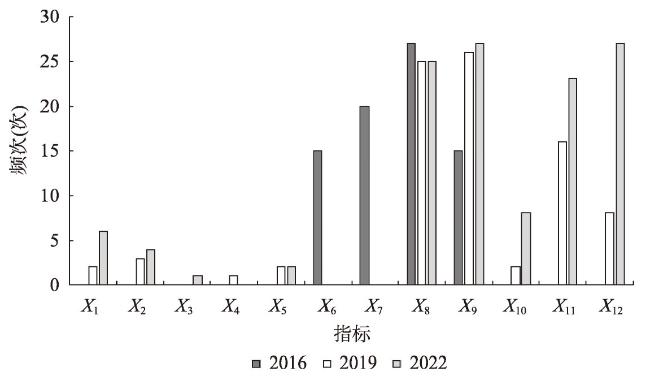
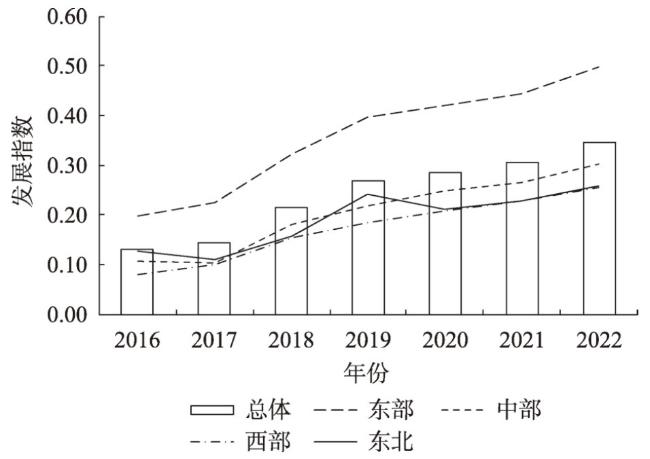
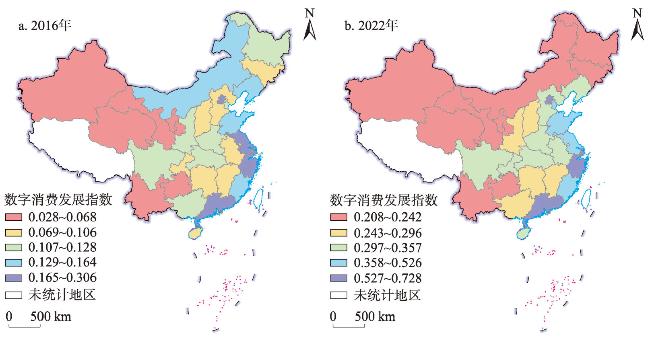
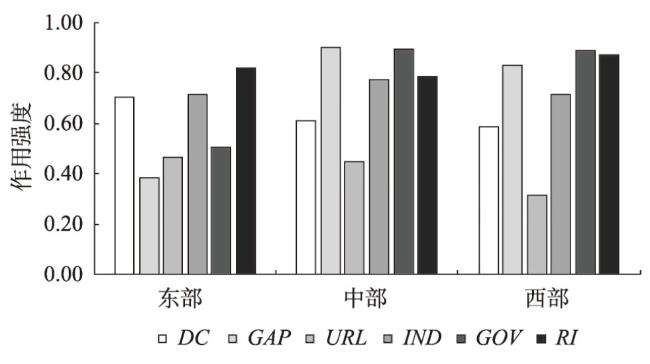
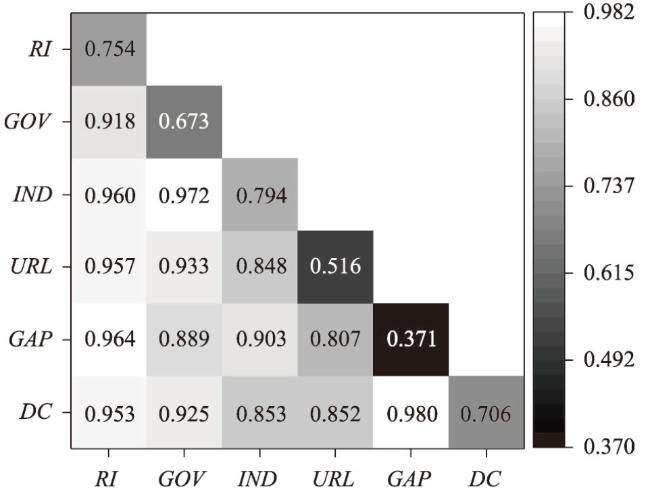
Digital consumption, as an important content and carrier of the construction of digital China, is the fulfilment of the people's need for a high quality of life, and is of great significance in promoting the sustainable development of consumption and boosting economic growth. Based on the national policy planning, this paper clarifies the theoretical connotation of digital consumption and its logical mechanism, and explores the spatial and temporal evolution characteristics of China's provincial digital consumption development from 2016 to 2022 with the help of the ESDA method, and examines its internal obstacles and external drivers with the use of the obstacle model and the geodetector. The study found that: (1) The structural characteristics show that the development potential of the national digital consumption has been rapidly released, but there are still problems such as the exclusion of digital payment tools and the lagging growth of income from digital consumption products and services; The chronological features reflect that China's digital consumption index shows a steady upward trend year by year, but the central and western regions of the country are characterized by “low quality and high speed growth”. (2) In terms of spatial pattern, the heterogeneity of China's digital consumption development is remarkable, and it has gradually formed a “multi-center” radiation network structure with the “Beijing-Tianjin-Hebei/Yangtze River Delta/Chengdu-Chongqing” urban agglomerations as the core nodes; In terms of spatial correlation, the degree of spatial agglomeration of digital consumption development has stabilized over time amid fluctuations, and spatial dependence has increased. The localized space has formed a pattern of association, in which “homogeneous and heterogeneous features coexist”. (3) The analysis of drivers shows that narrowing the differences in industrial agglomeration, regional innovation, and digital economy development across regions is an important driver for advancing the development of digital consumption, while the interactive combination of digital economy development and urban-rural income disparity is a key driver. This study has implications for synergistically enhancing the development of digital consumption and broadening the new space for economic growth.
CHENG Gang , CHANG Huifang , LI Xuhui . Spatio-temporal characteristics and influencing factors of China's digital consumption[J]. GEOGRAPHICAL RESEARCH, 2025 , 44(4) : 1102 -1118 . DOI: 10.11821/dlyj020240623
表1 中国数字消费发展测度指标体系Tab. 1 Indicator system for measuring the development of digital consumption in China |
| 目标层 | 准则层 | 一级指标 | 权重 |
|---|---|---|---|
| 中国数字 消费水平 测度指标 体系 | 数字消费基础保障 | 快递物流发展:人均快递业务量(X1) | 0.0729 |
| 数字通信设备:移动电话基站数(X2) | 0.0772 | ||
| 数字驱动设施:人均互联网接入端口数(X3) | 0.0808 | ||
| 数字驱动生产:工业互联网专利授权数(X4) | 0.0530 | ||
| 数字零售产业:新零售产业企业数量(X5) | 0.0562 | ||
| 数字支付 | 数字金融覆盖:金融服务数字化程度(X6) | 0.1110 | |
| 数字支付普及:支付宝账户覆盖率(X7) | 0.1009 | ||
| 数字驱动支付:网上零售额/社会消费品总额(X8) | 0.1299 | ||
| 数字产品服务 | 数字产品批发:软件产品收入(X9) | 0.0933 | |
| 数字产品零售:电信业务总额(X10) | 0.0623 | ||
| 数字驱动零售:电子商务交易额(X11) | 0.0845 | ||
| 数字技术服务:信息技术服务收入(X12) | 0.0779 |
表2 中国数字消费发展的空间相关性检验Tab. 2 Spatial correlation test of digital consumption development in China |
| 年份 | 2016 | 2017 | 2018 | 2019 | 2020 | 2021 | 2022 |
|---|---|---|---|---|---|---|---|
| 莫兰指数 | 0.225 | 0.181 | 0.219 | 0.285 | 0.241 | 0.229 | 0.240 |
| Z值 | 2.913 | 2.444 | 2.857 | 3.590 | 3.111 | 2.994 | 3.111 |
| P值 | 0.002 | 0.007 | 0.002 | 0.000 | 0.001 | 0.001 | 0.001 |
表3 中国各省份数字消费发展的空间集聚类型Tab. 3 Spatial clustering of digital consumption development in China's provincial-level regions |
| 年份 | “高-高”集聚型 (第一象限) | “低-高”集聚型 (第二象限) | “低-低”集聚型 (第三象限) | “高-低”集聚型 (第四象限) |
|---|---|---|---|---|
| 2016 | 浙江、上海、江苏、福建、山东、辽宁、内蒙古(7) | 天津、安徽、河北、海南、江西、吉林、河南(7) | 山西、湖北、黑龙江、广西、陕西、重庆、四川、湖南、新疆、贵州、云南、宁夏、青海、甘肃(14) | 广东、北京(2) |
| 2022 | 天津、上海、江苏、浙江、山东、福建(6) | 安徽、海南、河北、江西、河南、广西、内蒙古(7) | 湖北、湖南、山西、辽宁、陕西、重庆、新疆、贵州、云南、吉林、宁夏、黑龙江、青海、甘肃(14) | 北京、广东、四川(3) |
表4 全样本数字消费发展驱动因素探测结果Tab. 4 Detection results of driving factors for the development of full sample digital consumption |
| DC | GAP | URL | IND | GOV | RI | |
|---|---|---|---|---|---|---|
| q统计量 | 0.706 | 0.371 | 0.516 | 0.794 | 0.673 | 0.754 |
| p值 | 0.000 | 0.092 | 0.008 | 0.000 | 0.000 | 0.000 |
注:DC、GAP、URL、IND、GOV、RI分别表示数字经济发展、城乡收入差距、城镇化、产业集聚、政府投资和区域创新。 |
真诚感谢匿名评审专家在论文评审中所投入的辛勤工作,评审专家对本文研究思路、方法与指标选取、篇章结构、结果分析、结论与研究创新梳理方面提出的宝贵修改意见,极大地促进了本文质量的提升和完善。
| [1] |
毛军, 梁沐晗, 谢嘉豪. 中国数字乡村发展统计测度与时空异质性研究. 中国软科学, 2024, (5): 80-89.
[
|
| [2] |
赖立, 谭培文. 数字中国建设背景下数字消费的内涵、困境及发展路径. 经济学家, 2023, (12): 95-103.
[
|
| [3] |
中国政府网. 国务院办公厅转发国家发展改革委关于恢复和扩大消费措施的通知. https://www.gov.cn/zhengce/zhengceku/202307/content_6895600.htm, 2024-05-30.
[China gov.cn. General Office of the State Council transmits circular of the national development and reform commission on measures to restore and expand consumption. https://www.gov.cn/zhengce/zhengceku/202307/content_6895600.htm, 2024-05-30.]
|
| [4] |
中华人民共和国商务部. 商务部办公厅关于实施数字消费提升行动的通知. http://www.mofcom.gov.cn/article/gztz/202404/20240403502883.shtml, 2024-05-30.
[Ministry of Commerce of the People's Republic of China. Circular of the General Office of the Ministry of Commerce on the implementation of digital consumption enhancement action. http://www.mofcom.gov.cn/article/gztz/202404/20240403502883.shtml, 2024-05-30.]
|
| [5] |
毛中根, 谢迟, 叶胥. 新时代中国新消费:理论内涵、发展特点与政策取向. 经济学家, 2020, (9): 64-74.
[
|
| [6] |
刘亦文, 阳超. 城市让生活更美好: 城镇化的有序推进与城乡居民消费升级. 数理统计与管理, 2024, 43(1): 132-146.
[
|
| [7] |
杜丹清. 互联网助推消费升级的动力机制研究. 经济学家, 2017, (3): 48-54.
[
|
| [8] |
李梁栋, 刘璇. 数字时代中国式现代化的消费之维: 理论内涵、发展困境和应对措施. 当代经济管理, 2024, 46(1): 10-20.
[
|
| [9] |
魏晓敏, 王林杉. 中国居民网络消费的区域差异测度及收敛性研究. 数量经济技术经济研究, 2018, 35(7): 130-145.
[
|
| [10] |
李宝库, 赵博, 刘莹, 等. 农村居民网络消费支付意愿调查分析. 管理世界, 2018, 34(6): 94-103.
[
|
| [11] |
陈建, 邹红, 张俊英. 数字经济对中国居民消费升级时空格局的影响. 经济地理, 2022, 42(9): 129-137.
[
|
| [12] |
陈丽莉, 杨予越, 李长风, 等. 中国五大城市群消费中心城市指数演变及其影响因素. 经济地理, 2023, 43(8): 39-48.
[
|
| [13] |
曾洁华, 钟若愚. 互联网推动了居民消费升级吗? 基于广东省城市消费搜索指数的研究. 经济学家, 2021, (8): 31-41.
[
|
| [14] |
杜家廷, 何勇, 顾谦农. 数字普惠金融对农村居民消费结构升级的非线性影响. 统计与信息论坛, 2022, 37(9): 63-74.
[
|
| [15] |
李金昌. 统计测度: 统计学迈向数据科学的基础. 统计研究, 2015, 32(8): 3-9.
[
|
| [16] |
韩文龙. 数字经济中的消费新内涵与消费力培育. 福建师范大学学报: 哲学社会科学版, 2020, (5): 98-106, 170.
[
|
| [17] |
王磊. 更大限度激发数字消费潜力. 经济日报, 2024-01-23(10).
[
|
| [18] |
罗小芳, 卢现祥. 交易成本、普遍制度与全国统一大市场. 经济学动态, 2023, (6): 15-28.
[
|
| [19] |
李史恒, 屈小娥. 数字经济赋能制造业高质量发展: 理论机制与实证检验. 经济问题探索, 2022, (10): 105-117.
[
|
| [20] |
蔡跃洲, 牛新星. 中国数字经济增加值规模测算及结构分析. 中国社会科学, 2021, (11): 4-30, 204.
[
|
| [21] |
陈梦根, 周元任. 数字经济、分享发展与共同富裕. 数量经济技术经济研究, 2023, 40(10): 5-26.
[
|
| [22] |
潘宏亮, 赵兰香, 叶璐. 我国数据要素发展水平的测度及时空演进研究. 科学学研究, 2025, 43(1): 205-216.
[
|
| [23] |
洪闯, 李中明. 数字乡村背景下农村社区健康信息服务内容供给优先序研究. 图书情报工作, 2024, 68(5): 63-73.
[
|
| [24] |
周德, 戚佳玲, 钟文钰, 等. 城市群城乡融合发展: 测度评价、障碍因素与驱动因素. 地理研究, 2023, 42(11): 2914-2939.
[
|
| [25] |
史利江, 李永宁, 李前锦, 等. 资源型地区地级市绿色发展水平的时空演变及影响因素: 以山西省为例. 经济地理, 2024, 44(1): 77-87, 173.
[
|
| [26] |
时姗姗, 席建超. 青藏高原旅游城镇化测度研究. 地理研究, 2024, 43(2): 377-393.
[
|
| [27] |
郭峰, 王靖一, 王芳, 等. 测度中国数字普惠金融发展:指数编制与空间特征. 经济学(季刊), 2020, 19(4): 1401-1418.
[
|
| [28] |
周文, 韩文龙. 数字财富的创造、分配与共同富裕. 中国社会科学, 2023, (10): 4-23, 204.
[
|
| [29] |
戴翔, 曾令涵, 徐海峰. 企业数字化转型提升出口韧性: 机理及实证. 中国软科学, 2023, (5): 44-53.
[
|
| [30] |
渠慎宁, 史丹, 杨丹辉. 中国数字经济碳排放: 总量测算与趋势展望. 中国人口·资源与环境, 2022, 32(9): 11-21.
[
|
| [31] |
熊健, 杨军. 数字化背景下的农村金融排斥: 数字机遇还是数字鸿沟. 农业技术经济, 2023, (12): 111-122.
[
|
| [32] |
陈昌盛, 许伟, 兰宗敏, 等. 我国消费倾向的基本特征、发展态势与提升策略. 管理世界, 2021, 37(8): 46-58.
[
|
| [33] |
叶胥, 龙燕妮, 毛中根. 多层级消费城市的空间格局及驱动因素: 以长三角地区41个城市为例. 经济地理, 2022, 42(5): 75-85.
[
|
| [34] |
程名望, 张家平. 新时代背景下互联网发展与城乡居民消费差距. 数量经济技术经济研究, 2019, 36(7): 22-41.
[
|
| [35] |
李在军, 管卫华, 柯文前. 中国区域消费与经济、人口重心演变的时间多尺度研究. 经济地理, 2014, 34(1): 7-14.
[
|
/
| 〈 |
|
〉 |