A review and future prospects of higher education's role in shaping talent mobility amid the talent dividend transition
Received date: 2024-12-31
Accepted date: 2025-03-24
Online published: 2025-06-04
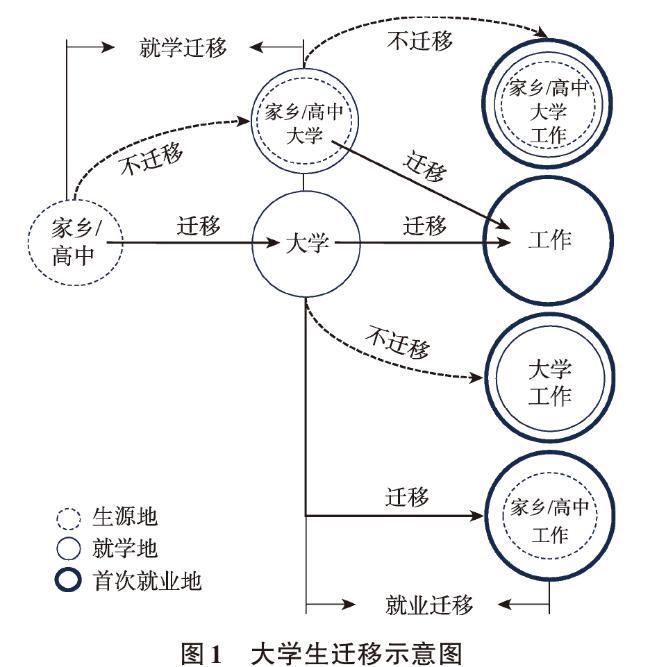
As China transitions from leveraging its “demographic dividend” to harnessing a “talent dividend”, the cultivation, utilization, mobilization, and management of talent have garnered unprecedented attention. Higher education, as a critical node in the talent's mobility chain, plays a dual role—first in talent cultivation and later in talent allocation and regional innovation. Since the 1960s, the world has entered an era of rapid expansion of higher education. The migration of university students—encompassing both educational migration and employment migration—centered around the locations of universities, has become increasingly dynamic. This migration significantly promotes the spatial agglomeration of human capital across countries and regions, sparking extensive discussions on the role of higher education in shaping human capital flows. This paper reviews the existing literature on educational and employment migration, systematically elucidates the relationship between these two stages of migration, and identifies diverse patterns of human capital movement among places of origin, higher education, and employment. Focusing on the influence of higher education institutions and their regional characteristics on the spatial distribution of human capital, scholarly perspectives coalesce around two contrasting theories: the “node theory” and the “hub theory”. Moreover, this paper highlights China's unique institutional contexts and their impact on the migration of university students. Future research can integrate multidisciplinary theories and research paradigms, conduct in-depth analyses on how China's higher education institutions and their regional characteristics shape student migration, and pursue international comparative studies to further dissect the role of institutional environmental factors.
YANG Jiarui , CUI Can , XIE Yuanyuan . A review and future prospects of higher education's role in shaping talent mobility amid the talent dividend transition[J]. GEOGRAPHICAL RESEARCH, 2025 , 44(6) : 1476 -1495 . DOI: 10.11821/dlyj020241482
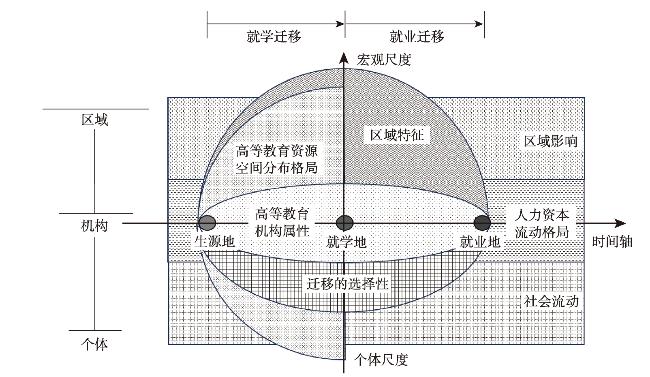
表1 就学迁移与就业迁移研究的主要议题Tab. 1 Main topics of research on schooling migration and employment migration |
| 主要议题 | 就绪迁移 | 就业迁移 | |||||
|---|---|---|---|---|---|---|---|
| 构成要素 | 主要研究内容 | 代表文献 | 构成要素 | 主要研究内容 | 代表文献 | ||
| 高等教育资 源空间分布 | 个体:大学的临近性 宏观:大学的空间分布 | 高等教育机会地理的差异对个体和区域迁移模式的影响 | Alm 等[39];潘昆峰和马莉萍[59] | —— | |||
| 高等教育 机构属性 | 位置、质量、专业设置、师资、学校类型等 | 高等教育机构的属性对就学迁移决策的影响,以及个体与机构属性的交互影响 | Sá 等[41]; Dotti 等[17] | 位置、质量、类型等 | 高等教育机构属性作为个体人力资本水平的“象征”,对流动性的影响 | Nifo 和 Vecchione[60] | |
| 迁移的选 择性 | 性别、种族、高中成绩、空间感知与偏好等 | 个体特征对就学迁移流动性差异的塑造 | Faggian 等[45];Donnelly 和 Gamsu[46] | 性别、种族、专业、空间感知与偏好等 | 个体特征对就业流动性差异的塑造 | Brophy[47];Kato[61] | |
| 区域特征 | 经济吸引力、舒适物水平 | 经济吸引力与舒适物等因素在就学迁移中的影响及重要程度 | Baryla 和 Do-tterweich[51] | 经济吸引力、舒适物水平 | 经济吸引力和舒适物水平对就业迁移决策的影响,以及二者重要程度的比较 | Capuano[52];Ishitani[12];Wright 和 Ellis[62] | |
| 社会流动 | 高等教育及迁移的支付能力 | 家庭的社会经济背景对就学迁移决策的影响,分析其对于维护社会阶层和代际传承的作用 | Impicciatore 和 Tosi[63] | 劳动力市场经济收益 | 就业流动性(模式)、迁移目的地等级差异导致的社会流动性差异 | Du[64];Yu 等[48] | |
| 人力资本 流动格局 | 地区吸引的大学生数量 | 就学迁移的流量和流向,分析不同地区高等教育机构的吸引力 | Ballarino 等[10] | 地区的毕业生保留率 | ① 毕业生就业迁移的流量和流向,分析不同地区高等教育机构的保留率;② 结合就学迁移,分析区域获取人力资本的不同方式 | Cui 等[65];Faggian 和 McCann[56] | |
| 区域影响 | 大学生的各种活动 | 就学迁移产生的区域影响,如支出-就业乘数效应、地区绅士化、知识溢出等 | Incera 等[55] | 毕业生的经济活动(就业、创业等)、迁移模式 | ① 毕业生不同类型的经济活动的区域影响;② 不同就业迁移模式对区域影响的差异 | Kitagawa 等[24];Marinelli[58] | |
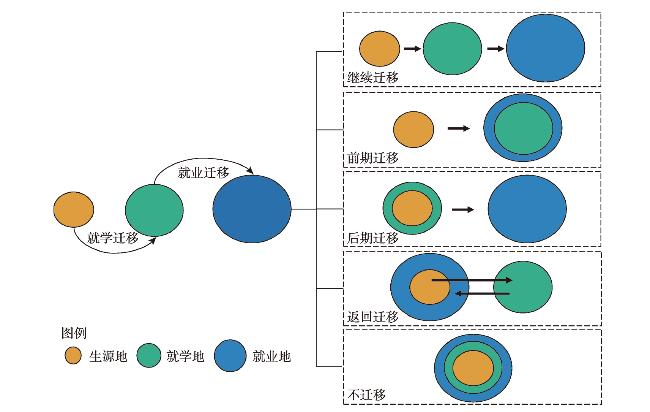
表2 大学生迁移模式的划分Tab. 2 Classification of migration modes for university students |
| 作者 | 类型1 | 类型2 | 类型3 | 类型4 | 类型5 |
|---|---|---|---|---|---|
| Belfield 和 Morris[9] | 留在本地就学并留在本地工作 (Stay to attend HE and stay in the region to work) | 留在本地就学但离开本地工作 (Stay to attend HE and exit that region to work) | 离开本地就学并留下工作 (Move to attend HE and stay in the region to work) | 离开本地就学并离开工作 (Move to attend HE and exit that region to work) | |
| Kodrzycki[67] | 非移民 (None-migrants) | - | 大学移民 (College in-migrants) | 成年移民 (Adult in-migrants) | 成年回归者(Adult returnees) |
| Faggian[45] | 不迁移 (Stayer) | 后期迁移 (Late Mover) | 前期迁移 (Sticker) | 继续迁移 (Repeat Migrant) | 返回迁移 (Return Migrant) |
| Hoare 和 Corver[72] | 本地人Locals (HSS大学:南方-南方+ LSS就业:南方-南方) | 外来者Outsiders (HNN大学:北方-北方+ LNS就业:南方-北方) | 停留者Stayers (HNS大学:南方-北方+ LSS就业:南方-南方) | - | 返回者 Returners (HSN大学:南方-北方+ LNS就业:北方-南方) |
| Herbst 和 Rok[73] | 就学不迁移,就业不迁移 H = U = L | 就学不迁移,就业不迁移 H = U → L | 就学迁移,就业不迁移 H → U = L | 就学迁移,就业迁移 H → U → L | 就学迁移,就业返回家乡 H → U → L = H |
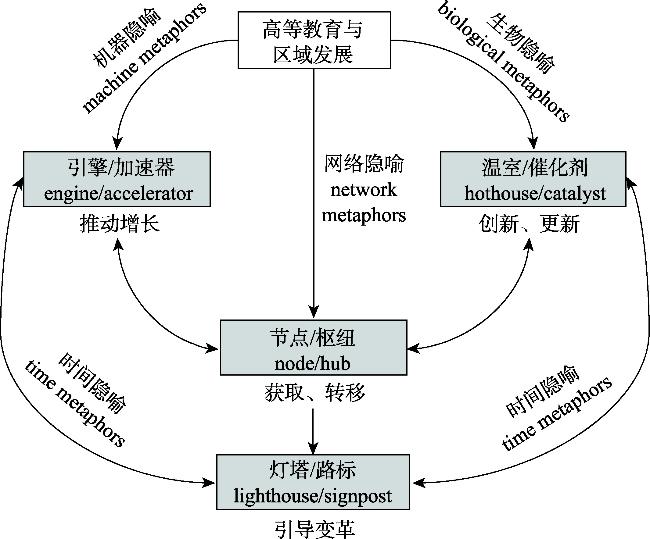
表3 高等教育“节点论”与“枢纽论”的概念内涵Tab. 3 “Node theory” and “hub theory” of higher education |
| 维度 | 节点论 | 枢纽论 |
|---|---|---|
| 机构的核心功能 | 以“接纳、输送或中转”为主,较少影响区域再分配 | 兼顾“集聚、调配和组织”,推动人力资本再分配 |
| 迁移模式 | 以高等教育机构为节点进行线性迁移,就学迁移和就业迁移是两个相对独立的阶段,迁移路径主要由区域结构特征(如就业机会、产业结构、气候环境等)决定 | 迁移模式网络化,高等教育机构在吸引学生的同时,通过“黏滞机制”留住毕业生并组织人力资本流向,覆盖从就学到就业的完整链条,连通区域间复杂的迁移网络 |
| 与区域联系 | 区域特性决定迁移结果 | 机构与区域特性共同作用 |
| 人力资本特性 | 学生主要在高等教育机构及就学地积累各类资本(人力、社会、文化等),但毕业后选择迁移还是留在所在地更依赖区域经济和就业条件等外部特性,高等教育机构影响有限 | 高等教育机构通过吸引优秀人才和提供高质量教育促进人力资本增长,其留住人才的能力依赖于“特定地点资本”和区域经济文化特性,形成区域竞争优势,影响区域长期发展路径。 |
| 政策导向 | 边缘地区投资高等教育难以显著留住人才,由于就业机会匮乏或与人才需求不匹配,高等教育更多充当人才输出功能,政策效果受限 | 高等教育机构作为区域治理的核心工具,通过优化资源配置提升区域人力资本水平,推动持续健康发展,特别是高质量机构能通过“黏滞机制”增强人才吸引与留存,政策效果显著 |
| 代表文献 | Bristow 等[69];Ma 等[7] | Faggian 和 McCann[5];Venhorst68];Kosztyán 等[8] |
真诚地感谢匿名评审专家在论文评审中所付出的时间和精力,评审专家对本文的章节设置顺序、主要议题的解读、大学生迁移概念图及核心概念解读等方面专业且细致的修改意见,使本文获益匪浅。
| [1] |
|
| [2] |
国家统计局. 中国统计年鉴2024. 北京: 中国统计出版社, 2024: 29.
[National Bureau of Statistics. China Statistical Yearbook 2024. Beijing: China Statistics Press, 2024: 29.]
|
| [3] |
胡鞍钢, 才利民. 从“六普” 看中国人力资源变化: 从人口红利到人力资源红利. 清华大学教育研究, 2011, 32(4): 1-8.
[
|
| [4] |
王思懿. 中国如何建设世界重要人才中心和创新高地. 重庆高教研究, 2024, 12(2): 14-24.
[
|
| [5] |
|
| [6] |
|
| [7] |
|
| [8] |
|
| [9] |
|
| [10] |
|
| [11] |
|
| [12] |
|
| [13] |
|
| [14] |
|
| [15] |
|
| [16] |
|
| [17] |
|
| [18] |
|
| [19] |
|
| [20] |
|
| [21] |
|
| [22] |
|
| [23] |
|
| [24] |
|
| [25] |
钟雨齐, 王强, 崔璨, 等. 人力资本的空间迁移模式与影响因素分析: 以南京市高校毕业生为例. 地理科学, 2021, 41(6): 960-970.
[
|
| [26] |
|
| [27] |
|
| [28] |
王强, 崔璨, 劳昕. 基于空间计量交互模型的人才流动影响因素研究: 以中国“双一流” 高校毕业生为例. 地理学报, 2023, 78(6): 1392-1407.
[
|
| [29] |
潘晨晨, 李莞荷, 王顶明. 人才流向何处:“双一流”高校毕业生空间流动特征研究 复旦教育论坛, 2024, 22(4): 34-43.
[
|
| [30] |
崔璨, 于程媛, 王强. 人才流动的空间特征、驱动因素及其对长三角一体化高质量发展的启示: 基于高校毕业生的分析. 自然资源学报, 2022, 37(6): 1440-1454.
[
|
| [31] |
|
| [32] |
|
| [33] |
|
| [34] |
|
| [35] |
|
| [36] |
|
| [37] |
|
| [38] |
|
| [39] |
|
| [40] |
|
| [41] |
|
| [42] |
|
| [43] |
|
| [44] |
|
| [45] |
|
| [46] |
|
| [47] |
|
| [48] |
|
| [49] |
|
| [50] |
赵卫华. 居住压力与居留意愿: 基于北京外地户籍大学毕业生的调研分析. 江苏社会科学, 2018(2): 31-40.
[
|
| [51] |
|
| [52] |
|
| [53] |
|
| [54] |
|
| [55] |
|
| [56] |
|
| [57] |
赵怡琳. 我国高校毕业生就业流动与产业结构升级相互影响机理及实证研究. 北京: 北京科技大学博士学位论文, 2023:39-40.
[
|
| [58] |
|
| [59] |
潘昆峰, 马莉萍. 央属高校跨省招生名额分配行为研究: 引力模型假设及其验证. 高等工程教育研究, 2013 (6): 114-121.
[
|
| [60] |
|
| [61] |
|
| [62] |
|
| [63] |
|
| [64] |
|
| [65] |
|
| [66] |
|
| [67] |
|
| [68] |
|
| [69] |
|
| [70] |
|
| [71] |
|
| [72] |
|
| [73] |
|
| [74] |
|
| [75] |
|
| [76] |
|
| [77] |
|
| [78] |
|
| [79] |
陈江生, 李录堂, 张耀启. 从农村生源毕业生视角看我国农村人口乡城迁移及其影响因素: 基于12省47个高校2009年调查数据的实证研究. 农村经济, 2011(2): 116-120.
[
|
| [80] |
李宏波. 大学生就业政策演变及绩效研究:以广东省为例. 湛江: 广东海洋大学硕士学位论文, 2015:15-16.
[
|
| [81] |
严士清. 新中国户籍制度演变历程与改革路径研究. 上海: 华东师范大学博士学位论文, 2012: 45-53.
[
|
| [82] |
阎凤桥, 毛丹. 中国高等教育规模扩张机制分析: 一个制度学的解释. 高等教育研究, 2013, 34(11): 25-35.
[
|
| [83] |
娄曦阳.中国高等教育资源空间分布研究. 上海: 华东师范大学硕士学位论文, 2014: 55-78.
[
|
| [84] |
|
| [85] |
|
| [86] |
潘昆峰. 大学招生计划对我国青年人口迁移的影响及作用机制. 教育科学研究, 2017(12): 89-92.
[
|
| [87] |
潘昆峰, 崔盛. 地方政府人力资本竞争与省属高校跨省招生策略. 教育经济评论, 2017, 2(6): 31-50.
[
|
| [88] |
|
| [89] |
|
| [90] |
王一凡, 崔璨, 王强, 等. “人才争夺战” 背景下人才流动的空间特征及影响因素: 以中国“一流大学” 毕业生为例. 地理研究, 2021, 40(3): 743-761.
[
|
| [91] |
岳昌君. 大学生跨省流动的特点及影响因素分析. 复旦教育论坛, 2011, 9(2): 57-62.
[
|
| [92] |
|
| [93] |
封世蓝, 谭娅, 黄楠, 等. 户籍制度视角下的大学生专业与就业行业匹配度异质性研究:基于北京大学2008—2014届毕业生就业数据的分析. 经济科学, 2017(5): 113-128.
[
|
| [94] |
马莉萍, 潘昆峰. 留还是流? 高校毕业生就业地选择与生源地、院校地关系的实证研究. 清华大学教育研究, 2013, 34(5): 118-124.
[
|
| [95] |
马莉萍, 刘彦林. 大学教育如何促进地区代际流动? 对大学生生源地、院校地和就业地城市级别的实证研究. 华东师范大学学报(教育科学版), 2018, 36(5): 51-5+167.
[
|
| [96] |
|
| [97] |
张维阳, 钱雨昕, 崔璨. 基于地理学视角的“双一流” 高校学生就学迁移网络: 格局、驱动因素与公平性. 地理科学, 2023, 43(4): 668-678.
[
|
/
| 〈 |
|
〉 |