乡村旅游开发对农户生计和社区旅游效应的影响——旅游开发模式视角的案例实证
作者简介:陈佳(1989-),男,湖南溆浦人,博士研究生,研究方向为社会—生态系统与旅游(区域) 可持续发展。E-mail: dongdongbj2010@126.com
收稿日期: 2016-12-23
要求修回日期: 2017-04-08
网络出版日期: 2017-09-15
基金资助
国家旅游局“万名旅游英才计划”项目(WMYC20151083)
陕西高校人文社会科学青年英才支持计划(HSSTP)
湖南省人居环境学研究基地开放基金项目(RJ15K02)
陕西省自然科学基础研究计划面上项目(2014JM5205)
The impact of tourism development on changes of households' livelihood and community tourism effect: A case study based on the perspective of tourism development mode
Received date: 2016-12-23
Request revised date: 2017-04-08
Online published: 2017-09-15
Copyright
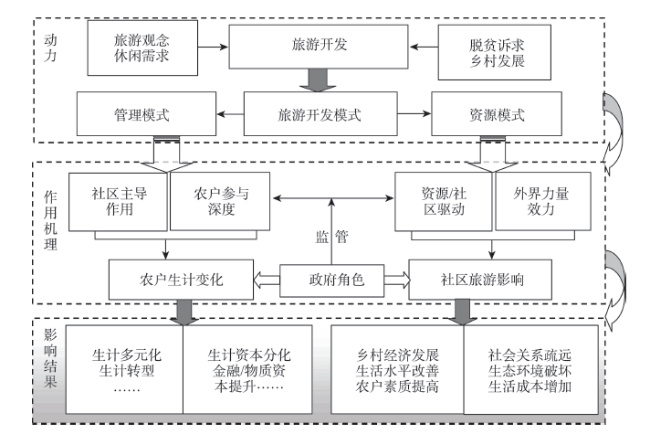
乡村旅游开发不可避免会重构人地关系,对农户、乡村社区都会产生重要影响,不同旅游开发模式直接影响乡村旅游发展绩效。以三类乡村旅游地为例,在总结资源、管理和发展主体差异的基础上,发现其呈现三类模式,各自特征分别表现为社区集体发展的民俗体验、社区主导的农家乐休闲和政府主导的遗址景区休闲。进而利用可持续生计框架和旅游效应理论,系统分析旅游开发模式对农户生计变化和社区的影响。研究表明:三种模式下农户生计策略都由传统农业生计方式向新型旅游经营主导生计转型,农户金融、物质、社会资本提升明显;其资源开发模式决定农户生计多样性与务工选择,旅游经营管理模式影响生计资本变化方向和社区旅游效应差异。其次,通过逻辑回归模型深入解释了三种类型旅游开发模式的影响作用,并给出其影响机理的理论解释。研究指出三种模式旅游影响途径都以农户金融、物质资本提升、乡村社会经济发展主导,相比而言,社区集体运营、农户主导的袁家村模式以“人”为核心,促进了乡村旅游全面发展。总体来说,资源差异与社区基础是农户生计变化、社区影响的原动力,政府角色、社区(企业)作用与农户利益是旅游开发管理的核心,旅游开发模式中政府有效管理、农户主体地位与外界力量正确介入才能保障乡村旅游有序进行,促进乡村社区发展与转型。
陈佳 , 张丽琼 , 杨新军 , 李钢 . 乡村旅游开发对农户生计和社区旅游效应的影响——旅游开发模式视角的案例实证[J]. 地理研究, 2017 , 36(9) : 1709 -1724 . DOI: 10.11821/dlyj201709009
Rural tourism development inevitably reconstructs the human-environment relationship, which exerts a significant impact on household and rural communities, and different tourism development modes directly affect the development performance of rural tourism. Firstly, this paper takes three types of rural sightseeing place as an example, on the basis of summarizing the differences of resources, management and development subject. It is found that three types of patterns have formed, which are characterized by folk experience of community collective development, "Nong Jia Le" leisure of community leading and ruins scenic spots leisure of government leading. And then, this article uses the sustainable livelihoods framework and tourism effect theory to systematically analyze the impact of tourism development modes on changes of households' livelihood and communities. It turns out that the three modes of livelihood strategies are from the traditional agricultural livelihood to a new tourism business livelihood. Household finance, material and social capital increase notably; the resource development mode determines the households' livelihood diversity and selection of migrant workers, and the mode of tourism management affect the change direction of livelihood capital and the difference of community tourism effects. Secondly, the role of the three types of tourism development model is explained by the logistic regression model, and the theoretical explanation of the mechanism of effects is presented. This research points out that the approach of influence of the three tourism modes are dominated by the households' finance and physical capital promotion as well as rural social and economic development. In comparison, Yuanjia village mode, which is operated by communities in a collective way and is household-oriented, takes "people" as the core, promoting the comprehensive development of rural tourism. In general, differences in resources and the foundation of communities are the driving force of households' livelihood changes and community impacts. At the same time, the role of government, the function of communities (enterprises) and the interest of households are the core of tourism development and management. Only the three conditions, namely, effective management of government, dominant position of households and external forces all carried out properly, can ensure ordered operation of rural tourism and thus promote the development and transformation of rural communities.
Key words: rural tourism; household; tourism development model; community; livelihood capital
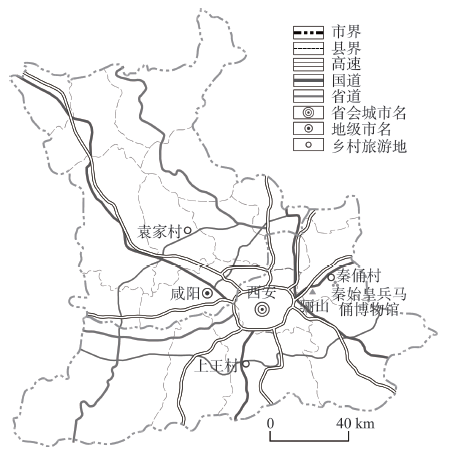
Fig. 1 Location of the study area图1 研究区示意图 |
Tab.1 Basic situation of the investigation表1 调查基本情况 |
| 村名 | 基本情况 | 调查情况 | ||||
|---|---|---|---|---|---|---|
| 总户数(户) | 旅游经营户(户) | 调查户数(户) | 旅游经营户(户) | 非旅游经营户(户) | ||
| 上王村 | 163 | 163 | 62 | 59 | 3 | |
| 秦俑村 | 152 | 45 | 60 | 37 | 23 | |
| 袁家村 | 62 | 58 | 35 | 33 | 2 | |
| 总计 | 377 | 266 | 157 | 129 | 28 | |
Tab.2 Change of households' livelihood pattern before and after tourism development表2 旅游开发前后农户生计方式变化 |
| 开发模式/类型 | 主要生计方式 | 生计多样化指数 | |||
|---|---|---|---|---|---|
| 旅游开发前 | 旅游开发后 | 旅游开发前 | 旅游开发后 | ||
| 上王村模式 | 务农(主导)+外出务工(农闲时节) | 农家乐经营(主导)+季节性务工(旅游淡季11月-次年3月) | 1.31 | 1.71 | |
| 袁家村模式 | 本地务工(主导)+务农(主要自给) | 农家乐经营(主导)+剩余劳动力外出务工+旅游商品经营 | 1.48 | 1.96 | |
| 秦俑村模式 | 务农(主导)+季节性务工 | 农家乐经营(旅游旺季4月-10月)+旅游商品经营/服务+长期务工 | 1.39 | 2.41 | |
注:生计多样化指数的计算公式为:,其中di为第i个农户的生计多样化指数;n为该社区的农户个数。 |
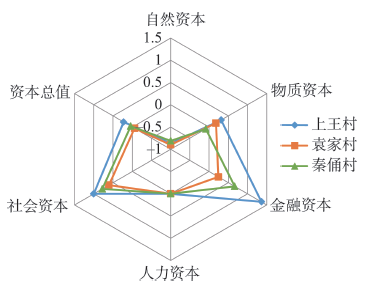
Tab.4 Comparison of farmer household capital before and after tourism development表4 旅游开发前后农户生计资本对比 |
| 类型 | 旅游开发前 | 旅游开发后 | |||||
|---|---|---|---|---|---|---|---|
| 上王村模式 | 袁家村模式 | 秦俑村模式 | 上王村模式 | 袁家村模式 | 秦俑村模式 | ||
| 自然资本 | 0.218 | 0.456 | 0.184 | 0.028 | 0.046 | 0.035 | |
| 物质资本 | 0.367 | 0.509 | 0.448 | 0.482 | 0.599 | 0.410 | |
| 金融资本 | 0.168 | 0.328 | 0.235 | 0.396 | 0.407 | 0.391 | |
| 人力资本 | 0.459 | 0.526 | 0.395 | 0.459 | 0.526 | 0.395 | |
| 社会资本 | 0.152 | 0.201 | 0.110 | 0.305 | 0.323 | 0.196 | |
| 资本总值 | 1.363 | 2.019 | 1.372 | 1.669 | 1.901 | 1.427 | |
注:由于旅游开发前后时间间隔为10年左右农户人力资本变化极小,故取值相同。 |
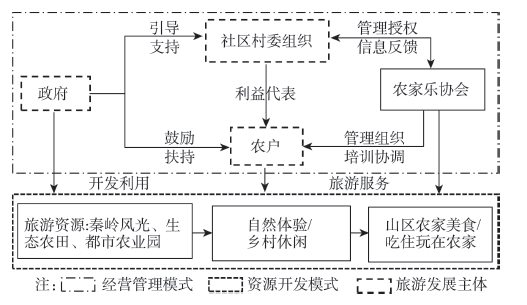
Fig. 2 Tourism development mode of Shangwang village图2 “上王村”旅游开发模式 |
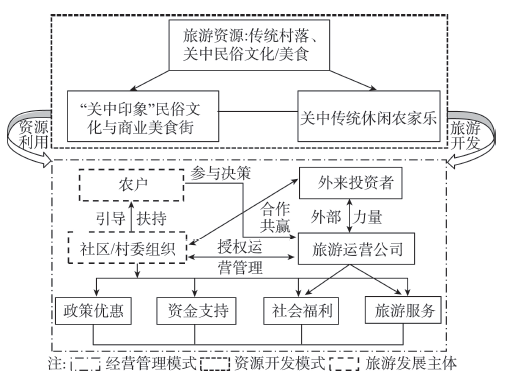
Fig. 3 Tourism development mode of Yuanjia village图3 “袁家村”旅游开发模式 |
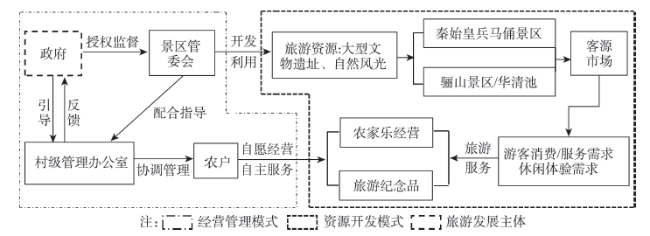
Fig. 4 Tourism development mode of Qinyong village图4 “秦俑村”旅游开发模式 |
Tab.3 The measuring indicators of households’ livelihood capital表3 农户生计资本测量指标体系 |
| 一级指标 | 二级指标 | 指标说明 | 权重 | 变量类型 |
|---|---|---|---|---|
| 自然资本(N) | 耕地资源(N1) | 户均耕地亩数 | 1.000 | 连续变量 |
| 物质资本(P) | 房屋面积(P1) | 户均住房面积 | 0.667 | 连续变量 |
| 日常耐用消费品(P2) | 农户家庭拥有的固定资产种类数 | 0.333 | 连续变量 | |
| 人力资本(H) | 家庭规模(H1) | 户均家庭人口数 | 0.169 | 连续变量 |
| 整体劳动能力(H2) | 无劳动力赋值0(完全不能从事劳动的儿童及老人);半劳动力赋值0.5(可以做一些简单劳动的孩子及老人);全劳动力赋值1.0(能够完全从事劳动) | 0.387 | 虚拟变量 | |
| 成员受教育程度(H3) | 文盲、小学、初中、高中、大专及以上分别赋值0、0.25、0.75、1.0 | 0.443 | 虚拟变量 | |
| 金融资本(F) | 家庭年收入(F1) | 户均家庭年总收入 | 0.493 | 连续变量 |
| 收入来源种类(F2) | 农户生计活动种类数 | 0.311 | 虚拟变量 | |
| 信贷机会(F3) | 有赋值为1;无赋值为0 | 0.196 | 虚拟变量 | |
| 社会资本(S) | 技能培训机会(S1) | 有赋值为1;无赋值为0 | 0.443 | 虚拟变量 |
| 社会网络支持度(S2) | (包括资金支持、政策支持、技术支持和人力支持)取得一种、两种、三种、四种分别赋值0.25、0.5、0.75、1.0 | 0.387 | 虚拟变量 | |
| 社会联结度(S3) | (是否有亲属在政府机关或企事业单位工作)有赋值1;无赋值0 | 0.169 | 虚拟变量 |
Fig. 5 Three communities of households' livelihood capital change rate after tourism development图5 旅游开发后三个社区农户生计资本变化率 |
Tab.5 Tourism impact perceptions statistics表5 旅游效应感知统计表 |
| 类别 | 感知指标 | 效应维度 | “上王村”模式 | “袁家村”模式 | “秦俑村”模式 | |||||
|---|---|---|---|---|---|---|---|---|---|---|
| 均值 | 标准差 | 均值 | 标准差 | 均值 | 标准差 | |||||
| 正面效应 | 旅游增加了就业机会 | 经济效应 | 4.433 | 0.767 | 4.621 | 0.429 | 3.821 | 0.862 | ||
| 旅游提高了农户收入 | 4.450 | 0.648 | 4.459 | 0.503 | 3.928 | 0.604 | ||||
| 旅游提高了生活水平 | 4.316 | 0.700 | 4.567 | 0.470 | 4.071 | 0.716 | ||||
| 旅游促进基础设施建设 | 4.250 | 0.772 | 4.459 | 0.706 | 4.285 | 0.599 | ||||
| 旅游改善了交通条件 | 4.350 | 0.732 | 4.540 | 0.496 | 4.462 | 0.576 | ||||
| 旅游提高农户环保意识 | 环境效应 | 3.983 | 0.947 | 4.243 | 0.549 | 3.821 | 0.728 | |||
| 旅游改善社区卫生环境 | 4.774 | 0.425 | 4.667 | 0.702 | 4.185 | 1.210 | ||||
| 旅游提高了社区知名度 | 社会文化效应 | 4.383 | 0.922 | 4.810 | 0.325 | 4.142 | 0.890 | |||
| 旅游促进民俗文化保护 | 4.129 | 0.922 | 4.708 | 0.550 | 3.741 | 0.859 | ||||
| 旅游促进社会治安变好 | 4.050 | 0.746 | 4.135 | 0.693 | 3.821 | 0.818 | ||||
| 旅游提高了农户素质 | 4.100 | 0.796 | 4.216 | 0.452 | 3.964 | 0.576 | ||||
| 旅游增进邻里关系 | 2.683 | 0.982 | 3.513 | 1.064 | 3.142 | 0.803 | ||||
| 负面效应 | 旅游导致贫富差距扩大 | 经济效应 | 3.700 | 1.078 | 3.621 | 1.017 | 4.285 | 0.975 | ||
| 旅游导致本地物价上涨 | 4.350 | 0.708 | 4.243 | 0.561 | 4.678 | 0.475 | ||||
| 旅游导致生态环境恶化 | 环境效应 | 3.500 | 1.112 | 3.675 | 1.028 | 3.571 | 0.959 | |||
| 旅游导致道德标准下降 | 社会文化效应 | 2.484 | 1.363 | 1.667 | 0.637 | 2.111 | 1.120 | |||
| 旅游导致优良传统受到外来思想冲击 | 3.129 | 1.477 | 2.292 | 1.122 | 2.704 | 1.203 | ||||
Tab.6 Model parameter estimation and test results表6 模型参数估计与检验结果 |
| 自变量 | 解释变量 | 回归系数 (B) | 标准误 (S.E) | Wald统计量 | 显著水平(Sig) | 发生比率 Exp (B) |
|---|---|---|---|---|---|---|
| “上王村”模式 | 住房面积 | 9.563 | 4.039 | 5.607 | 0.018 | 1423.504 |
| 农户收入 | 1.700 | 0.865 | 3.859 | 0.049 | 0.183 | |
| 商品和服务价格 | 2.570 | 0.855 | 9.024 | 0.003 | 13.063 | |
| 常量 | -4.571 | 4.312 | 1.124 | 0.289 | 0.010 | |
| HL=4.537 Sig=0.806 Nagelkerk R2 =0.411 模型预测准确率为80.8% | ||||||
| “袁家村”模式 | 旅游从业人数占比 | 7.705 | 3.770 | 4.176 | 0.041 | 2218.419 |
| 生活水平 | 2.485 | 1.106 | 5.047 | 0.025 | 12.001 | |
| 常量 | -11.509 | 5.590 | 4.239 | 0.040 | 0.000 | |
| HL=5.983 Sig=0.425 Nagelkerke R2 =0.475 模型预测准确率为94.3% | ||||||
| “秦俑村”模式 | 女性人口占比 | -12.235 | 5.568 | 4.828 | 0.028 | 0.100 |
| 日常耐用品种类 | 22.950 | 10.024 | 5.242 | 0.022 | 9.272 | |
| 家庭成员受教育程度 | 20.791 | 9.230 | 5.074 | 0.024 | 1.071 | |
| 培训次数 | 24.262 | 11.825 | 4.210 | 0.040 | 3.444 | |
| 农户收入 | 6.695 | 3.378 | 3.927 | 0.048 | 808.070 | |
| 常量 | -47.978 | 21.775 | 4.855 | 0.028 | 0.000 | |
| HL=2.098 Sig=0.978 Nagelkerke R2 =0.839 模型预测准确率为92.1% | ||||||
Fig. 6 The mechanism of the influence of tourism development model on farmers and community图6 旅游开发模式对农户、社区影响机理 |
The authors have declared that no competing interests exist.
| [1] |
|
| [2] |
|
| [3] |
|
| [4] |
|
| [5] |
|
| [6] |
[
|
| [7] |
|
| [8] |
|
| [9] |
|
| [10] |
[
|
| [11] |
[
|
| [12] |
[
|
| [13] |
[
|
| [14] |
[
|
| [15] |
[
|
| [16] |
[
|
| [17] |
[
|
| [18] |
[
|
| [19] |
[
|
| [20] |
[
|
| [21] |
|
| [22] |
[
|
| [23] |
[
|
| [24] |
[
|
| [25] |
DFID. Sustainable Livelihoods Guidance Sheets. London: Department for International Development, 2000.
|
| [26] |
[
|
| [27] |
[
|
| [28] |
[
|
/
| 〈 |
|
〉 |