基于全球生产网络视角下的零售供应链升级与转型——以鲜奶和大豆油为例
作者简介:王玥(1982- ),女,上海市人,博士,研究方向为全球生产网络和零售业国际化。E-mail:yuewang@niglas.ac.cn
收稿日期: 2017-12-04
要求修回日期: 2018-04-16
网络出版日期: 2018-07-30
基金资助
国家自然科学基金项目(41401131);中国博士后科学基金面上资助(2014M561721);教育部留学回国人员科研启动基金
Retailing supply networks transformation and upgrading within the global production networks (GPN): The case studies of fresh milk and edible oil
Received date: 2017-12-04
Request revised date: 2018-04-16
Online published: 2018-07-30
Copyright
在过去的10年中,快速的零售业全球化进程已经在经济地理学研究中引起了强烈的关注。依托全球生产网络分析框架,通过阐述权利与价值在两个食品供应链(鲜奶和食用油)中发生的迁移与更迭,揭示出跨国零售企业进入中国市场前后,本土供应链发生的转型与升级。同时,就供应链转型所具有的五个普适性特征,包括集中化采购、专业批发商的涌现、物流与信息系统升级、执行企业标准和发展自有品牌,在选取的案例产品中进行分析与比较,以此来解释供应链重组过程中的影响因素。结果表明:应采用动态的视角来研究零售供应链中的权利与价值,以此才能更好地揭示新兴市场中供应链网络转型升级的复杂性和不均衡性。
王玥 . 基于全球生产网络视角下的零售供应链升级与转型——以鲜奶和大豆油为例[J]. 地理研究, 2018 , 37(7) : 1435 -1446 . DOI: 10.11821/dlyj201807014
Over the last decade, the intensive and rapid retail internationalization has attracted wide attention across the social sciences. In particular, the local supply network impacts from retail transnational corporations (TNCs) purchasing activities have been discussed extensively by academic scholars, especially in terms of the host economies of Latin America. However, it is surprising that little similar research has been conducted in the world's biggest retailing market - China. Thus this paper adopts the global production networks (GPN) approach to explore these local supply network transformations in the Chinese market, and also identifies the mechanisms of upgrading process. The GPN framework refers to networks of firms and institutions, which pinpoints where value is created, enhanced and then captured throughout supply networks, highlights the dynamics of power within these webs of production, and reveals how retail TNCs make their attempt at embedding themselves in local markets. With the extensive interview-based fieldwork undertaken in Shanghai, China between 2014 and 2015 on two specific local supply networks, i.e., branded fresh milk and own branded edible oil, the paper examines the five ongoing shifts of the procurement activities adopted by retail TNCs in the host market. They are centralization of procurement, upgrading logistical systems, adoption of the specialized/dedicated wholesalers, private-standards enforcement and the development of private labels. The analysis demonstrates significant variations in both retailer management practices and strategic responses by suppliers between the two products. It reveals the dynamic power relations among retail TNCs, suppliers, wholesalers and logistics providers. In addition, a considerable restructuring and reconfiguration process has taken place in the local distribution, wholesale and agricultural production sectors, due to the increasing power exercised by retail TNCs. Finally, the paper calls for an in-depth study on the retailer power and its impacts based on the nuanced and dynamic approach, in an aim at better understanding the complexity and unevenness of supply network restructuring in emerging markets.
Tab. 1 Top 10 food and general merchandise retail chains in China 2015 (ranked by sales)[2]表1 2015年中国连锁十强(超市卖场类)[2] |
| 序号 | 企业名称 | 2015年销售(含税万元) | 2015年门店个数(家) |
|---|---|---|---|
| 1 | 华润万家有限公司 | 10940000 | 3397 |
| 2 | 高鑫零售有限公司 | 10790644 | 409 |
| 3 | 沃尔玛(中国)投资有限公司 | 7354653 | 432 |
| 4 | 联华超市股份有限公司 | 6047365 | 3912 |
| 5 | 永辉超市股份有限公司 | 4930942 | 394 |
| 6 | 家乐福(中国)管理咨询服务有限公司 | 4010221 | 234 |
| 7 | 农工商超市(集团)有限公司 | 2851127 | 2493 |
| 8 | 北京物美商业集团股份有限公司 | 2625527 | 552 |
| 9 | 山东家家悦投资控股股份有限公司 | 2297684 | 623 |
| 10 | 锦江麦德龙现购自运有限公司 | 1910000 | 8 |
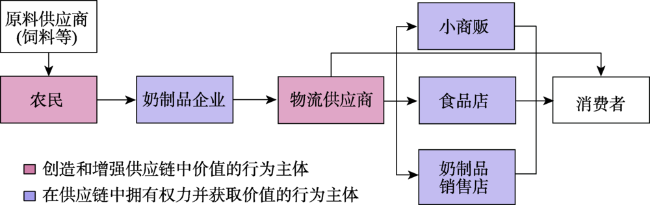
Fig. 1 The fresh milk supply network before the arrival of retail TNCs in China图1 跨国零售企业进入中国市场之前的鲜奶供应链 |
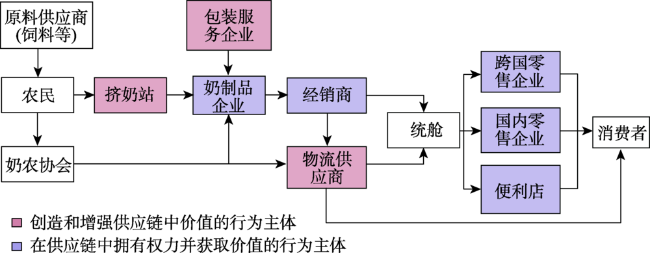
Fig. 2 The fresh milk supply network after the arrival of retail TNCs in China图2 跨国零售企业进入中国市场之后的鲜奶供应链 |
Tab. 2 Distribution of milk products by format in China: Percentage value during 2011-2015(%)表2 2011-2015年中国牛奶分销情况占比(%) |
| 分销渠道 | 2011 | 2012 | 2013 | 2014 | 2015 |
|---|---|---|---|---|---|
| 现代零售商 | 47.1 | 49.2 | 49.8 | 49.9 | 50.1 |
| 便利店 | 2.8 | 3.1 | 3.3 | 3.5 | 3.6 |
| 打折店 | 0.2 | 0.2 | 0.2 | 0.2 | 0.2 |
| 大卖场 | 11.1 | 13.2 | 13.9 | 14.2 | 14.5 |
| 超市 | 33.0 | 32.7 | 32.4 | 32.0 | 31.8 |
| 传统零售商 | 51.9 | 47.6 | 45.9 | 43.9 | 42.6 |
| 独立小店 | 26.6 | 26.0 | 25.0 | 24.0 | 23.3 |
| 其他零售店 | 25.3 | 21.6 | 20.9 | 19.9 | 19.3 |
| 其他(如网上销售) | 1.0 | 3.2 | 4.3 | 6.2 | 7.3 |
Tab. 3 Milk products brand shares in China: Percentage value during 2012-2015(%)表3 2012-2015年中国牛奶品牌销量占比(%) |
| 品牌 | 2012 | 2013 | 2014 | 2015 |
|---|---|---|---|---|
| 伊利 | 19.9 | 19.6 | 19.4 | 19.8 |
| 蒙牛 | 14.2 | 14.0 | 14.3 | 14.5 |
| 光明 | 3.3 | 2.8 | 2.4 | 2.6 |
| 完达山 | 1.8 | 1.7 | 1.7 | 1.6 |
| 三元 | 1.8 | 1.6 | 1.6 | 1.7 |
| 其他 | 59.0 | 60.3 | 60.6 | 59.8 |
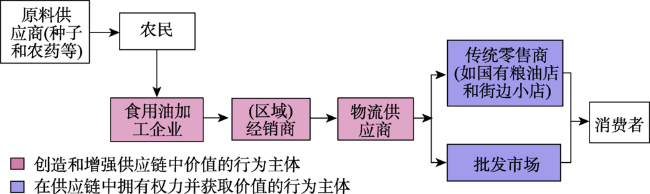
Fig. 3 The soybean oil supply network before the arrival of retail TNCs in China图3 跨国零售企业进入中国市场之前的大豆油供应链 |
Tab.4 Distribution of edible oil products by format in China: Percentage value during 2005-2015(%)表4 2005-2015年中国食用油分销情况占比(%) |
| 分销渠道 | 2005 | 2008 | 2011 | 2014 | 2015 |
|---|---|---|---|---|---|
| 现代零售商 | - | - | 79.9 | 80.1 | 80.7 |
| 便利店 | 11.0 | 12.0 | 3.0 | 3.2 | 3.2 |
| 打折店 | 0.1 | 0.2 | 0.2 | 0.2 | 0.2 |
| 大卖场 | 53.0 | 57.0 | 26.7 | 28.7 | 30.0 |
| 超市 | 50.0 | 48.0 | 47.3 | ||
| 传统零售商 | - | - | 19.7 | 18.7 | 17.8 |
| 独立小店 | 9.0 | 7.0 | 6.9 | 6.7 | 6.6 |
| 其他(如菜市场) | 26.9 | 23.8 | 12.8 | 12.0 | 11.2 |
| 其他(如网上销售) | - | - | 0.4 | 1.2 | 1.5 |
Tab. 5 Company shares of edible oils in China: Percentage value during 2011-2015(%)表5 2012-2015年中国食用油品牌销量占比(%) |
| 生产厂家 | 2011 | 2012 | 2013 | 2014 | 2015 |
|---|---|---|---|---|---|
| 益海嘉里 | 44.1 | 44.4 | 45.9 | 43.9 | 41.2 |
| 中粮集团 | 15.2 | 14.5 | 11.3 | 10.6 | 9.8 |
| 山东鲁花 | 5.3 | 5.3 | 5.8 | 6.4 | 7.2 |
| 上海粮油 | 3.6 | 3.4 | 3.5 | 3.3 | 3.4 |
| 上海佳格 | 1.8 | 1.8 | 2.0 | 2.4 | 2.7 |
| 其他 | 30.0 | 30.6 | 31.5 | 33.4 | 35.7 |
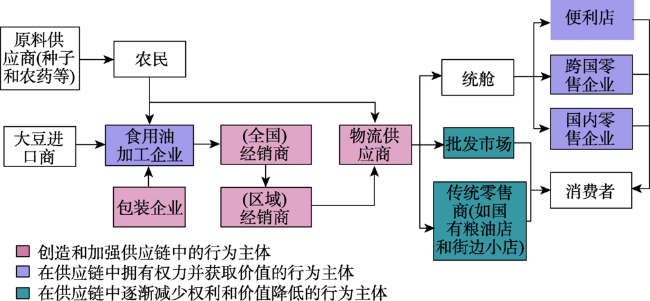
Fig. 4 The soybean oil supply network after the arrival of retail TNCs in China图4 跨国零售企业进入中国市场之后的大豆油供应链 |
Tab. 6 Power dynamics and value enhancement between the fresh milk and soybean oil supply network: A comparison表6 鲜奶与大豆油供应链中权利与价值更迭情况比较 |
| 供应链转型特征 | 鲜奶供应链 | 大豆油供应链 |
|---|---|---|
| 集中化采购趋势 | 供应商从门店配送转向集中配送,为零售商提供价值,分担成本,但获取了零售商长期的无形支持 | 对于无法达到集中化采购所需规模的自有品牌大豆油,零售商依靠第三方物流或供应商来存储和运输,降低成本,获取价值 |
| 采用专业批发商 | 专业批发商代表生产商与零售商进行谈判,利用当地品牌效应(领域根植性)为生产商谋求价值最大化 | 生产商要求专业批发商提高其品牌效应,后者在提高自身营销能力的同时,也为生产商创造了价值 |
| 物流与信息系统升级 | 由于侧重运输与销售环节的升级,因此零售商要求物流企业和供应商在这两个方面创造和增强价值 | 由于侧重于仓库存储环节的升级,生产商在提升此方面价值的同时提高了整体业务效率,也为零售商缓解了库存压力,创造价值 |
| 执行企业标准 | 零售商对供应商和物流商设置标准,包括配送时间、运输环境和温度控制等来获取价值 | 对于自有品牌产品,具体的企业标准明确之后,方可建立合作关系 |
| 不明朗的自有品牌发展趋势 | 发展形势并乐观,消费者对于自有品牌鲜奶制品信心不足,担心企业形象受损,企业不愿意生产自有品牌鲜奶(社会根植性的影响) | 零售企业主打自有品牌之一。为了降低产能过剩问题,同时抑制竞争对手产能,领先的大豆油生产商愿意生产自有品牌大豆油。有时,零售商低价销售自有品牌大豆油以吸引消费者 |
The authors have declared that no competing interests exist.
| [1] |
[
|
| [2] |
中国连锁经营协会. . 2015年中国快速消费品连锁百强. 2017-12-03.
[China Chain Store & Franchise Association. Top 100 Food and General Merchandise Retail Chains in China. , 2017-12-03.]
|
| [3] |
[
|
| [4] |
|
| [5] |
|
| [6] |
|
| [7] |
|
| [8] |
|
| [9] |
|
| [10] |
|
| [11] |
|
| [12] |
|
| [13] |
|
| [14] |
|
| [15] |
|
| [16] |
|
| [17] |
|
| [18] |
|
| [19] |
|
| [20] |
|
| [21] |
|
| [22] |
|
| [23] |
|
| [24] |
|
| [25] |
|
| [26] |
|
| [27] |
[
|
| [28] |
|
| [29] |
|
| [30] |
|
| [31] |
|
| [32] |
[
|
| [33] |
[
|
| [34] |
|
| [35] |
|
| [36] |
[
|
/
| 〈 |
|
〉 |