武陵山片区城镇化的农户生计响应及影响因素研究——基于3个典型乡镇355户农户调查数据的分析
|
丁建军(1980- ),男,湖南衡东人,博士,教授,博士生导师,主要研究方向为区域贫困与发展。 E-mail: latt514@163.com |
收稿日期: 2018-05-06
要求修回日期: 2018-07-25
网络出版日期: 2019-08-20
基金资助
国家自然科学基金项目(41761022)
国家自然科学基金项目(41761023)
国家自然科学基金项目(41761029)
湖南省社会科学基金重点项目(18ZDB031)
湖南省武陵山片区区域发展研究中心重点项目(17JDZB054)
湖南省武陵山片区扶贫与发展协同创新中心一般项目(17JDZB079)
版权
The livelihood response of rural households to urbanization and its influencing factors in Wuling Mountain area: With the survey data of 355 households in three typical towns
Received date: 2018-05-06
Request revised date: 2018-07-25
Online published: 2019-08-20
Copyright
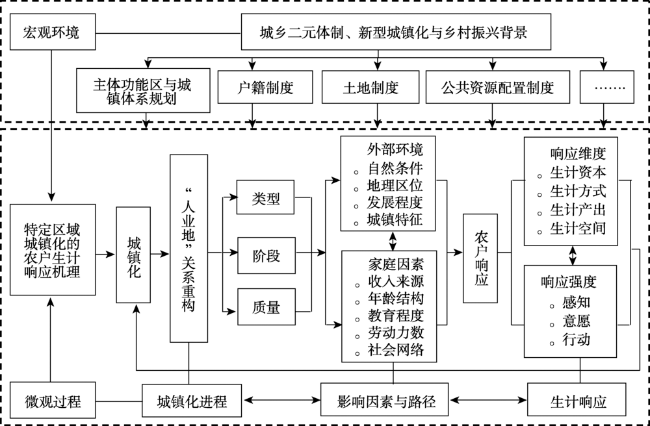
基于3个典型乡镇355户农户的调查数据考察武陵山片区农户的城镇化生计响应发现:① 农户生计响应是“城乡连续体”的“人业地”关系重构中乡村聚落的决策单元对城镇聚落吸附与扩散效应的综合反应,受宏观环境、外部条件和家庭因素的影响;② 区域性中心城市郊区、革命老区红色旅游景区和县城近郊特色农业种植区周边农户的生计综合响应、生计空间响应和生计产出响应依次递减,但生计资本和生计方式响应及各维度的响应强度排序不一致;③ 城乡二元体制的演变与新型城镇化战略、乡村振兴战略动态地规制与诱导农户,使其生计响应与国家阶段性战略目标相适应。地形平缓、距离县城较近、经济发展水平较高以及区域性中心城市郊区休闲驱动型城镇化对应于更广维度和更高强度的农户生计响应。收入来源以经商、务工为主,家庭成员中有小孩或老人,有较高教育程度家庭成员以及社会资本较高的农户,其生计响应的维度更广且强度更高。
丁建军 , 金宁波 , 贾武 , 易肖肖 , 王永明 . 武陵山片区城镇化的农户生计响应及影响因素研究——基于3个典型乡镇355户农户调查数据的分析[J]. 地理研究, 2019 , 38(8) : 2027 -2043 . DOI: 10.11821/dlyj020180441
Urbanization, as one of the most important ways to reduce poverty, influences rural poverty with the help of backward correlation effect, migration effect, wage effect and spillover effect. However, the empirical conclusions of urbanization's poverty reduction effectiveness were inconsistent, and even conflicting. One of the reasons is that the net poverty reduction effect of urbanization is closely related to the poor's livelihood response to urbanization. Therefore, rural households' livelihood response is an important perspective to understand the differences of poverty reduction effectiveness of urbanization. Yet unfortunately, there were few papers that have paid attention to rural households' livelihood response to urbanization, especially in the Contiguous Areas of China. In order to start a discussion, this paper, based on the survey data of 355 rural households in three typical towns, investigated the livelihood response, influencing factors and response mechanism and path of rural households under urbanization background in the Wuling Mountain area. The results showed that: (1) The farmer's livelihood response was the comprehensive reaction of the decision unit of rural settlements in the process of recombination of three basic factors (human activities and environment of the Urban and Rural Continuum. It was the result of mixture effect of background macroregulation and induction, external conditions and urban settlements' adsorption and diffusion and family factors' internal driving force. (2) The comprehensive livelihood response, livelihood space response and livelihood production response of rural households were decreasing orderly from regional central city suburbs, red tourism scenic spots of old revolutionary base areas to characteristic agriculture towns nearby county town, but the order of response of livelihood capital and means of livelihood were different, and the response intensity of each dimension was not consistent. (3) At the macro level, the regulation and induction of the evolution of the urban-rural dual system and the strategies of new-type urbanization and rural revitalization made farmers' livelihood response adapt to the national stage strategic goal. In the external condition, more gentle reliefs, closer to the county town, higher level of economic development and leisure driven urbanization of the regional central city suburbs were corresponded to wider dimension and higher strength of farmers' livelihood response. Family factors, such as incomes priority from business operation and employment, there were children or the aged family members, at least one higher degree of education family member as well as higher social capital, which made farmers' livelihood response wider and more intensively.
Key words: urbanization; rural household; livelihood response; Wuling Mountain area
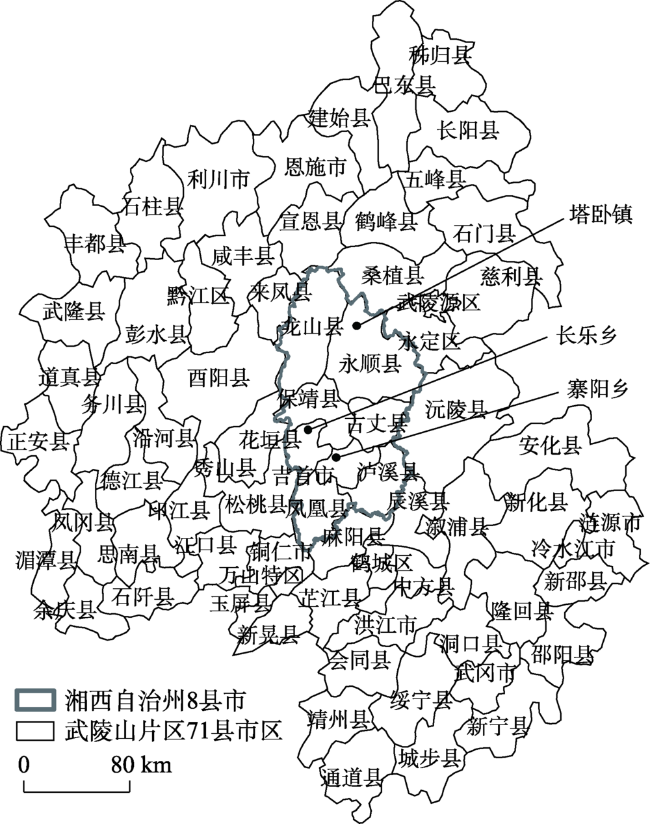
表1 调查基本情况表Tab. 1 Basic information of investigation |
| 调查村寨数(个) | 占比(%) | 调查户数(户) | 占比(%) | 调查对象为户主(人) | 占比(%) | |
|---|---|---|---|---|---|---|
| 寨阳乡 | 6 | 33.33 | 128 | 36.05 | 109 | 36.09 |
| 塔卧镇 | 5 | 27.78 | 106 | 29.86 | 87 | 28.81 |
| 长乐乡 | 7 | 38.89 | 121 | 34.08 | 106 | 35.10 |
| 总计 | 18 | 100.00 | 355 | 100.00 | 302 | 100.00 |
表2 农户生计响应测度要素与权重Tab. 2 Measurement elements and weights of rural households' livelihood response |
| 响应维度 | 测度要素 | 响应强度 | 主观权重 | 客观权重 | 综合权重 | |
|---|---|---|---|---|---|---|
| 生计 资本 | 自然资本 | 对耕地、林地、菜地、鱼塘等由于城镇化而被征收或流转的认知、态度和行为反应 | 感知 | 0.10 | 0.13 | 0.12 |
| 意愿 | 0.30 | 0.31 | 0.30 | |||
| 行动 | 0.60 | 0.56 | 0.58 | |||
| 自然资本响应权重 | 0.20 | 0.22 | 0.21 | |||
| 物质资本 | 对城市购房或住房改建中家居(小车、家具等)受城镇化影响的认知、态度及行为反应 | 感知 | 0.10 | 0.11 | 0.11 | |
| 意愿 | 0.30 | 0.22 | 0.26 | |||
| 行动 | 0.60 | 0.67 | 0.63 | |||
| 物质资本响应权重 | 0.20 | 0.29 | 0.25 | |||
| 人力资本 | 对家庭成员的见识、技能及对教育的认识等受城镇化影响的认知、态度和行为反应 | 感知 | 0.10 | 0.15 | 0.13 | |
| 意愿 | 0.30 | 0.32 | 0.31 | |||
| 行动 | 0.60 | 0.53 | 0.56 | |||
| 人力资本响应权重 | 0.20 | 0.08 | 0.14 | |||
| 社会资本 | 对邻里、亲戚和朋友关系等社会网络资源受城镇化影响的认知、态度和行为反应 | 感知 | 0.10 | 0.14 | 0.12 | |
| 意愿 | 0.30 | 0.31 | 0.31 | |||
| 行动 | 0.60 | 0.55 | 0.57 | |||
| 社会资本响应权重 | 0.20 | 0.20 | 0.20 | |||
| 金融资本 | 对持有金融产品、发生金融业务及与金融机构互动频率和方式受城镇化影响的认知、态度和行为反应 | 感知 | 0.10 | 0.16 | 0.13 | |
| 意愿 | 0.30 | 0.32 | 0.31 | |||
| 行动 | 0.60 | 0.52 | 0.56 | |||
| 金融资本响应权重 | 0.20 | 0.21 | 0.20 | |||
| 生计资本响应权重 | 0.25 | 0.13 | 0.19 | |||
| 生计方式 | 对城镇就业机会、非农就业方式(做生意、务工、兼职等)以及乡村生计方式受城镇化影响的认知、态度与行为反应 | 感知 | 0.10 | 0.21 | 0.15 | |
| 意愿 | 0.30 | 0.42 | 0.36 | |||
| 行动 | 0.60 | 0.37 | 0.49 | |||
| 生计方式响应权重 | 0.25 | 0.39 | 0.32 | |||
| 生计产出 | 对城镇化引起的产出水平、收入渠道以及受自然条件(灾害、恶劣天气等)、市场条件(价格、需求等)影响的认知、态度及行为反应 | 感知 | 0.10 | 0.32 | 0.21 | |
| 意愿 | 0.30 | 0.28 | 0.29 | |||
| 行动 | 0.60 | 0.40 | 0.50 | |||
| 生计产出响应权重 | 0.25 | 0.24 | 0.245 | |||
| 生计空间 | 对生计活动的空间(居住、就业、就学、就医、购物、娱乐空间等)受城镇化影响的认知、态度和行为反应 | 感知 | 0.10 | 0.18 | 0.14 | |
| 意愿 | 0.30 | 0.38 | 0.34 | |||
| 行动 | 0.60 | 0.44 | 0.52 | |||
| 生计空间响应权重 | 0.25 | 0.24 | 0.245 | |||
表3 三乡镇样本农户生计响应指数分维度比较Tab. 3 Dimension comparison of representative farmer' livelihood response index among the three towns |
| 生计资本响应 | 生计方式响应 | 生计产出响应 | 生计空间响应 | 综合生计响应 | ||||||||||
|---|---|---|---|---|---|---|---|---|---|---|---|---|---|---|
| 均值 | 标准差 | 均值 | 标准差 | 均值 | 标准差 | 均值 | 标准差 | 均值 | 标准差 | |||||
| 寨阳乡 | 3.68 | 0.65 | 3.52 | 1.12 | 3.83 | 0.73 | 3.38 | 0.85 | 3.59 | 0.71 | ||||
| 塔卧镇 | 3.39 | 0.44 | 3.64 | 0.65 | 3.50 | 0.64 | 3.25 | 0.50 | 3.46 | 0.38 | ||||
| 长乐乡 | 3.55 | 0.53 | 3.52 | 0.88 | 3.36 | 0.78 | 3.16 | 0.65 | 3.40 | 0.50 | ||||
| 所有样本 | 3.55 | 0.57 | 3.56 | 0.93 | 3.57 | 0.76 | 3.27 | 0.70 | 3.49 | 0.57 | ||||
| 自然资本响应 | 物质资本响应 | 人力资本响应 | 社会资本响应 | 金融资本响应 | ||||||||||
| 均值 | 标准差 | 均值 | 标准差 | 均值 | 标准差 | 均值 | 标准差 | 均值 | 标准差 | |||||
| 寨阳乡 | 3.92 | 1.16 | 2.95 | 1.27 | 4.31 | 0.77 | 3.70 | 1.11 | 3.90 | 1.12 | ||||
| 塔卧镇 | 3.57 | 1.03 | 3.05 | 0.77 | 4.05 | 0.83 | 3.19 | 0.88 | 3.36 | 0.91 | ||||
| 长乐乡 | 3.73 | 1.23 | 2.72 | 1.09 | 4.75 | 0.83 | 3.67 | 0.88 | 3.45 | 0.91 | ||||
| 所有样本 | 3.75 | 1.16 | 2.90 | 1.09 | 4.38 | 0.81 | 3.54 | 1.08 | 3.59 | 1.09 | ||||
Tab. 4 Mean comparison of representative farmer' livelihood response intensity index among the three towns |
| 生计资本响应 | 生计方式响应 | 生计产出响应 | 生计空间响应 | 综合生计响应 | |||||||||||||||
|---|---|---|---|---|---|---|---|---|---|---|---|---|---|---|---|---|---|---|---|
| 感知 | 意愿 | 行动 | 感知 | 意愿 | 行动 | 感知 | 意愿 | 行动 | 感知 | 意愿 | 行动 | 感知 | 意愿 | 行动 | |||||
| 寨阳乡 | 4.35 | 3.83 | 3.48 | 3.91 | 3.26 | 3.60 | 4.40 | 3.98 | 3.49 | 4.26 | 3.89 | 2.81 | 4.20 | 3.70 | 3.36 | ||||
| 塔卧镇 | 4.09 | 3.48 | 3.20 | 4.07 | 3.73 | 3.44 | 3.68 | 3.34 | 3.51 | 3.79 | 3.36 | 3.03 | 3.91 | 3.50 | 3.31 | ||||
| 长乐乡 | 4.19 | 3.69 | 3.36 | 4.47 | 3.83 | 3.01 | 3.54 | 3.30 | 3.32 | 3.90 | 3.01 | 3.05 | 4.05 | 3.47 | 3.16 | ||||
| 所有样本 | 4.22 | 3.68 | 3.36 | 4.15 | 3.59 | 3.35 | 3.89 | 3.56 | 3.44 | 3.99 | 3.43 | 2.96 | 4.06 | 3.56 | 3.28 | ||||
| 自然资本响应 | 物质资本响应 | 人力资本响应 | 社会资本响应 | 金融资本响应 | |||||||||||||||
| 感知 | 意愿 | 行动 | 感知 | 意愿 | 行动 | 感知 | 意愿 | 行动 | 感知 | 意愿 | 行动 | 感知 | 意愿 | 行动 | |||||
| 寨阳乡 | 4.46 | 4.04 | 3.74 | 4.11 | 3.29 | 2.61 | 4.74 | 4.36 | 4.18 | 4.23 | 3.81 | 3.52 | 4.38 | 3.94 | 3.77 | ||||
| 塔卧镇 | 4.19 | 3.63 | 3.41 | 4.00 | 3.23 | 2.81 | 4.58 | 4.14 | 3.88 | 3.90 | 3.27 | 2.98 | 3.97 | 3.39 | 3.19 | ||||
| 长乐乡 | 4.36 | 3.79 | 3.56 | 3.67 | 3.06 | 2.41 | 4.89 | 4.77 | 4.70 | 4.31 | 3.78 | 3.48 | 4.06 | 3.52 | 3.28 | ||||
| 所有样本 | 4.35 | 3.84 | 3.58 | 3.92 | 3.19 | 2.60 | 4.74 | 4.44 | 4.27 | 4.16 | 3.64 | 3.35 | 4.15 | 3.64 | 3.43 | ||||
表5 农户生计响应维度影响因素的识别结果Tab. 5 Identification results of factors that have impact on rural households’ livelihood response dimensions |
| 模型 | 模型1 | 模型2 | 模型3 | 模型4 | 模型5 | |
|---|---|---|---|---|---|---|
| 因变量 | ||||||
| 自变量 | ||||||
| 外部环境 | ||||||
| 城镇特征 | xzlx1 | 0.14(0.29) | -0.01(0.96) | -0.07(0.76) | 0.13(0.50) | 0.53***(0.00) |
| xzlx2 | -0.18(0.16) | -0.30*(0.05) | -0.02(0.94) | -0.46**(0.02) | -0.02(0.91) | |
| 自然条件 | dxlx1 | 0.14(0.24) | 0.03(0.78) | -0.07(0.71) | 0.33*(0.07) | 0.29**(0.04) |
| dxlx2 | 0.10(0.65) | 0.31(0.19) | 0.16(0.55) | -0.34(0.29) | 0.30(0.19) | |
| dxlx3 | 0.02(0.93) | -0.22(0.16) | -0.46(0.15) | 0.75**(0.01) | 0.09(0.70) | |
| 区位条件 | xcjl1 | -0.09(0.60) | -0.04(0.84) | -0.01(0.96) | -0.10(0.72) | -0.21(0.30) |
| xcjl2 | 0.03(0.86) | 0.14(0.35) | 0.03(0.87) | 0.11(0.67) | -0.16(0.35) | |
| xcjl3 | -0.00(0.99) | 0.07(0.74) | -0.04(0.87) | 0.38(0.23) | -0.38*(0.09) | |
| 村级经济 | cjjj1 | -0.24(0.23) | 0.26(0.29) | -0.28(0.34) | -0.33(0.15) | -0.48*(0.09) |
| cjjj2 | -0.08(0.62) | 0.12(0.58) | -0.13(0.56) | -0.18(0.39) | -0.08(0.75) | |
| cjjj3 | -0.30*(0.06) | 0.04(0.84) | -0.42**(0.04) | -0.59***(0.00) | -0.10(0.65) | |
| 家庭因素 | ||||||
| 收入来源 | Srly1 | 0.18(0.20) | -0.00(0.99) | 0.30(0.29) | 0.51***(0.00) | -0.20(0.26) |
| Srly2 | 0.04(0.75) | 0.03(0.90) | 0.35(0.20) | 0.23(0.20) | -0.55***(0.00) | |
| Srly3 | 0.34**(0.01) | 0.18(0.49) | 0.43(0.14) | 0.64***(0.00) | 0.03(0.85) | |
| Srly4 | -0.63***(0.00) | -0.41(0.22) | -0.76**(0.04) | -0.27(0.40) | -0.96***(0.00) | |
| 年龄结构 | nljg1 | 0.25**(0.01) | 0.28**(0.01) | 0.28*(0.09) | 0.21*(0.07) | 0.19(0.12) |
| nljg2 | 0.10(0.27) | 0.18*(0.05) | 0.04(0.79) | 0.18(0.11) | 0.04(0.67) | |
| nljg3 | -0.21(0.14) | -0.09(0.57) | -0.18(0.45) | -0.24(0.20) | -0.29*(0.08) | |
| 教育程度 | zgjy1 | -0.20*(0.05) | -0.15(0.17) | -0.23(0.18) | -0.25*(0.06) | -0.13(0.26) |
| zgjy2 | -0.17(0.15) | -0.18(0.13) | -0.12(0.57) | -0.18(0.22) | -0.21(0.13) | |
| zgjy3 | -0.08(0.48) | -0.06(0.67) | 0.03(0.87) | -0.28*(0.05) | -0.30(0.84) | |
| zgjy4 | 0.12(0.74) | -0.17(0.48) | 0.13(0.81) | 0.27(0.55) | 0.17(0.53) | |
| 劳力数量 | ldls1 | 0.21(0.34) | -0.07(0.65) | 0.28(0.46) | 0.17(0.45) | 0.36(0.16) |
| ldls2 | 0.15(0.51) | -0.12(0.43) | 0.15(0.69) | 0.17(0.45) | 0.31(0.22) | |
| ldls3 | 0.17(0.47) | -0.18(0.31) | 0.24(0.55) | 0.17(0.47) | 0.31(0.26) | |
| 社会网络 | csgz1 | 0.17*(0.06) | 0.13(0.20) | 0.21(0.19) | -0.06(0.58) | 0.38***(0.00) |
| csgz2 | 0.15*(0.09) | 0.01(0.94) | 0.16(0.29) | 0.16(0.21) | 0.23*(0.05) | |
| csgz3 | -0.23**(0.03) | -0.27**(0.01) | -0.16(0.48) | -0.38***(0.00) | -0.13(0.34) | |
| Loglikelihood | -176.06 | -186.37 | -313.92 | -240.50 | -225.88 | |
| Adj.R2 | 0.24 | 0.18 | 0.12 | 0.27 | 0.26 | |
| Prob(F-statistic) | 0.00 | 0.01 | 0.07 | 0.00 | 0.00 | |
注:① 模型1~5分别为生计资本响应、生计方式响应、生计产出响应、生计空间响应和综合生计响应的影响因素识别;② 所有模型均经过多重共线性、异方差等检验修正,并采用White异方差一致性估计量估计;③ ***、**、*分别表示在1%、5%和10%的显著性水平上显著。 |
| [1] |
蔺雪芹, 王岱, 任旺兵 , 等. 中国城镇化对经济发展的作用机制. 地理研究, 2013,32(4):691-700.
[
|
| [2] |
游俊, 冷志明, 丁建军 . 中国连片特困区发展报告(2014—2015). 北京: 社会科学文献出版社, 2015.
[
|
| [3] |
丁建军, 周书应 . 武陵山片区城镇化减贫的空间异质性. 中南民族大学学报: 人文社会科学版, 2018,38(2):78-83.
[
|
| [4] |
夏庆杰, 王大树 . 城市化与贫困: 文献综述. 中国国际扶贫中心研究报告, 2013, (10), , 2018-05-06.
[
|
| [5] |
|
| [6] |
|
| [7] |
|
| [8] |
|
| [9] |
|
| [10] |
|
| [11] |
|
| [12] |
Abdissa. Urban expansion and the livelihood of the peri-urban agricultural community: The case of Addis Abeba. Addis Ababa: Master Dissertation of Addis Abeba University, 2005.
|
| [13] |
|
| [14] |
|
| [15] |
|
| [16] |
|
| [17] |
|
| [18] |
李小建 . 农户地理论. 北京: 科学出版社, 2009.
[
|
| [19] |
李彩霞 . 城镇化对农民生计方式变迁的影响. 石河子: 石河子大学硕士学位论文, 2014.
[
|
| [20] |
刘自强, 李静 . 宁夏农户生计资本对城镇化的响应及提升路径. 北方民族大学学报: 哲学社会科学版, 2017, ( 2):127-132.
[
|
| [21] |
游和远, 李依灵 . 生计资本对农地转出户分层城镇化选择意愿的影响分析. 农村经济与科技, 2016,27(17):197-200.
[
|
| [22] |
苏芳, 周亚雄 . 新型城镇化背景下劳动力转移对农户生计策略选择的影响分析. 数理统计与管理, 2017, ( 1):15-22.
[
|
| [23] |
李伯华, 曹冬, 杨森 . 城乡边缘区农户家庭就业空间行为模式及机制研究. 云南地理环境研究, 2012,24(3):25-30.
[
|
| [24] |
任国平, 刘黎明, 付永虎, 等 . 基于 GWR模型的都市城郊村域农户生计资本空间差异分析. 资源科学, 2016,38(8):1594-1608.
[
|
| [25] |
镇玲, 孙丽丽 . 城市近郊被征地农户生计变化分析. 华中农业大学学报: 社会科学版, 2013, ( 5):106-112.
[
|
| [26] |
丁士军, 张银银, 马志雄 . 被征地农户生计能力变化研究. 农业经济问题, 2016, ( 6):25-33.
[
|
| [27] |
安祥生, 陈园园, 凌日平 . 基于结构方程模型的城镇化农民可持续非农生计分析. 地理研究, 2014,33(11):2021-2033.
[
|
| [28] |
冯建喜, 汤爽爽, 杨振山 . 农村人口流动中的“人地关系”与迁入地创业行为的影响因素. 地理研究, 2016,35(1):148-16.
[
|
| [29] |
陈佳, 张丽琼, 杨新军 , 等. 乡村旅游开发对农户生计和社区旅游效应的影响. 地理研究, 2017,36(9):1709-1724.
[
|
| [30] |
赵雪雁 . 地理学视角的可持续生计研究: 现状、问题与领域. 地理研究, 2017,36(10):1859-1872.
[
|
| [31] |
杨锡涛, 周学红, 张伟 . 基于熵值法的我国野生动物资源可持续发展研究. 生态学报, 2012,32(22):7230-7238.
[
|
/
| 〈 |
|
〉 |