中蒙俄经济走廊耕地资源格局与合作战略研究
|
李飞(1982-),男,山东淄博人,博士,副研究员,主要从事社会-生态-资源系统过程与可持续性及世界资源战略等研究。E-mail: lifeicas@163.com |
收稿日期: 2021-02-08
录用日期: 2021-11-10
网络出版日期: 2022-01-10
基金资助
中国科学院绿色过程制造创新研究院项目(IGAM-2019-A16-1)
国家社会科学基金项目(17VDL016)
“一带一路”国际科学组织联盟联合研究合作专项(ANSO-CRKP-2020-02)
中国科学院战略性先导科技专项(XDA2003020302)
国家科技基础资源调查专项(2017FY101302)
版权
Distribution of arable land resources and cooperation policies in the China-Mongolia-Russia economic corridor
Received date: 2021-02-08
Accepted date: 2021-11-10
Online published: 2022-01-10
Copyright
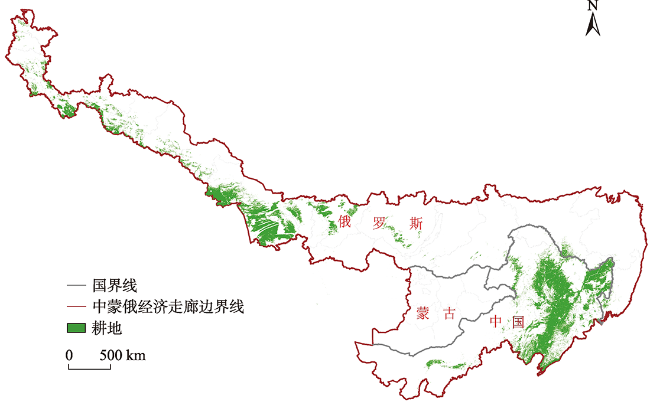
中蒙俄经济走廊耕地资源战略合作对于“一带一路”共建、加强中俄新时代全面战略协作伙伴关系意义重大。本研究综合运用遥感影像解析、野外实地考察、统计分析等方法,揭示了中蒙俄经济走廊耕地资源分布格局,剖析了耕地资源开发利用的主要制约因素;研究了中国对外耕地合作开发的主要问题,探索提出了中蒙俄经济走廊耕地资源合作对策建议。中蒙俄经济走廊耕地资源丰富,主要集中在俄罗斯欧洲部分莫斯科河和伏尔加河流域,以及鄂毕河流域、叶尼塞河流域、阿穆尔河流域与贝加尔湖流域等地。中蒙俄经济走廊俄罗斯部分耕地面积和高产耕地面积分别占经济走廊的60%和74%左右;而经济走廊俄罗斯部分未利用耕地面积占俄罗斯未利用耕地面积的近50%,占中蒙俄经济走廊未利用耕地面积的95%左右。今后应高度重视中蒙俄经济走廊耕地资源合作开发,推动中蒙俄耕地与农业合作自由化发展,可探索在阿穆尔州、犹太自治州等地率先开展中俄毗邻重点耕地国际合作创新示范区建设和农业自贸区建设,扩展延伸经济走廊耕地产业链和价值链,共建多元稳定的中蒙俄经济走廊农产品物流贸易通道。
李飞 , 张克 , 董锁成 , 李泽红 . 中蒙俄经济走廊耕地资源格局与合作战略研究[J]. 地理研究, 2021 , 40(11) : 3063 -3072 . DOI: 10.11821/dlyj020210118
The cooperation of arable land resources in the China-Mongolia-Russia economic corridor is of great significance to the joint construction of “the Belt and Road” and the promotion of the China-Russia comprehensive strategic partnership of coordination for a new era. Based on remote sensing, field surveys, statistical analyses and other methods, this study comprehensively revealed the distribution pattern of arable land resources in the China-Mongolia-Russia economic corridor, analyzed the main constraints on the development and utilization of arable land resources in the China-Mongolia-Russia economic corridor, explored the main problems of China's cooperative development of foreign arable land, and proposed measures and suggestions for the cooperation of arable land resources in the China-Mongolia-Russia economic corridor. It is shown that arable land resources are abundant in the China-Mongolia-Russia economic corridor, mainly concentrated in the basins of the Moskva river, the Volga river, the Ob River, the Yenisei river, the Amur river, and the Baikal basin in Russia. The key pilot demonstration areas include Altai Krai, Amur Oblast, Khabarovsk Krai, Jewish Autonomous Oblast, Primorye Krai, Novosibirsk Oblast, Omsk Oblast, Republic of Buryatia, and so on. The proportion of high-yield arable land in the China-Mongolia-Russia economic corridor is not high. The arable land area and high-yield arable land area in the Russian part of the China- Mongolia- Russia economic corridor account for about 60% and 74% of that in the whole economic corridor, respectively. The unused arable land area in the Russian part of the China-Mongolia-Russia economic corridor accounts for nearly one-half of that in Russia, with huge land development potential, which is about 95% of the unused arable land area of the China-Mongolia-Russia economic corridor. China-Russia agricultural cooperation is a mutually significant win-win move between both sides. In the future, great attention should be paid to the cooperation of cultivated land resources in the China-Mongolia-Russia economic corridor, and the experiences of Japan, South Korea and other countries should be used to promote the development of China-Mongolia-Russia cooperation in arable land resources and agriculture. China and Russia could innovate the cooperation models of arable land resources, strengthen the construction of the China-Russia agricultural free trade zone, and try to build a China-Russia cooperation innovation demonstration zone. Moreover, both sides could strengthen and upgrade the agricultural product logistics and trade channels of the China-Mongolia-Russia economic corridor, and improve the facilitation level of international cooperation in arable land resources. These would be used as the key direction of China-Russia comprehensive cooperation.
图1 中蒙俄经济走廊耕地资源分布示意图注:该图基于自然资源部地图技术审查中心标准地图(审图号为 GS(2020)4398号)制作,底图无修改。 Fig. 1 Scheme of the arable land resources distribution in the China-Mongolia-Russia economic corridor |
表1 中蒙俄经济走廊耕地资源格局Tab. 1 Pattern of arable land resources in the China-Mongolia-Russia economic corridor |
| 等级 | 耕地(万hm2) | 行政区 |
|---|---|---|
| 高值区 | >500 | 黑龙江省 内蒙古自治区 阿尔泰边疆区 吉林省 鄂木斯克州 新西伯利亚州 辽宁省 克拉斯诺亚尔边疆区 |
| 较高值区 | 100~500 | 基洛夫州 下诺夫哥罗德州 彼尔姆地区 伊尔库茨克州 阿穆尔州 克麦罗沃州 特维尔州 斯维尔德洛夫斯克州 乌德穆尔特共和国 秋明州 |
| 一般区 | 30~100 | 莫斯科州 滨海边疆区 布里亚特共和国 哈卡斯共和国 弗拉基米尔州 诺夫哥罗德州 外贝加尔边疆区 列宁格勒州 图瓦共和国 犹太自治区 哈巴罗夫斯克(伯力)边疆区 |
| 低值区 | <30 | 中央省 色楞格省 中戈壁省 南戈壁省 东方省 东戈壁省 肯特省 苏赫巴托尔省 |
真诚感谢编辑部专家老师和匿名评审专家在论文评审中所付出的时间和精力,评审专家针对本文的研究方法阐释、结论与对策分析、图文表达等方面所提修改意见,使本文获益匪浅!
| [1] |
石玉林, 唐华俊, 高中琪, 等. 中国农业资源环境若干战略问题研究. 北京: 中国农业出版社, 2019: 1-50.
[
|
| [2] |
王立新, 刘爱民, 辛良杰. 中国粮食安全与耕地保障问题战略研究. 北京: 中国农业出版社, 2019: 1-30.
[
|
| [3] |
钱易, 陈吉宁. 农业环境污染的系统分析和综合治理. 北京: 中国农业出版社, 2008: 1-35.
[
|
| [4] |
王金霞, 仇焕广, 王军飞. 中国农村生活污染与农业生产污染. 北京: 科学出版社, 2013: 1- 26;75-90.
[
|
| [5] |
章力建, 蔡典雄, 武雪萍. 农业立体污染综合防治理论与实践. 杭州: 浙江科学技术出版社, 2013: 1-48.
[
|
| [6] |
|
| [7] |
United States Environmental Protection Agency (USEPA). Washington D C: USEPA, 2019: 1-21.
|
| [8] |
|
| [9] |
|
| [10] |
|
| [11] |
李飞, 董锁成, 李泽红, 等. 中国东部地区农业环境-经济系统耦合度研究. 长江流域资源与环境, 2016, 25(2): 219-226.
[
|
| [12] |
|
| [13] |
|
| [14] |
韩璟, 卢新海, 匡兵. 中国海外耕地投资东道国的空间分布及地缘关系因素影响路径分析. 中国土地科学, 2020, 34(10): 79-88.
[
|
| [15] |
胡冰川. 开放条件下的农业供给侧结构性改革: 形势、目标与策略. 理论学刊, 2016, 4(7): 67-73.
[
|
| [16] |
|
| [17] |
曾庆芬. 贸易战对我国农业对外直接投资的影响及政策建议. 农村经济, 2019,(12): 11-19.
[
|
| [18] |
李富佳, 董锁成, 原琳娜, 等. “一带一路”农业战略格局及对策. 中国科学院院刊, 2016, 31(6): 678-688.
[
|
| [19] |
余燕, 赵明正, 赵翠萍. 中国与“一带一路”沿线国家粮食生产合作潜力研究. 区域经济评论, 2021, (6): 115-124.
[
|
| [20] |
谭晓宇, 刘家福, 张柏, 等. 俄罗斯远东地区后备耕地资源潜力分析. 土壤与作物, 2021, 10(3) : 314-323.
[
|
| [21] |
张金萍, 高子清. 中俄农业深度合作的基础与路径选择. 求是学刊, 2014, 41(6): 1-9.
[
|
| [22] |
|
| [23] |
程金龙. 俄罗斯村庄被遗弃现象的原因分析及对中国的警示. 世界农业, 2017, (11): 184-189.
[
|
/
| 〈 |
|
〉 |