家庭化迁移对流动人口职住关系的影响——以广州为例
|
文萍(1987-),女,江西莲花人,博士,副研究员,主要研究方向为人口流动和城乡规划。E-mail: wenp@mail.sysu.edu.cn |
收稿日期: 2021-02-18
录用日期: 2021-07-26
网络出版日期: 2022-06-10
基金资助
国家自然科学基金项目(41801162)
国家自然科学基金项目(41871148)
国家自然科学基金项目(71961137003)
广东省重点研发领域计划项目(2020B0202010002)
版权
The effects of family migration on jobs-housing relationship of the floating population: A case study of Guangzhou
Received date: 2021-02-18
Accepted date: 2021-07-26
Online published: 2022-06-10
Copyright
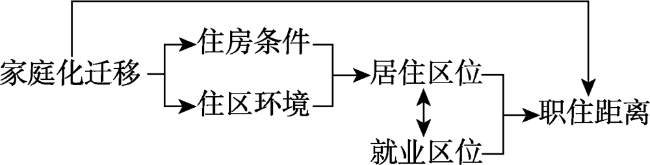
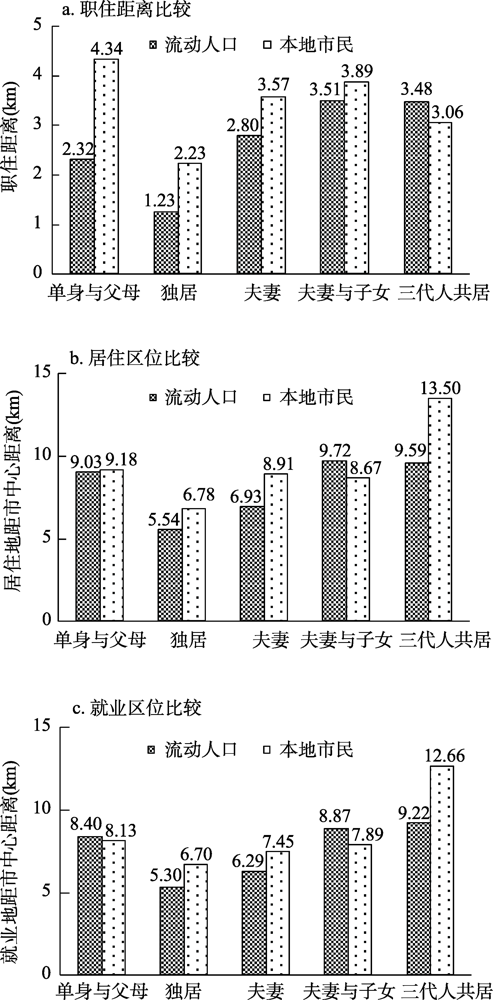
流动人口家庭化迁移可能对其在城市的职住关系产生影响。本研究基于广州市居民日常出行调查数据,考察流动人口在不同家庭化迁移状态下的职住关系,并与本地市民进行比较。研究发现:广州市流动人口职住临近特征明显,但随着家庭化迁移程度提高,职住距离增长,并接近本地市民水平。相较于个体单独迁移,夫妻共同迁移由于难以同时实现职住临近,职住距离更长;子女和老人随迁情境下,流动人口职住区位郊区化特征明显,因为郊区能以较低成本满足家庭生活对住房和住区环境的更高要求,但该情境下整体职住距离增幅较小且不显著。多数家庭化迁移的流动人口仍存在不稳定流动特征,以租房为主,租金规避需求与环境提升需求并存,需要相关政策加以关注。
文萍 , 周素红 . 家庭化迁移对流动人口职住关系的影响——以广州为例[J]. 地理研究, 2022 , 41(4) : 1212 -1226 . DOI: 10.11821/dlyj020210127
After more than 40 years of reform and opening up, the mobility of domestic labor floating population in China has generally shifted from individual migration to family migration. Existing studies suggest that the urban life of the floating population mainly revolves around the place of employment and residence, and that they tend to live in place as close as possible to their working places if the rent is acceptable. With more family migrations, some complex factors need to be considered in the residence and work place decision-making of the floating population, as these factors will lead to the change of jobs-housing relationship. Based on the residents' daily travel survey data of Guangzhou, this study investigates the characteristics of the jobs-housing relationship of the floating population, and the differences of the jobs-housing relationship between family migration states, and makes comparison with that of the registered local citizens. The results reveal that the average distance between housing and working place of the floating population is significantly shorter than that of the registered local citizens, showing obvious proximity. However, as family migration increases, the jobs-housing distance of the floating population has gradually increased to a comparable level to that of the registered local citizens. The increase of the jobs-housing distance is most obvious from moving alone to couple migration, mainly because it is difficult for both husband and wife to realize jobs-housing proximity. The increase in the jobs-housing distance caused by the accompanying migration of children and the elderly is relatively small, but the suburbanization of work and residence is obvious, because the suburbs can meet the family's requirements for better housing and residential environment at a lower cost. As family migration becomes more and more common, the jobs-housing relationship of the floating population will gradually converge with that of the registered local citizens. But there are still substantial differences behind the convergence. Most of the family-migrating floating population tends to rent house, showing strong instability. Policy makers should pay attention to the coexistence of their needs for both lower rent and better environment.
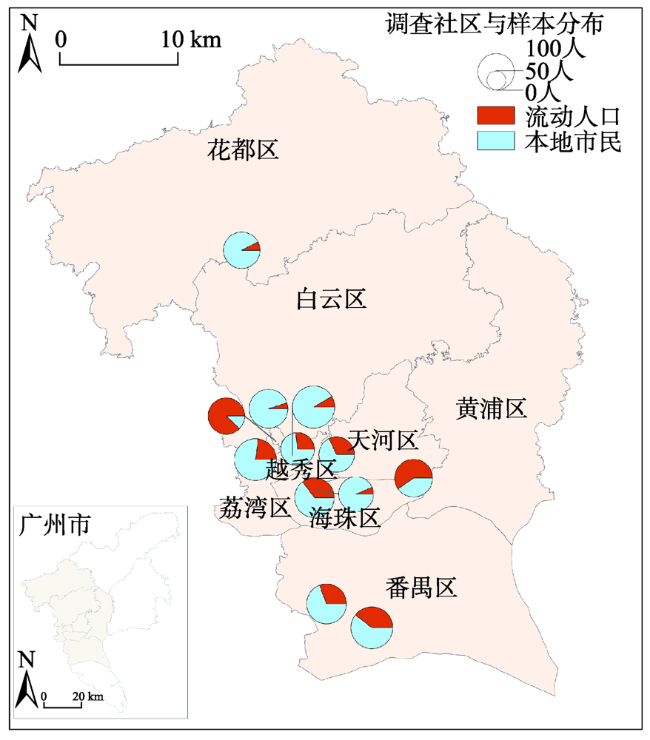
表1 调查社区类型和特征Tab. 1 Community types and characteristics |
| 社会区 类型 | 特征 | 调查社区 | 总人口 (万) | 调查 样本 | 流动人口样本 | 流动人口样本比例(%) |
|---|---|---|---|---|---|---|
| 旧城旧机关类 | 旧城社区,旧机关人口和老龄非在业人口比例高 | 洪庆坊、三眼井、吉祥、小梅 | 141.33 | 281 | 44 | 15.66 |
| 普通商业类 | 城市商业从业人口、外来人口集中,保障性住房集中,老城区外围多为此类 | 泽德、石溪、怡东、穗华、康乐中、王圣堂 | 417.92 | 465 | 211 | 45.38 |
| 高教育旧单位类 | 高校和科研院所集中,教育水平高 | 麓苑、中大、天河直街、广和 | 152.97 | 285 | 62 | 21.75 |
| 郊区城镇类 | 郊区住宅区,购房或自建住房集中 | 祈福新村、三堂、先锋、莲塘 | 239.61 | 372 | 102 | 27.42 |
表2 样本基本特征Tab. 2 Characteristics of the samples |
| 特征 | 流动人口 | 本地市民 | ||||||||||
|---|---|---|---|---|---|---|---|---|---|---|---|---|
| 全体 | 按共同居住的家庭类型 | 全体 | 按共同居住的家庭类型 | |||||||||
| 单身与 父母 | 独居 | 夫妻 | 夫妻与 子女 | 三代人 共居 | 单身与 父母 | 独居 | 夫妻 | 夫妻与 子女 | 三代人 共居 | |||
| 性别(%) | ||||||||||||
| 男 | 42.72 | 58.97 | 47.14 | 38.27 | 38.65 | 51.11 | 44.38 | 56.04 | 50.00 | 43.33 | 44.16 | 37.60 |
| 女 | 57.28 | 41.03 | 52.86 | 61.73 | 61.35 | 48.89 | 55.62 | 43.96 | 50.00 | 56.67 | 55.84 | 62.40 |
| 平均年龄(岁) | 35.26 | 25.18 | 30.77 | 38.73 | 37.49 | 35.78 | 39.10 | 26.58 | 35.00 | 37.90 | 41.77 | 38.06 |
| 婚姻(%) | ||||||||||||
| 在婚 | 74.51 | 8.33 | 36.23 | 96.25 | 94.41 | 88.89 | 85.66 | 12.09 | 25.00 | 100.00 | 95.78 | 92.00 |
| 不在婚 | 25.49 | 91.67 | 63.77 | 3.75 | 5.59 | 11.11 | 14.34 | 87.91 | 75.00 | 0.00 | 4.22 | 8.00 |
| 教育程度(%) | ||||||||||||
| 小学及以下 | 11.22 | 5.13 | 10.00 | 16.05 | 9.20 | 11.11 | 2.69 | 2.19 | 12.50 | 1.67 | 2.37 | 3.20 |
| 初中 | 39.14 | 25.64 | 32.86 | 49.38 | 41.72 | 33.33 | 13.35 | 3.30 | 12.50 | 20.00 | 14.42 | 14.40 |
| 高中或中职 | 34.13 | 43.59 | 41.43 | 24.69 | 34.36 | 35.56 | 51.05 | 29.67 | 37.50 | 38.33 | 57.30 | 47.20 |
| 大专或本科 | 15.04 | 25.64 | 14.29 | 8.64 | 14.72 | 20.00 | 32.44 | 64.84 | 25.00 | 40.00 | 25.36 | 35.20 |
| 研究生 | 0.47 | 0.00 | 1.42 | 1.24 | 0.00 | 0.00 | 0.47 | 0.00 | 12.50 | 0.00 | 0.55 | 0.00 |
| 单位性质(%) | ||||||||||||
| 个体户 | 32.77 | 15.38 | 39.13 | 33.33 | 33.33 | 27.91 | 16.07 | 13.63 | 12.50 | 22.03 | 16.14 | 13.60 |
| 私营企业 | 50.84 | 69.23 | 47.83 | 49.38 | 48.77 | 53.49 | 43.45 | 44.32 | 37.50 | 37.29 | 45.08 | 44.00 |
| 股份制或外资企业 | 7.47 | 10.26 | 2.89 | 6.18 | 9,26 | 9.30 | 15.00 | 17.05 | 25.00 | 20.34 | 12.80 | 16.00 |
| 国有或集体企业 | 7.23 | 5.13 | 8.70 | 8.64 | 7.41 | 6.98 | 15.60 | 17.05 | 12.50 | 10.17 | 15.40 | 16.80 |
| 机关及事业单位 | 1.69 | 0.00 | 1.45 | 2.47 | 1.23 | 2.32 | 9.88 | 7.95 | 12.50 | 10.17 | 10.58 | 9.60 |
| 家庭收入(%) | ||||||||||||
| 3千以下 | 4.54 | 0.00 | 17.14 | 1.24 | 3.68 | 0.00 | 1.40 | 0.00 | 37.50 | 1.66 | 0.91 | 1.60 |
| 3千~5千 | 24.34 | 12.82 | 37.14 | 38.27 | 18.41 | 17.78 | 10.42 | 8.79 | 12.50 | 26.67 | 9.85 | 6.40 |
| 5千~8千 | 34.61 | 43.59 | 30.00 | 35.80 | 37.42 | 22.22 | 27.05 | 30.77 | 0.00 | 18.33 | 29.38 | 22.40 |
| 8千~1万 | 12.17 | 23.08 | 4.29 | 8.64 | 10.43 | 20.00 | 27.05 | 25.27 | 37.50 | 26.67 | 26.64 | 30.40 |
| 1万~2万 | 17.18 | 17.95 | 10.00 | 11.11 | 19.02 | 31.11 | 24.24 | 28.57 | 12.50 | 21.67 | 22.45 | 28.80 |
| 2万以上 | 7.16 | 2.56 | 1.43 | 4.94 | 11.04 | 8.89 | 9.84 | 6.60 | 0.00 | 5.00 | 10.77 | 10.40 |
| 样本量 | 398 | 39 | 70 | 81 | 163 | 45 | 832 | 91 | 8 | 60 | 548 | 125 |
| 占比(%) | 100.00 | 9.80 | 17.59 | 20.35 | 40.95 | 11.31 | 100 | 10.94 | 0.96 | 7.21 | 65.87 | 15.02 |
表3 不同家庭化迁移程度流动人口的职住特征Tab. 3 Residential and work characteristics of the floating population in different family migration states |
| 特征 | 单身与父母 | 独居 | 夫妻 | 夫妻与子女 | 三代人共居 | P值 |
|---|---|---|---|---|---|---|
| 住房面积平均值(m2) | 43.28 | 31.56 | 35.72 | 52.67 | 62.40 | 0.000 |
| 每月住房开支平均值(元) | 803.59 | 919.29 | 808.27 | 864.82 | 832.11 | 0.896 |
| 住房开支占总开支比例平均值(%) | 28.76 | 37.03 | 29.91 | 23.19 | 20.32 | 0.000 |
| 房屋产权(%) | 0.000 | |||||
| 自有 | 7.69 | 0.00 | 4.94 | 21.47 | 24.44 | |
| 租赁 | 92.31 | 100.00 | 95.06 | 78.53 | 75.56 | |
| 择居主因(%) | 0.006 | |||||
| 工作方便 | 38.46 | 32.86 | 37.04 | 32.52 | 37.78 | |
| 价格便宜 | 53.85 | 61.43 | 54.32 | 38.04 | 40.00 | |
| 政策住房 | 0.00 | 0.00 | 0.00 | 1.22 | 0.00 | |
| 子女上学方便 | 0.00 | 0.00 | 0.00 | 9.82 | 8.89 | |
| 周边配套完善 | 7.69 | 2.86 | 4.94 | 7.36 | 4.44 | |
| 周边环境好坏 | 0.00 | 1.43 | 3.70 | 10.43 | 8.89 | |
| 其他 | 0.00 | 1.42 | 0.00 | 0.61 | 0.00 | |
| 择业主因(%) | 0.175 | |||||
| 待遇好 | 10.26 | 4.29 | 12.35 | 11.04 | 6.67 | |
| 有前途 | 15.38 | 8.57 | 4.94 | 7.36 | 11.11 | |
| 离住的地方近 | 7.69 | 4.29 | 1.23 | 4.91 | 8.89 | |
| 配偶的原因 | 0.00 | 2.85 | 1.23 | 0.61 | 6.67 | |
| 子女的原因 | 0.00 | 0.00 | 0.00 | 3.07 | 4.44 | |
| 自己能力所及 | 51.28 | 54.29 | 55.56 | 49.69 | 37.78 | |
| 喜欢广州 | 5.13 | 7.14 | 8.64 | 9.82 | 11.11 | |
| 喜欢这类职业 | 7.69 | 8.57 | 8.64 | 6.75 | 6.67 | |
| 偶然机会 | 2.57 | 10.00 | 7.41 | 4.29 | 0.00 | |
| 其他 | 0.00 | 0.00 | 0.00 | 2.46 | 6.66 | |
| 样本量 | 39 | 70 | 81 | 163 | 45 |
注:连续变量为方差分析结果,分类变量为卡方检验结果。 |
表4 流入地家庭类型与职住关系的回归结果Tab. 4 Regression results of family types on jobs-housing relationship |
| 模型1 | 模型2 | 模型3 | 模型4 | 模型5 | ||||||||||
|---|---|---|---|---|---|---|---|---|---|---|---|---|---|---|
| ln职住距离 | ln职住距离 | ln居住地距市 中心距离 | ln居住地距市 中心距离 | ln就业地距市 中心距离 | ||||||||||
| 系数 | 标准差 | 系数 | 标准差 | 系数 | 标准差 | 系数 | 标准差 | 系数 | 标准差 | |||||
| 常数项 | -2.949*** | 0.761 | -3.522*** | 0.700 | 1.297** | 0.653 | 0.242 | 0.677 | 0.815 | 0.672 | ||||
| 性别(参照:女性) | ||||||||||||||
| 男性 | -0.097 | 0.124 | -0.073 | 0.113 | 0.060 | 0.106 | 0.108 | 0.101 | 0.165 | 0.109 | ||||
| 年龄 | 0.084** | 0.041 | 0.103*** | 0.038 | -0.014 | 0.035 | -0.017 | 0.033 | 0.025 | 0.036 | ||||
| 年龄平方 | -0.001** | 0.000 | -0.001*** | 0.000 | 0.000 | 0.000 | 0.000 | 0.000 | 0.000 | 0.000 | ||||
| 婚姻(参照:不在婚) | ||||||||||||||
| 在婚 | -0.134 | 0.262 | -0.169 | 0.240 | 0.149 | 0.225 | 0.120 | 0.213 | 0.172 | 0.231 | ||||
| 教育(参照: 小学及以下) | ||||||||||||||
| 初中 | 0.059 | 0.209 | 0.083 | 0.191 | -0.006 | 0.179 | -0.056 | 0.170 | 0.052 | 0.184 | ||||
| 高中或中职 | 0.291 | 0.220 | 0.258 | 0.202 | -0.060 | 0.189 | -0.219 | 0.181 | -0.187 | 0.194 | ||||
| 大专或大本 | 0.604** | 0.268 | 0.736*** | 0.246 | -0.304 | 0.230 | -0.444** | 0.219 | -0.198 | 0.237 | ||||
| 研究生 | -0.478 | 0.883 | -0.135 | 0.809 | -0.880 | 0.758 | -0.677 | 0.720 | -0.668 | 0.780 | ||||
| 单位性质(参照:个体户) | ||||||||||||||
| 私营企业 | 0.731*** | 0.138 | 0.592*** | 0.127 | 0.208* | 0.118 | 0.193* | 0.112 | 0.013 | 0.121 | ||||
| 股份制或外资企业 | 1.418*** | 0.255 | 1.018*** | 0.238 | 0.665*** | 0.219 | 0.489** | 0.209 | 0.147 | 0.225 | ||||
| 国有或集体气也 | 0.547** | 0.249 | 0.374 | 0.230 | 0.069 | 0.214 | 0.046 | 0.203 | -0.319 | 0.220 | ||||
| 机关及事业单位 | 0.213 | 0.494 | -0.078 | 0.454 | 0.115 | 0.424 | -0.032 | 0.402 | -0.536 | 0.436 | ||||
| 家庭月收入 (参照:3千以下) | ||||||||||||||
| 3千~5千 | 0.493 | 0.299 | 0.270 | 0.276 | 0.550** | 0.257 | 0.367 | 0.247 | 0.395 | 0.264 | ||||
| 5千~8千 | 0.592** | 0.297 | 0.322 | 0.274 | 0.518** | 0.255 | 0.208 | 0.252 | 0.223 | 0.262 | ||||
| 8千~1万 | 0.887** | 0.343 | 0.608* | 0.315 | 0.458 | 0.294 | 0.067 | 0.286 | 0.094 | 0.302 | ||||
| 1千~2万 | 0.830** | 0.325 | 0.722** | 0.298 | 0.205 | 0.279 | -0.378 | 0.282 | 0.083 | 0.287 | ||||
| 2万以上 | 1.372*** | 0.370 | 1.641*** | 0.340 | -0.312 | 0.318 | -1.045*** | 0.330 | 0.137 | 0.327 | ||||
| 流入地家庭类型 (参照:独居) | ||||||||||||||
| 夫妻 | 0.457** | 0.229 | 0.419** | 0.210 | -0.059 | 0.197 | -0.046 | 0.186 | -0.201 | 0.202 | ||||
| 夫妻与子女 | 0.429** | 0.213 | 0.269 | 0.195 | 0.323* | 0.182 | 0.133 | 0.175 | 0.158 | 0.188 | ||||
| 三代人共居 | 0.641** | 0.260 | 0.490** | 0.238 | 0.389* | 0.223 | 0.225 | 0.215 | 0.297 | 0.229 | ||||
| ln居住地距市中心距离 | 0.690*** | 0.086 | ||||||||||||
| ln就业地距市中心距离 | -0.395*** | 0.084 | ||||||||||||
| ln住房面积 | 0.448*** | 0.107 | ||||||||||||
| 择居主因(参照:其他) | ||||||||||||||
| 居住环境与配套 | 0.597*** | 0.142 | ||||||||||||
| 样本量 | 351 | 351 | 351 | 351 | 351 | |||||||||
| 调整R2 | 0.255 | 0.378 | 0.092 | 0.186 | 0.038 | |||||||||
注:***表示P值<0.01;**表示P值<0.05;*表示P值<0.1。 |
真诚感谢匿名评审专家在论文评审中所付出的时间和精力,评审专家对本文文献综述、理论框架、数据说明、结果分析以及表格呈现、文字表达等方面提出的修改意见,使本文获益匪浅。
| [1] |
李强. 当代中国社会分层. 北京: 生活·读书·新知三联书店, 生活书店出版有限公司, 2019: 75-97.
[
|
| [2] |
任远. 由“进城”和“返乡”共同构成的城市化. 江苏社会科学, 2010, (3):108-112.
[
|
| [3] |
吕利丹, 段成荣, 刘涛, 等. 对我国流动人口规模变动的分析和讨论. 南方人口, 2018,33(1):20-29.
[
|
| [4] |
国家卫生和计划生育委员会流动人口司. 中国流动人口发展报告2015. 北京: 中国人口出版社, 2015: 3.
[Department of Floating Population, National Health and Family Planning Commission of the People's Republic of China. 2015 Report on China's Migrant Population Development. Beijing: China Population Publishing House, 2015: 3.]
|
| [5] |
国家卫生健康委员会. 中国流动人口发展报告2018. 北京: 中国人口出版社, 2018: 4.
[National Health Commission of the People's Republic of China. 2018 Report on China's Migrant Population Development. Beijing: China Population Publishing House, 2018: 4.]
|
| [6] |
朱明芬. 农民工家庭人口迁移模式及影响因素分析. 中国农村经济, 2009, (2):67-76, 93.
[
|
| [7] |
|
| [8] |
杨菊华, 陈传波. 流动人口家庭化的现状与特点: 流动过程特征分析. 人口与发展, 2013, (3):2-13.
[
|
| [9] |
杨中燕, 朱宇, 林李月, 等. 核心家庭人口流动模式及其影响因素. 西北人口, 2015,36(3):18-22.
[
|
| [10] |
国家卫生和计划生育委员会流动人口司. 中国流动人口发展报告2017. 北京: 中国人口出版社, 2017: 6.
[Department of Floating Population, National Health and Family Planning Commission of the People's Republic of China. 2017 Report on China's Migrant Population Development. Beijing: China Population Publishing House, 2017: 6.]
|
| [11] |
|
| [12] |
|
| [13] |
|
| [14] |
|
| [15] |
|
| [16] |
|
| [17] |
叶裕民, 牛楠. 转型时期城中村改造: 基于农民工住宅选择的实证研究. 经济与管理研究, 2012, (4):18-25.
[
|
| [18] |
谢宝富. 中低收入流动人口居住问题的解决途径. 城市问题, 2015, (5):85-89.
[
|
| [19] |
|
| [20] |
|
| [21] |
吴冰. 快速城市化过程中的群租现象及其治理困境: 以上海市W住宅区为例. 上海: 复旦大学硕士学位论文, 2009: 21-22.
[
|
| [22] |
余建辉, 董冠鹏, 张文忠, 等. 北京市居民居住: 就业选择的协同性研究. 地理学报, 2014,69(2):147-155.
[
|
| [23] |
党云晓, 湛东升, 谌丽, 等. 城市更新过程中流动人口居住-就业变动的协同机制研究: 以北京为例. 地理研究, 2021,40(2):513-527.
[
|
| [24] |
陈卓. 北京外来中低收入人群就业-居住关系研究: 基于静态与动态的实证模型. 北京: 中国城市规划设计研究院硕士学位论文, 2010: 23-25, 31-32.
[
|
| [25] |
马伟霞. 武汉市外来人口就业-居住关系及影响因素研究. 武汉: 华中师范大学硕士学位论文, 2013: 13-20.
[
|
| [26] |
张燕, 肖娟, 张新兰. 城市发展中流动人口的出行特征及城乡规划启示. 见: 中国城市规划学会. 城乡治理与规划改革: 2014中国城市规划年会论文集. 北京: 中国建筑工业出版社, 2014.
[
|
| [27] |
兰宗敏, 冯健. 城中村流动人口的时间利用以及生活活动时空间结构: 对北京5个城中村的调查. 地理研究, 2010,29(6):1092-1104.
[
|
| [28] |
郑承智, 张旺锋, 武炳炎, 等. 北京市外来人口集聚型城中村流动人口职住分离研究. 地理科学进展, 2017,36(4):416-425.
[
|
| [29] |
刘盛和, 刘冉, 赵美风. 北京市流动人口聚居区与非正规住房市场研究. 北京: 中国建筑工业出版社, 2018: 19.
[
|
| [30] |
侯学英, 吴巩胜, 陈乐. 城中村居民就业的空间特征及其对其收入的影响. 城市问题, 2014, (7):94-100.
[
|
| [31] |
安黎, 冯健. “空间错配”视角下城中村流动人口职住关系研究: 以北京市挂甲屯村、皮村为例. 城市发展研究, 2020,27(12):123-131.
[
|
| [32] |
|
| [33] |
|
| [34] |
刘保奎, 冯长春. 大城市外来农民工通勤与职住关系研究: 基于北京的问卷调查. 城市规划学刊, 2012, (4):59-64.
[
|
| [35] |
仝德, 高静, 龚咏喜. 城中村对深圳市职住空间融合的影响: 基于手机信令数据的研究. 北京大学学报: 自然科学版, 2020,56(6):1091-1101.
[
|
| [36] |
马亮, 马雪城. 大城市城中村居民出行特征研究. 综合运输, 2016,38(8):90-94.
[
|
| [37] |
|
| [38] |
刘望保, 闫小培. 转型期广州市居住迁移影响因素于户籍之间的比较. 地理研究, 2007,26(5):1055-1066.
[
|
| [39] |
|
| [40] |
|
| [41] |
|
| [42] |
|
| [43] |
|
| [44] |
李强. 农民工与中国社会分层. 北京: 社会科学文献出版社, 2004: 161-179.
[
|
| [45] |
冯长春, 李天娇, 曹广忠, 等. 家庭式迁移的流动人口住房状况. 地理研究, 2017,36(4):633-646.
[
|
| [46] |
张丽琼, 朱宇, 林李月. 家庭化流动对流动人口就业率和就业稳定性的影响及其性别差异: 基于2013年全国流动人口动态监测数据的分析. 南方人口, 2017,32(2):1-12.
[
|
| [47] |
王琭琳. 子女随迁对流动人口家庭务工地消费的影响. 劳动经济研究, 2015,3(6):117-128.
[
|
| [48] |
胡霞, 丁浩. 子女随迁政策对农民工家庭消费的影响机制研究. 经济学动态, 2016, (10):25-38.
[
|
| [49] |
王靖. 流动人口家庭化趋势下社会网络的新特点与作用: 以广州南沙区D村的个案研究为例. 社会工作, 2016, (5): 101-111, 119, 128.
[
|
| [50] |
宋笑蕾, 邹冠炀, 石景容, 等. 从家庭化流动视角研究广东省流动人口卫生服务利用的影响因素. 现代预防医学, 2017,44(8):145-1459, 1469.
[
|
| [51] |
周春山, 戴舒琳, 袁宇君. 珠三角流动人口家庭化迁移特征及影响因素研究: 基于家庭生命周期视角. 人文地理, 2020,35(3):29-36, 75.
[
|
| [52] |
杨舸, 段成荣, 王宗萍. 流动还是留守: 流动人口子女随迁的选择性及其影响因素分析. 中国农业大学学报: 社会科学版, 2011,28(3):85-96.
[
|
| [53] |
李巧, 梁在. 二代流动儿童回流状况及其影响因素. 人口研究, 2019,43(3):65-77.
[
|
| [54] |
王德福. 弹性城市化与接力式进城: 理解中国特色城市化模式及其社会机制的一个视角. 社会科学, 2017, (3):66-74.
[
|
| [55] |
凌旻华. 中职教育、社会再生产与上海外来务工人员随迁子女. 见: 韩嘉玲, 朱琳, 刘月. 中国流动儿童教育发展报告: 2019—2020. 北京: 社会科学文献出版社, 2020: 212-234.
[
|
| [56] |
|
| [57] |
叶裕民. 特大城市包容性城中村改造理论架构与机制创新: 来自北京和广州的考察与思考. 城市规划, 2015,39(8):9-23.
[
|
| [58] |
田莉. 从城市更新到城市复兴: 外来人口居住权益视角下的城市转型发展. 城市规划学刊, 2019, (4):56-62.
[
|
/
| 〈 |
|
〉 |