中国高技能劳动力迁移网络对城际技术创新网络的影响研究
|
姜菁(1998-),女,山东济南人,博士研究生,主要研究方向为人口与区域创新。E-mail: jiangjing624@mails.ccnu.edu.cn |
收稿日期: 2024-05-11
录用日期: 2024-08-23
网络出版日期: 2025-04-16
基金资助
国家自然科学基金项目(42271188)
Impact of China's high-skilled labor migration networks on inter-city technological innovation networks
Received date: 2024-05-11
Accepted date: 2024-08-23
Online published: 2025-04-16
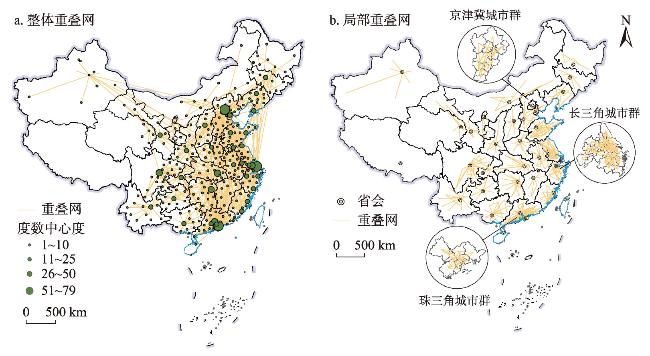
高技能劳动力是区域创新的核心因素,高技能劳动力迁移对区际技术创新网络的形成和发展具有重要驱动作用。以中国大陆337个地级及以上行政区为研究对象,基于人口抽样调查微观数据和专利数据构建“高技能劳动力迁移-城际技术创新”双层网络,分析其结构特征,并利用QAP回归模型实证探究高技能劳动力迁移网络对城际技术创新网络的影响。研究发现:① 中国城际“迁移网”与“创新网”的结构特征高度一致。“北上广深”一线城市在两个网络中均占据核心地位,网络整体均呈现清晰的层级结构,双层网络的重叠度较高。② 高技能迁移劳动力积极促进“迁出-迁入”城市间建立技术创新网络。高技能迁移劳动力既可以作为创新势能外溢的重要“通道”,显著促进网络边缘城市与核心城市跨层级建网;又可以助力东西部城市跨区域建立技术创新网络。③ 基于职业类型和创新组织规模的异质性分析结果显示,专业人员迁移对“大”“小”和“大-小”规模组织间的跨城合作创新均具有较强的促进作用。除专业人员外,大规模创新组织间的跨城合作主要受技术人员迁移的影响,中小微企业间的跨城合作创新则更受管理人员迁移的影响。加快发展新质生产力,应重视并充分发挥高技能劳动力迁移网络在城际技术创新网络中的推动作用。
姜菁 , 敖荣军 , 陈京 , 周笑琦 . 中国高技能劳动力迁移网络对城际技术创新网络的影响研究[J]. 地理研究, 2025 , 44(4) : 1048 -1066 . DOI: 10.11821/dlyj020240426
High-skilled labor is a critical factor in regional innovation, and its migration plays a crucial role in the formation and development of interregional technology innovation networks. Using 337 administrative regions at the prefecture level and above in China as our research scope, this paper constructs a dual-layer network of “high-skilled labor migration - intercity technological innovation” based on microdata from population sampling surveys and patent data. We examine the structural characteristics of this network and employ the QAP regression model to empirically investigate the impact of high-skilled labor migration on intercity technological innovation networks. The research reveals that: (1) The structural characteristics of China's intercity “migration networks” and “innovation networks” exhibit remarkable consistency: Beijing, Shanghai, Guangzhou, and Shenzhen hold central positions in both networks. Moreover, the entire networks display a distinct hierarchical structure with a high degree of overlap between the two layers. (2) Highly skilled migrant labors actively facilitate the establishment of technological innovation cooperation among intercity organizations. Serving as a crucial “channel” for the diffusion of innovation potential, highly skilled migrant labors significantly foster the cross-level networking of innovative organizations. Furthermore, they aid in the establishment of cross-regional technological innovation networks between cities in the eastern and western regions of China. (3) Based on the heterogeneity analysis of occupation types and innovative organization scales, the results show that professional mobility significantly promotes cross-city collaborative innovation among “large”, “small”, and “large-small” scale organizations. Apart from professionals, cross-city collaborative innovation among large-scale innovative organizations is primarily influenced by technical personnel mobility, whereas collaboration among small and medium-sized enterprises is more influenced by managerial personnel mobility. To accelerate the development of new-quality productive forces, it is essential to emphasize and fully leverage the role of high-skilled labor migration networks in driving intercity technology innovation networks.
表1 变量定义与解释Tab.1 Variable definition and explanation |
| 变量类型 | 变量名称 | 符号 | 指标解释 |
|---|---|---|---|
| 因变量 | 城际技术创新网络 | Innij | 城市间联合申请专利数量 |
| 自变量 | 高技能劳动力迁移网络 | Skiij | 城市间高技能劳动力空间OD流 |
| 管理人员迁移网络 | Mngij | 城市间管理人员空间OD流 | |
| 专业人员迁移网络 | Profij | 城市间专业人员空间OD流 | |
| 技术人员迁移网络 | Tecmij | 城市间技术人员空间OD流 | |
| 控制变量 | 地理邻近度 | Geoij | 城市在地理空间上的远近程度 |
| 制度邻近度 | Insij | 城市间正式、非正式创新规则的相似性 | |
| 技术邻近度 | Tecij | 城市间已有知识基础结构或技术结构的相似性或关联度 | |
| 社会邻近度 | Socij | 城市间社会嵌入性关系的远近 |
表2 基准回归结果Tab. 2 Baseline regression results |
| 变量 | M1 | M2 | M3 |
|---|---|---|---|
| Skiij | 0.071*** (0.000) | 0.092*** (0.000) | |
| Mngij | 0.023*** (0.000) | ||
| Profij | 0.044*** (0.000) | ||
| Tecmij | 0.028*** (0.000) | ||
| Socij | 0.762*** (0.000) | 0.762*** (0.000) | 0.590*** (0.000) |
| Tecij | 0.005 (0.208) | 0.005 (0.202) | -0.077*** (0.001) |
| Geoij | 0.018*** (0.001) | 0.018*** (0.000) | 0.104*** (0.000) |
| Insij | 0.086*** (0.000) | 0.086*** (0.000) | 0.090*** (0.000) |
| Adj R2 | 0.629 | 0.629 | 0.410 |
| 网络节点规模 | 337 | 337 | 152 |
注:括号里为P值,***表示P<0.01。 |
表3 不同层级间创新网络回归结果Tab. 3 Regression results of innovation networks between different levels |
| 变量 | M1 | M2 | M3 | |
|---|---|---|---|---|
| Skiij | 0.173*** (0.000) | 0.078*** (0.000) | 0.186*** (0.000) | |
| Socij | 0.591*** (0.000) | 0.461*** (0.000) | 0.340*** (0.000) | |
| Tecij | -0.345** (0.020) | -0.239*** (0.007) | -0.103*** (0.008) | |
| Geoij | 0.403** (0.012) | 0.310*** (0.006) | 0.226*** (0.000) | |
| Insij | 0.140** (0.014) | 0.164*** (0.009) | 0.138*** (0.010) | |
| Adj R2 | 0.539 | 0.360 | 0.285 | |
| 网络节点规模 | 44 | 135 | 178 | |
注:括号里为P值,**表示P<0.05,***表示P<0.01。 |
表4 东、中西区域内与区域间创新网络回归结果Tab. 4 Regression results of innovation networks within and between the eastern and central-western regions |
| 变量 | M1 | M2 | M3 |
|---|---|---|---|
| Skiij | 0.073*** (0.001) | 0.215*** (0.000) | 0.094*** (0.000) |
| Socij | 0.779*** (0.000) | 0.529*** (0.000) | 0.638*** (0.000) |
| Tecij | 0.008 (0.294) | 0.018** (0.017) | -0.013 (0.992) |
| Geoij | 0.013 (0.192) | 0.031*** (0.000) | 0.013** (0.029) |
| Insij | 0.130*** (0.000) | 0.168*** (0.000) | 0.094*** (0.000) |
| Adj R2 | 0.699 | 0.414 | 0.450 |
| 网络节点规模 | 88 | 249 | 337 |
注:括号里为P值,**表示P<0.05,***表示P<0.01。 |
表5 基于职业类型与创新组织规模的异质性分析结果Tab. 5 Analysis of heterogeneity based on occupational types and organizational size of innovation |
| 变量 | M1 | M2 | M3 | M4 | M5 | M6 |
|---|---|---|---|---|---|---|
| Skiij | 0.015*** (0.002) | 0.163*** (0.000) | 0.125*** (0.000) | |||
| Mngij | 0.002* (0.067) | 0.071*** (0.000) | 0.041*** (0.001) | |||
| Profij | 0.006** (0.018) | 0.106*** (0.000) | 0.082*** (0.001) | |||
| Tecmij | 0.011*** (0.003) | 0.047*** (0.001) | 0.046*** (0.000) | |||
| Socij | 0.808*** (0.000) | 0.808*** (0.000) | 0.383*** (0.001) | 0.379*** (0.000) | 0.398*** (0.000) | 0.397*** (0.001) |
| Tecij | 0.002 (0.412) | 0.002 (0.420) | 0.010** (0.013) | 0.010** (0.018) | 0.008 (0.144) | 0.008 (0.139) |
| Geoij | 0.013*** (0.001) | 0.013*** (0.000) | 0.004 (0.186) | 0.004 (0.192) | 0.024*** (0.000) | 0.024*** (0.000) |
| Insij | 0.054*** (0.000) | 0.054*** (0.000) | 0.069*** (0.000) | 0.069*** (0.000) | 0.122*** (0.000) | 0.122*** (0.000) |
| Adj R2 | 0.670 | 0.670 | 0.207 | 0.209 | 0.222 | 0.222 |
| 网络节点规模 | 337 | 337 | 337 | 337 | 337 | 337 |
注:括号里为P值,*表示P<0.1,**表示P<0.05,***表示P<0.01。 |
衷心感谢匿名评审专家在论文评审中所付出的时间和精力,评审专家对本文理论框架构建、变量指标选取、结果分析、结论梳理方面提出的一系列极具针对性、细致化的修改意见,使本文获益匪浅。
| [1] |
赵剑波, 苏楠, 刘志迎, 等. 加快发展新质生产力. 区域经济评论, 2024, (2): 26-37.
[
|
| [2] |
戴靓, 曹湛, 马海涛, 等. 中国城市知识合作网络结构演化的影响机制. 地理学报, 2023, 78(2): 334-350.
[
|
| [3] |
栾心晨, 朱晟君, 毛熙彦. 多尺度视角下技术转移网络对城市创新能力的影响. 地理科学, 2023, 43(1): 11-9.
[
|
| [4] |
|
| [5] |
刘旭阳, 金牛. 城市“抢人大战”政策再定位: 聚焦青年流动人才的分析. 中国青年研究, 2019, (9): 47-53.
[
|
| [6] |
马海涛. 知识流动空间的城市关系建构与创新网络模拟. 地理学报, 2020, 75(4): 708-721.
[
|
| [7] |
周灿, 曾刚, 曹贤忠. 中国城市创新网络结构与创新能力研究. 地理研究, 2017, 36(7): 1297-1308.
[
|
| [8] |
|
| [9] |
段德忠, 杜德斌, 谌颖, 等. 中国城市创新网络的时空复杂性及生长机制研究. 地理科学, 2018, 38(11): 1759-1768.
[
|
| [10] |
周锐波, 邱奕锋, 胡耀宗. 中国城市创新网络演化特征及多维邻近性机制. 经济地理, 2021, 41(5): 1-10.
[
|
| [11] |
王秀梅, 黄春晓, 许宏福, 等. 高端人才流动的网络关联特征与影响因素分析: 对长三角地区高端人才流动的观察. 热带地理, 2023, 43(8): 1489-1500.
[
|
| [12] |
林赛南, 王雨, 马海涛. 中国高学历流动人口流动的空间特征及形成机制. 地理研究, 2022, 41(12): 3229-3244.
[
|
| [13] |
|
| [14] |
|
| [15] |
|
| [16] |
|
| [17] |
|
| [18] |
|
| [19] |
|
| [20] |
李迎成, 杨钰华, 马海涛. 邻近视角下长三角城市多尺度创新网络形成的微观机制. 地理学报, 2023, 78(8): 2074-2091.
[
|
| [21] |
|
| [22] |
|
| [23] |
|
| [24] |
敖荣军, 伊尔凡江·艾合买提江, 杨彬, 等. 技能劳动力区位选择的时空格局及影响因素. 地理研究, 2023, 42(9): 2451-2465.
[
|
| [25] |
刘承良, 管明明, 段德忠. 中国城际技术转移网络的空间格局及影响因素. 地理学报, 2018, 73(8): 1462-1477.
[
|
| [26] |
|
| [27] |
|
| [28] |
刘晔, 王若宇, 薛德升, 等. 中国高技能劳动力与一般劳动力的空间分布格局及其影响因素. 地理研究, 2019, 38(8): 1949-1964.
[
|
| [29] |
|
| [30] |
|
| [31] |
|
| [32] |
|
| [33] |
|
| [34] |
|
| [35] |
|
| [36] |
边燕杰, 丘海雄. 企业的社会资本及其功效. 中国社会科学, 2000, (2): 87-99, 207.
[
|
| [37] |
|
| [38] |
陈斌开, 陈思宇. 流动的社会资本: 传统宗族文化是否影响移民就业?. 经济研究, 2018, 53(3): 35-49.
[
|
| [39] |
|
| [40] |
|
| [41] |
杨孝良, 王崇举. 社会资本、 资源获取与移民创业绩效: 基于三峡库区的调研数据. 农村经济, 2019, (2): 62-69.
[
|
| [42] |
|
| [43] |
|
| [44] |
|
| [45] |
|
| [46] |
|
| [47] |
|
| [48] |
盛广耀. 中国省际人口流动网络的演化及其解释. 中国人口·资源与环境, 2018, 28(11): 1-9.
[
|
| [49] |
|
| [50] |
ILO. International Standard Classification of Occupations: ISCO-08: Vol.1 Structure, Group Definitions and Correspondence Tables. Geneva: International Labor Office, 2012.
|
| [51] |
国家职业分类大典修订工作委员会. 中华人民共和国职业分类大典(2015年版). 北京: 中国劳动社会保障出版社, 中国人事出版社, 2015: 6.
[Working Committee for revising National Occupational Classification. Natioanl Classification of Occupations of the People's Republic of China (2015 edition). Beijing: China Labor and Social Security Publishing House, China Personnel Publishing House, 2015: 6.]
|
| [52] |
|
| [53] |
杜亚楠, 王庆喜, 王忠燕. 多维邻近下中国三大城市群创新网络演化特征及机制研究. 地理科学, 2023, 43(2): 197-207.
[
|
| [54] |
|
| [55] |
古恒宇, 黎宇翔, 劳昕, 等. 疫情期间中国春运人口流动网络特征及其影响因素. 经济地理, 2024, 44(5): 53-63.
[
|
| [56] |
|
| [57] |
|
| [58] |
|
/
| 〈 |
|
〉 |