城市创意旅游资源空间效应及发展模式——以苏州市中心城区为例
作者简介:刘昌雪(1978- ),女,安徽阜阳人,副教授,主要研究旅游市场和城市旅游。E-mail: liucx78@163.com
收稿日期: 2015-11-06
要求修回日期: 2016-03-04
网络出版日期: 2016-05-10
基金资助
国家自然科学基金项目(41271134)
江苏省高校2016年度青蓝工程项目
苏州市职业大学成果创新科研项目(SVU2015CGCX12)
Spatial effects and development pattern of creative tourism resource:A case study of center city of Suzhou
Received date: 2015-11-06
Request revised date: 2016-03-04
Online published: 2016-05-10
Copyright
随着创意经济的兴起和旅游者需求的变化,发展创意旅游日益成为消费热点和推动旅游业转型升级的有效途径。创意旅游资源是创意旅游发展的基础,其产生的空间效应是区域旅游研究的重要内容,对提升区域旅游竞争力具有重要意义。以苏州中心城区为例,综合运用最近邻指数、不平衡指数、核密度分析和使用者温度计量模型等方法,深入研究城市创意旅游资源空间效应。结果显示:① 创意旅游资源的融入使苏州中心城区整体和各区域的旅游资源空间分布集聚度增大,但各区域增大程度和资源空间分布状态变化不同;② 融入创意旅游资源后苏州中心城区整体旅游资源区域分布呈集中态势,且分布的均衡度降低;③ 创意旅游资源的融入促进了区域旅游资源空间效应的发挥,苏州中心城区由以姑苏区为“单核心”的“众星拱月”空间格局转变为以姑苏区—工业园区为“双核心”的“日月同辉”空间格局,从而实现苏州中心城区“双核”旅游空间发展模式。
刘昌雪 , 汪德根 . 城市创意旅游资源空间效应及发展模式——以苏州市中心城区为例[J]. 地理研究, 2016 , 35(5) : 977 -991 . DOI: 10.11821/dlyj201605014
With the rise of creative economy and changes in tourist demands, the development of creative tourism has become a consumption hotspot as well as an effective way to promote transformation and upgrading of tourism. As creative tourism resources are the foundation for creative tourism development, their spatial effect is an important area for regional tourism research; and they play an important role in enhancing the competitiveness of regional tourism. With a case study in the central city of Suzhou, this paper analyzes the spatial effect of creative tourism resources using a number of quantitative models including the nearest neighbor index, disequilibrium analysis index, kernel density, and user thermometric modeling. The result shows that, (1) The integration of creative tourism resources increases the concentration of tourism resources both in the whole city and in subareas of the central city, however, the increment and the spatial distribution of resources vary by subareas; (2) With the integration of the creative resources, the distribution of tourism resources in the central city of Suzhou becomes more concentrated and less balanced; (3) The integration of creative tourism resources greatly enhances the spatial effects of the regional tourism resources. And it converts the central city from a "single core" (Gusu District only) pattern into a "dual core" (Gusu District and Suzhou Industrial Park) pattern.
Tab. 1 Classification of creative tourism resources表1 创意旅游资源分类 |
| 主 类 | 亚 类 |
|---|---|
| 创意主题园区 | 主题公园、创意产业园、游戏和动漫基地、艺术园区和特色展示、演示场馆 |
| 创意城市景观 | 雕塑小品、建筑景观、广场景观、水景观、景观道、桥梁景观、交通设施景观 |
| 创意活动 | 特色民俗、现代节事、会展活动、特色表演、体验活动 |
| 创意社区 | 特色街区、特色聚落(村、镇) |
| 创意旅游商品 | 手工产品与工艺品、旅游日用品 |
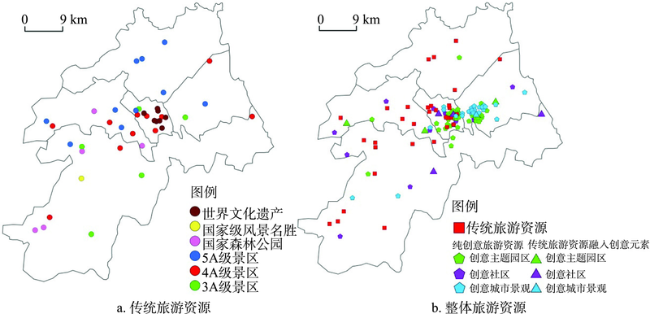
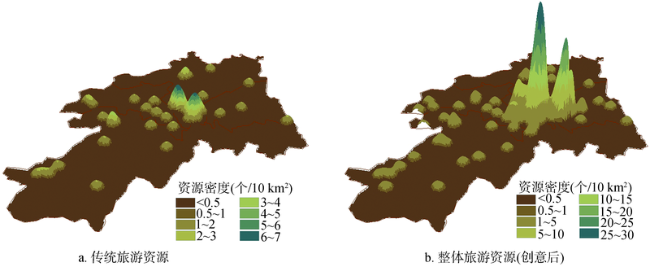
Fig. 1 Changes in the distribution of tourism resources in the study area with the integration of creative tourism resources图1 融入创意旅游资源后研究区旅游资源布局变化 |
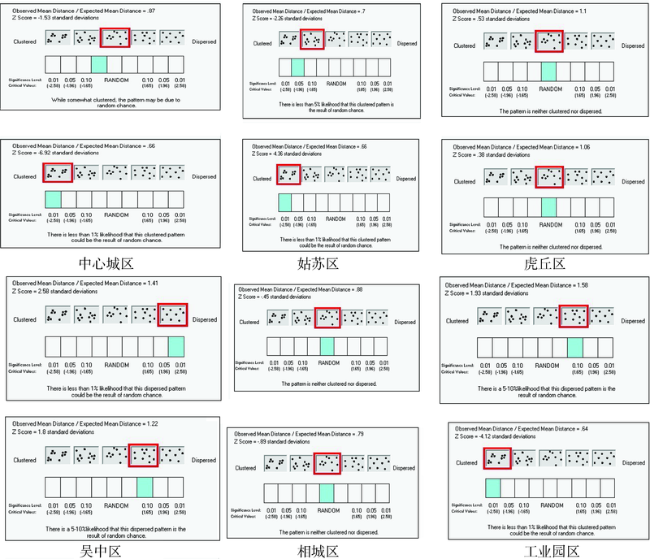
Fig. 2 Changes of the nearest neighbor index of Suzhou tourism resources with the integration of creative tourism resources图2 融入创意旅游资源后研究区域旅游资源最近邻指数变化 |
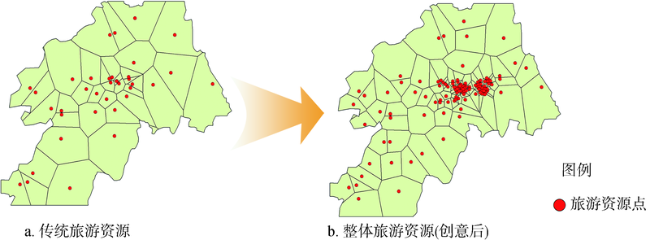
Fig. 3 The change of Voronoi diagram of tourist attractions with the integration of creative tourism resources图3 融入创意旅游资源后研究区域旅游资源Voronoi多边形变化 |
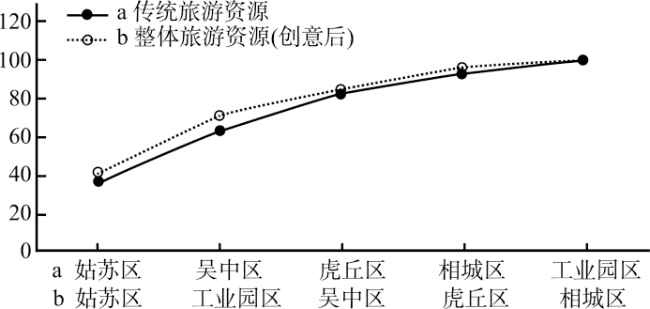
Fig. 4 The change of Lorenz Curve of the distribution of Suzhou tourism resources with the integration of creative tourism resources图4 融入创意旅游资源后研究区域旅游资源数量罗伦兹曲线变化 |
Fig. 5 The shape change of the spatial structure of Suzhou tourism resources with the integration of creative tourism resources图5 融入创意旅游资源后研究区域旅游资源空间结构形态变化 |
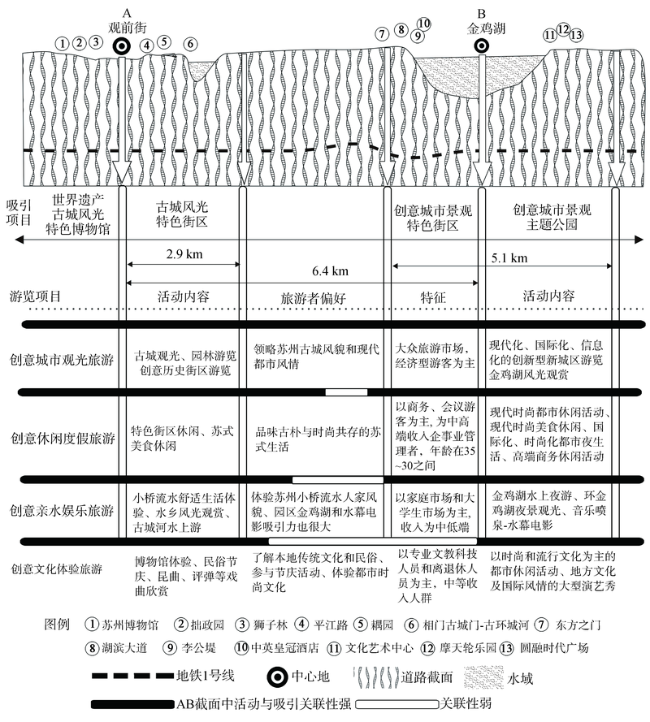
Fig. 6 Section elevation diagram-analysis of Guanqian Street and Jinji Lake图6 剖面图——观前街—金鸡湖截面分析 |
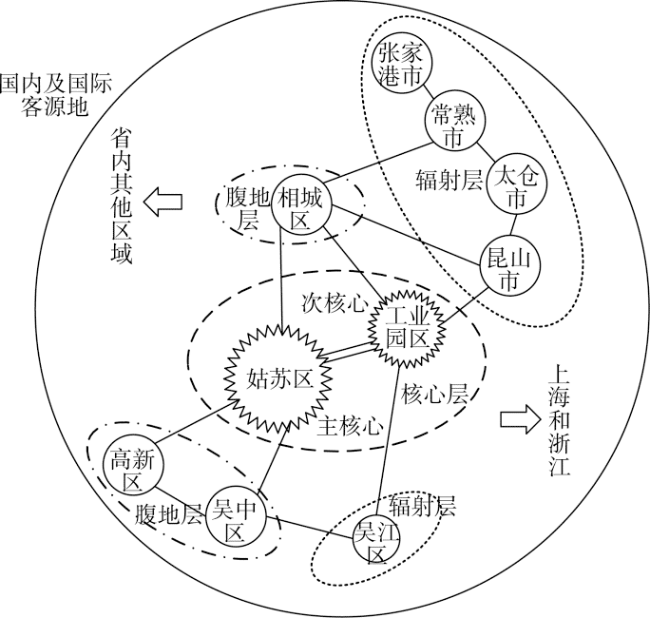
Fig. 7 "Dual-core" tourism development spatial model of Suzhou图7 创意旅游资源下苏州“双核心”旅游发展模式图 |
The authors have declared that no competing interests exist.
| [1] |
|
| [2] |
|
| [3] |
|
| [4] |
|
| [5] |
|
| [6] |
|
| [7] |
|
| [8] |
UNESCO. Towards sustainable strategies for creative tourism. Santa Fe: UNESCO, 2006.
|
| [9] |
|
| [10] |
|
| [11] |
|
| [12] |
|
| [13] |
Korean National Commission for UNESCO. 2nd Forum on UNESCOP Creative Cities Network. Icheon: UNESCO, 2010.
|
| [14] |
|
| [15] |
|
| [16] |
|
| [17] |
|
| [18] |
|
| [19] |
|
| [20] |
Richards G Textile tourists in the European periphery: New markets for disadvantaged areas. Tourism Review International, 2005, 8: 323-338.
|
| [21] |
|
| [22] |
[
|
| [23] |
[
|
| [24] |
[
|
| [25] |
[
|
| [26] |
[
|
| [27] |
[
|
| [28] |
[
|
| [29] |
[
|
| [30] |
|
| [31] |
[
|
| [32] |
[
|
| [33] |
|
| [34] |
[
|
| [35] |
|
| [36] |
[
|
| [37] |
[
|
| [38] |
[
|
/
| 〈 |
|
〉 |