GPN视角下华为手机生产网络特征与影响因素研究
|
陈肖飞(1986-),男,河南三门峡人,副教授,博士生导师,研究方向为经济地理与区域发展。E-mail: xfchen@henu.edu.cn |
收稿日期: 2022-06-17
录用日期: 2023-10-08
网络出版日期: 2024-01-09
基金资助
国家自然科学基金项目(42371187)
国家自然科学基金项目(42001176)
河南省高等学校哲学社会科学创新人才支持计划(2024-CXRC-09)
河南大学文科优秀青年科研骨干能力提升计划项目
Research on the characteristics and influencing factors of Huawei′s mobile phone production network from GPN
Received date: 2022-06-17
Accepted date: 2023-10-08
Online published: 2024-01-09
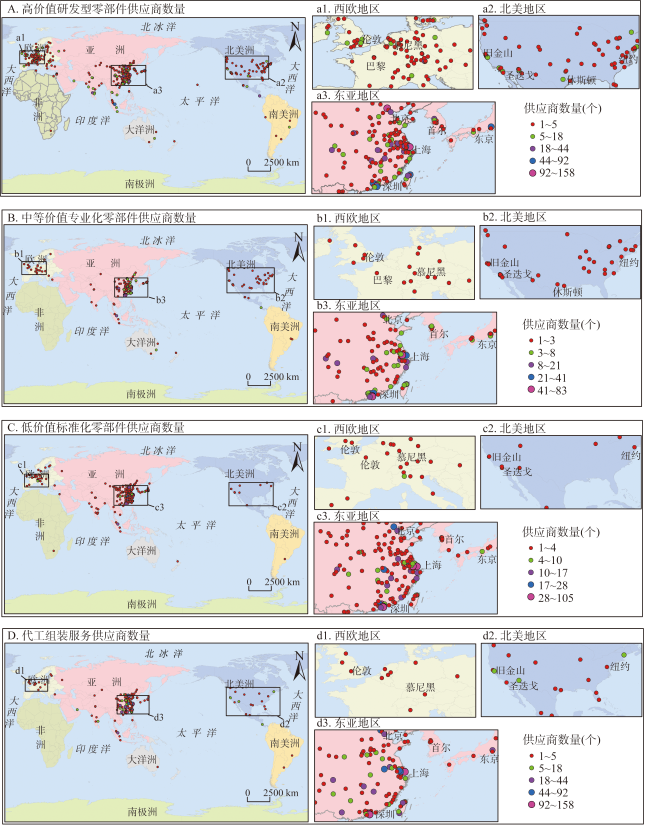
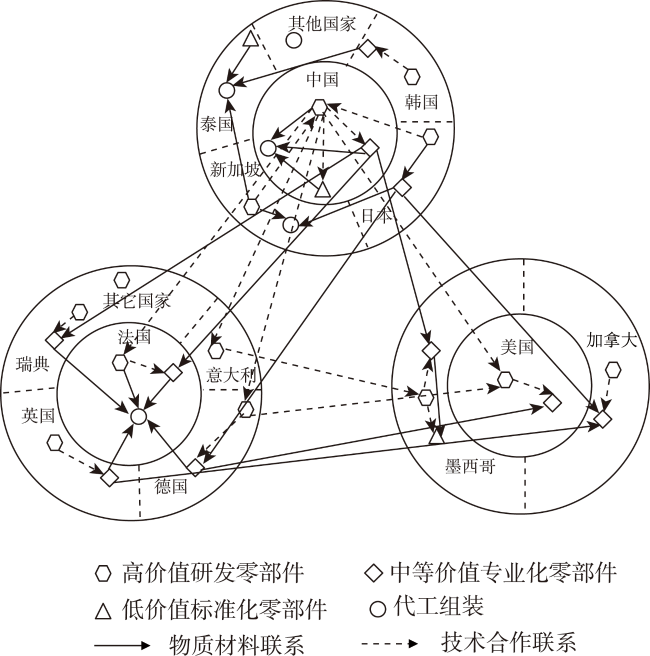
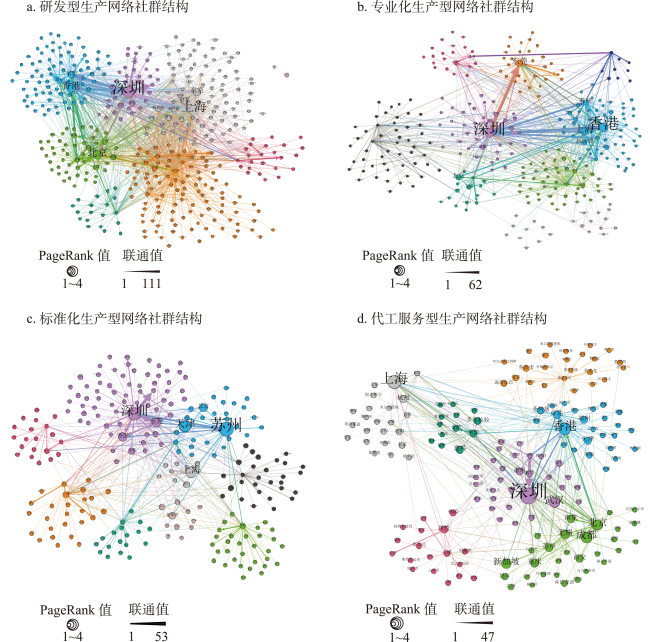
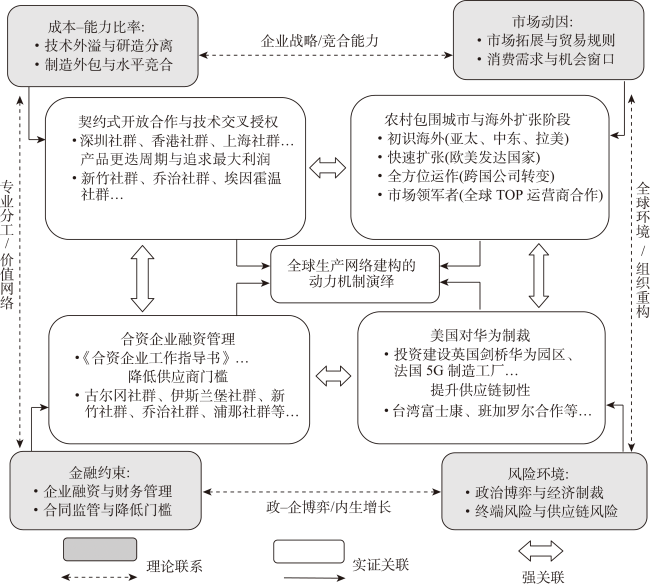
全球生产网络(GPN)作为当前全球经济地理研究的核心议题之一,网络结构与演化过程已被充分讨论,然而如何在经济逆全球化和大国博弈背景下,基于典型案例揭示其网络特征和影响因素等问题仍需探究。本文选取2020年华为手机供应商数据,依据GPN2.0框架下企业行动者角色功能,深入探讨华为手机生产网络特征及影响因素。研究表明:① 就华为手机而言,虽然整体上技术合作和零部件制造呈现典型的全球链接特征,但更值得关注的是,不同角色功能的企业行动者及其产品所处的不同价值链位置,所构建的生产网络呈现出显著的空间差异。② GPN2.0框架下的企业成本-能力比率、市场动因、金融约束以及风险环境等因素虽然对华为手机生产网络空间组织建构发挥了重要作用,但无法完全解释现实经济中其高度复杂的网络等级结构和社群跨域特征,应与国家行动者角色、金融环境、劳工条件等进行交互补充和兼容整合,才能更加系统的解释华为手机生产网络空间组织建构的影响因素。③ 对于后发国家和地区而言,本土企业融入全球生产网络,实现战略耦合与区域发展需要更加契合的理论指导。本研究通过“产品价值-企业区位-城市载体”实现了与GPN侧重企业在组织上和地理上的结构特征分析的一致性,促进了城市关系由场空间向价值空间的转变,以期为GPN理论的中国本土化提供科学实践支持。
陈肖飞 , 杜景新 , 李元为 , 赵梓渝 . GPN视角下华为手机生产网络特征与影响因素研究[J]. 地理研究, 2024 , 43(1) : 51 -65 . DOI: 10.11821/dlyj020220643
Global production network (GPN) is one of the core issues in the current global economic geography research. The network structure and evolution process have been fully discussed. However, the existing research focuses more on foreign leading enterprises, and relatively ignores the network construction and dynamic mechanism of Chinese local leading enterprises. Under the background of economic anti-globalization and great power game, how to reveal its network characteristics and influencing factors based on typical cases still needs to be explored. This paper selects the 2020 Huawei mobile phone bill of materials and supplier data, and tries to scientifically identify the types of Huawei mobile phone production networks based on the corporate actor role function and value chain theory under the GPN2.0 framework, so as to explore the organizational structure of different categories of Huawei mobile phone production networks and the dynamic mechanism of globalized production network development. The results show that: (1) Although overall technological cooperation and component manufacturing exhibit typical global linkage characteristics, what is more noteworthy is that the production networks constructed by enterprise actors with different roles and functions, as well as the different value chain positions of their products, exhibit significant spatial differences. (2) Although factors such as cost capability ratio, market drivers, financial constraints, and risk environment of enterprises under the GPN2.0 framework have played an important role in the construction of Huawei's mobile phone production network space organization, they cannot fully explain its highly complex network hierarchical structure and cross domain characteristics in the real economy. They should be supplemented and integrated with the role of national actors, financial environment, labor conditions, etc. Only then can we more systematically explain the influencing factors of Huawei′s mobile phone production network spatial organization construction. (3) For latecomer countries and regions, the integration of local enterprises into global production networks to achieve strategic coupling and regional development requires more coherent theoretical guidance. This study achieved consistency with GPN′s emphasis on analyzing the organizational and geographical structural characteristics of enterprises through "product value enterprise location urban carrier", promoting the transformation of urban relationships from field space to value space, and providing scientific practical support for the localization of GPN theory in China.
表1 基于成本价值和功能的华为手机零部件等级代表企业Tab. 1 Representative enterprises based on value and function |
| 零部件分级 | 零部件类型 | 代表企业 | 主要产品 | 总部位置 | 分支机构位置 |
|---|---|---|---|---|---|
| 高价值研发型零部件(5 ~60美元) | 系统芯片、基带芯片、 内存芯片、闪存芯片、显示屏(背光模组、显示面板、玻璃基板、显示芯片)、射频芯片、电源管理芯片、快充管理芯片、WiFi/BT芯片、相机模块、分立器件、触控芯片等 | 恩智浦半导体 | NFC芯片 | 埃因霍温 | 渥太华、长春、北京等 |
| 京东方科技股份有限公司 | 屏幕 | 北京 | 深圳、台北、新加坡等 | ||
| 联发科技股份有限公司 | 芯片 | 新竹 | 深圳、新加坡、班加罗 尔等 | ||
| 海力士 | 内存、闪存 | 利川 | 圣何塞、奥斯汀、无锡等 | ||
| 中等价值专业化零部件(0.5 ~5美元) | 射频收发器、CPU供电器、基带供电器、电源管理器、音频解码器、快充管理器、前端模块、加速剂、陀螺仪、传感器、放大器、PCB、充电器、精密组件、晶振、声学元件、电源组件、磁性元件、稳定器 等 | 瑞声声学科技有限公司 | 声学元件 | 深圳 | 常州、圣何塞、库比蒂诺 等 |
| 沪士电子股份有限公司 | PCB板 | 昆山 | 昆山、黄石等 | ||
| 台湾晶技服份有限公司 | 石英振荡器 | 台北 | 横滨、深圳、法兰克福等 | ||
| 低价值标准化零部件(0.5美元及以下) | 金属外壳、塑胶、铰链、玻璃盖板、包装/ 印刷、连接器、射频 开关、指纹控制器、 电子罗盘等 | 蓝思科技股份有限公司 | 玻璃后盖 | 长沙 | 东莞、湘潭等 |
| 广濑电机集团 | 连接器 | 东京 | 槟城、达拉斯、苏州等 | ||
| 比亚迪电子有限公司 | 金属中框 | 深圳 | 台北、惠州、芝加哥等 | ||
| 代工、组装厂商 | OEM、OBM、ODM、CEM、EMS | 富士康集团 | 组装 | 台北 | 深圳、北京、郑州等 |
| 中芯国际 | 晶圆代工 | 上海 | 无锡、东莞、西安、香港 等 |
| [1] |
陈蕊, 刘逸. 全球生产网络(GPN)的理论问题和中国实践启示. 地理研究, 2021, 40(12): 3259-3271.
[
|
| [2] |
贺灿飞. 高级经济地理学. 北京: 商务印书馆, 2021: 612-613.
[
|
| [3] |
|
| [4] |
|
| [5] |
朱晟君, 王翀. 制造业重构背景下的中国经济地理研究转向. 地理科学进展, 2018, 37(7): 865-879.
[
|
| [6] |
朱晟君, 杨博飞, 刘逸. 经济全球化变革下的世界经济地理与中国角色. 地理学报, 2022, 77(2): 315-330.
[
|
| [7] |
|
| [8] |
|
| [9] |
|
| [10] |
赵梓渝, 王士君, 陈肖飞. 模块化生产下中国汽车产业集群空间组织重构: 以一汽大众为例. 地理学报, 2021, 76(8):1848-1864.
[
|
| [11] |
符天蓝, 程叶青. 珠三角服装出口制造业市场转向的模式与机制. 经济地理, 2022, 42(5):125-135.
[
|
| [12] |
王玥. 基于全球生产网络视角下的零售供应链升级与转型: 以鲜奶和大豆油为例. 地理研究, 2018, 37(7): 1435-1446.
[
|
| [13] |
姚作林, 金凤君, 陈卓. 全球产业转移与GVC区域竞争: 基于中国与中南半岛四国的分析. 地理研究, 2021, 40(2): 326-342.
[
|
| [14] |
王璐玮, 汪涛, 张晗. 全球生产网络与本土创新网络的战略耦合动态: 以中国生物医药产业为例. 地理研究, 2021, 40(12): 3314-3332.
[
|
| [15] |
|
| [16] |
|
| [17] |
|
| [18] |
|
| [19] |
|
| [20] |
|
| [21] |
|
| [22] |
|
| [23] |
刘逸, 杨伟聪. 全球生产网络视角下珠三角区域经济的战略耦合与产业升级. 热带地理, 2019, 39(2):155-169.
[
|
| [24] |
|
| [25] |
童昕, 王涛, 李沫. 无锡光伏产业链中的全球-本地联系. 地理科学, 2017, 37(12): 1823-1830.
[
|
| [26] |
何金廖, 黄贤金, 司月芳. 产业集群的地方嵌入与全球生产网络链接: 以上海文化创意产业园区为例. 地理研究, 2018, 37(7): 1447-1459.
[
|
| [27] |
|
| [28] |
毛熙彦, 贺灿飞. 区域发展的“全球-地方”互动机制研究. 地理科学进展, 2019, 38(10): 1449-1461.
[
|
| [29] |
康江江, 张凡, 宁越敏. 苹果手机零部件全球价值链的价值分配与中国角色演变. 地理科学进展, 2019, 38(3): 395-406.
[
|
/
| 〈 |
|
〉 |